


A Cautionary Tale
“It is not so much about what life hands you, but what you do with what you get”
Idowu Koyenikan

Certain travel moments stay with you long after the journey ends. Some become treasured memories tied to a place, a conversation, or a view we still think about years later. Others quietly change the way we travel forever.
For us, one of those moments came in the form of a missing suitcase.
The Suitcase That Never Came Home
Some travel lessons stay with you forever.
Not because they were beautiful or inspiring, but because they quietly change the way you move through the world afterward.
For us, one of those lessons came in the form of a stolen suitcase.
At first, we thought it was delayed.
We stood at baggage claim watching the carousel spin while travelers slowly disappeared toward hotel shuttles, taxis, and rental cars. Suitcase after suitcase rolled past while the crowd around us became smaller and smaller. Anyone who travels frequently knows that strange feeling when you begin mentally calculating connection times, replaying layovers in your head, and trying to convince yourself the bag is probably just coming later.
At first, you stay patient. Then you become slightly concerned. Eventually, you realize something is wrong. Only a handful of lonely suitcases remained circling the belt.
Ours was not one of them.
When Concern Turned Into Something Else
At the time, we were already fairly experienced travelers. We had dealt with missed connections, delayed flights, rerouted itineraries, and the occasional baggage issue before. Those situations are frustrating, but they are also part of modern travel.
This felt different.
There is a certain helplessness that comes with standing in a large airport far from home, realizing your belongings are simply gone. Clothing can eventually be replaced. Toiletries can be purchased. But luggage often carries much more than just physical items. It holds pieces of the journey itself.
Thinking About Everything Inside.
Souvenirs. Gifts. Personal items collected during the trip. Favorite shoes and outfits. Coat.
And suddenly the situation feels much more personal.
There is something uniquely unsettling about realizing your belongings are simply gone in the middle of an airport.
Thankfully, during that trip, we had placed an Apple AirTag inside the suitcase. At the time, AirTags were still relatively new, and honestly, we purchased them more out of curiosity than anything else. We thought they might occasionally prove useful while traveling, but we certainly did not expect them to change the situation unfolding before us completely.
Instead of relying entirely on airline systems and airport staff for updates, we suddenly had information.
The AirTag Inside the Suitcase
Thankfully, during that trip, we had placed an Apple AirTag inside the suitcase. At the time, AirTags were still relatively new, and honestly, we bought them more out of curiosity than anything else. We thought they might occasionally prove useful while traveling, but we certainly did not expect them to change the situation unfolding before us completely.
Instead of relying entirely on airline systems and airport staff for updates, we suddenly had information.
Real information.
We could see movement. We could see location changes. More importantly, we could tell the suitcase was not where it was supposed to be.
That tiny device transformed what originally felt like a helpless waiting game into something different. We were no longer simply standing around hoping someone behind a counter could tell us what happened.
We could actively follow the situation ourselves.
The Waiting Game
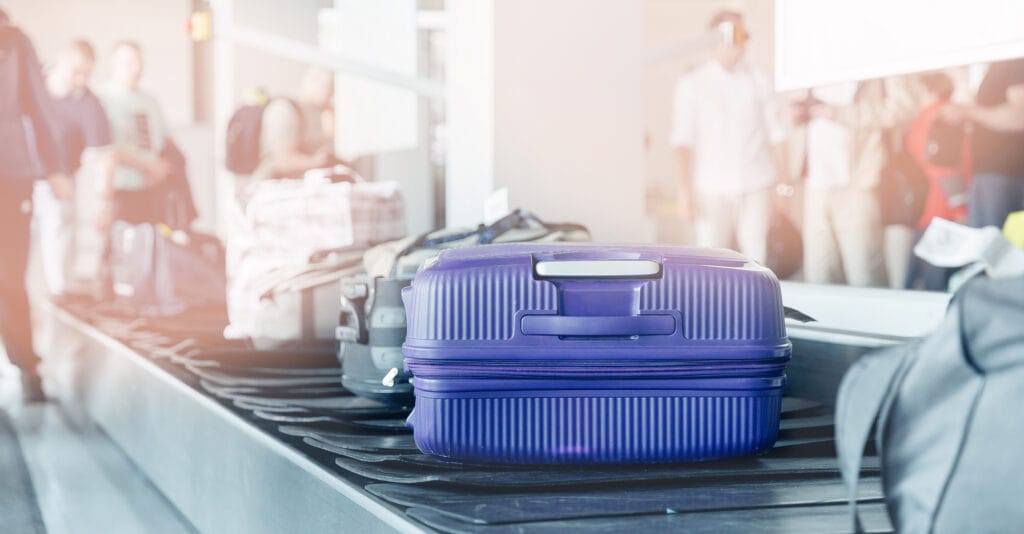
The airline told us to keep waiting; it would come. As the hour unfolded, it became increasingly clear that the suitcase had not simply been delayed.
It had been stolen. The police confirmed it.
That realization was incredibly frustrating, not just because of the belongings inside, but because travel already requires a certain level of trust. You trust airlines with your luggage. You trust airport systems to move your belongings across countries and continents. It is amazing how uncommon it has been for issues to occur in our travels. In over 2,200,000 flight miles between us, we can count on both hands how often our language has been delayed and, surprisingly, never lost.
When that process breaks down, it changes your perspective.
What made the situation even more eye-opening was what happened afterward.
That night, while speaking with the airport police, we were quietly told they already knew of at least four cases of luggage theft from that same evening alone. Using airport surveillance cameras, they were actually able to pull up video footage showing our suitcase being taken and leaving the airport.
That moment completely changed how we viewed missing luggage.
It made us realize something many travelers probably never consider. Sometimes luggage that the airline assumes is lost, delayed, or misplaced may actually have been stolen.
Without a tracking device inside the suitcase, we likely never would have known what truly happened. We would still be saying the airline lost it.
The Situation Became Even More Surreal the Next Day
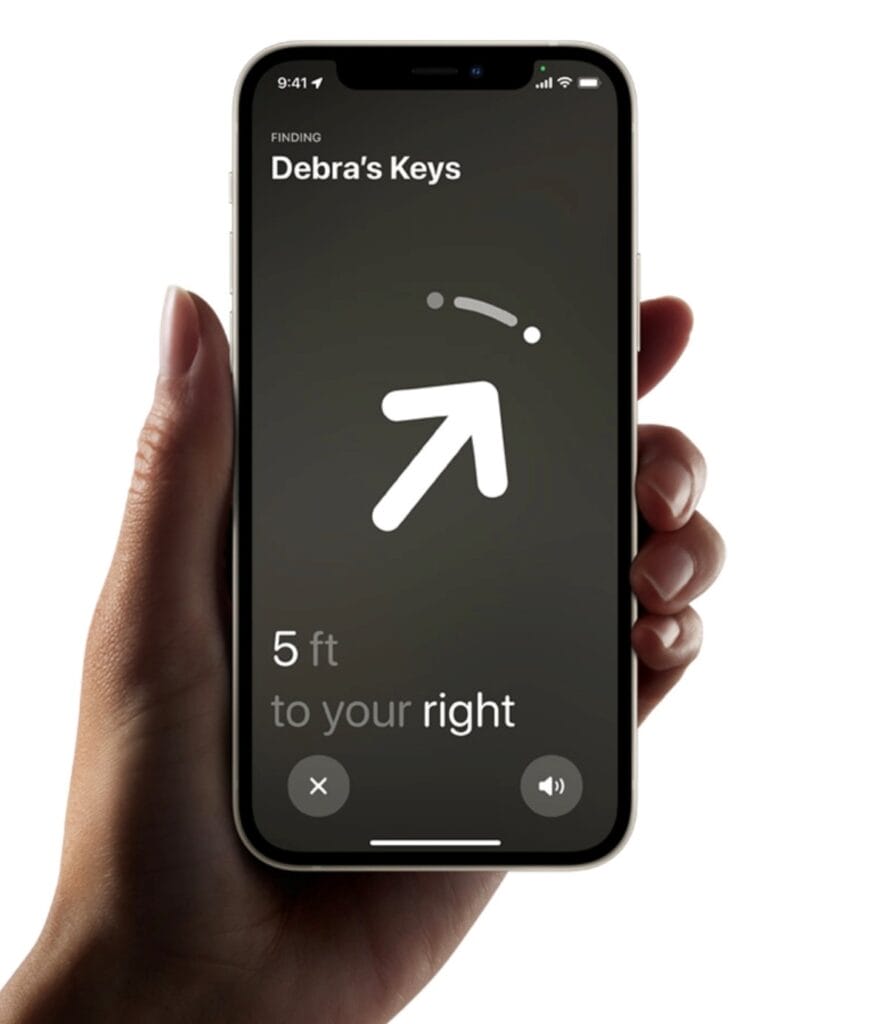
Using the AirTag location, police were able to continue tracking the suitcase. We drove near the ping and met the police there. Eventually, the signal led them near train tracks, where they discovered a small shack. Inside were dozens of stolen suitcases.
Ours was there too.
Unfortunately, by that point, the suitcase had already been emptied.
Still, there was something strangely satisfying about knowing the AirTag had tracked the luggage that far. The police themselves seemed genuinely amazed by how effective the technology had been at narrowing down the location.
For us, that experience became far bigger than simply recovering a missing bag.
It became a lesson in how modern travel works, how vulnerable luggage can be in large airports, and how valuable visibility can be in stressful situations.
Looking back now, that experience quietly changed the way we travel.
Travel Has Become More Complicated
Modern travel is remarkable in many ways. We can leave the United States in the evening and wake up in Europe the next morning. Airline apps provide gate updates, boarding information, baggage notifications, and real-time delay alerts directly on our phones. Technology has made navigating the world easier than ever.
At the same time, travel has become incredibly complicated behind the scenes.
Airports process enormous amounts of luggage every day, while airlines juggle weather delays, staffing shortages, aircraft swaps, tight international connections, and operational disruptions that can quickly ripple through entire systems.
Most bags arrive exactly where they should.
Some do not.
Experienced travelers understand this reality well. Over the years, we have seen luggage delayed due to weather, mechanical issues, short connections, staffing issues, and simple human error. Sometimes bags miss a connection by only a few minutes.
That uncertainty is exactly why AirTags slowly became part of our normal travel routine.
Not because we expect disaster every time we check a suitcase, but because they provide something travelers often lack during stressful moments: visibility.
When Technology Changed the Situation
What originally felt like a helpless waiting game eventually became something entirely different because of that tiny AirTag inside the suitcase.
Instead of relying entirely on airline systems and airport staff for information, we could track the bag’s movement ourselves. We could see location changes and begin piecing together what was happening in real time.
That experience completely changed the way we viewed travel technology.
Before then, AirTags had simply seemed like an interesting gadget.
Afterward, they became something practical.
Something genuinely useful.
The Frankfurt Moment
One of the clearest examples happened much more recently after returning home from Frankfurt.
Like most travelers these days, we monitored the airline app while waiting for our luggage. Shortly after landing, the app confidently notified us that our bags had arrived safely.
Normally, that would sound reassuring.
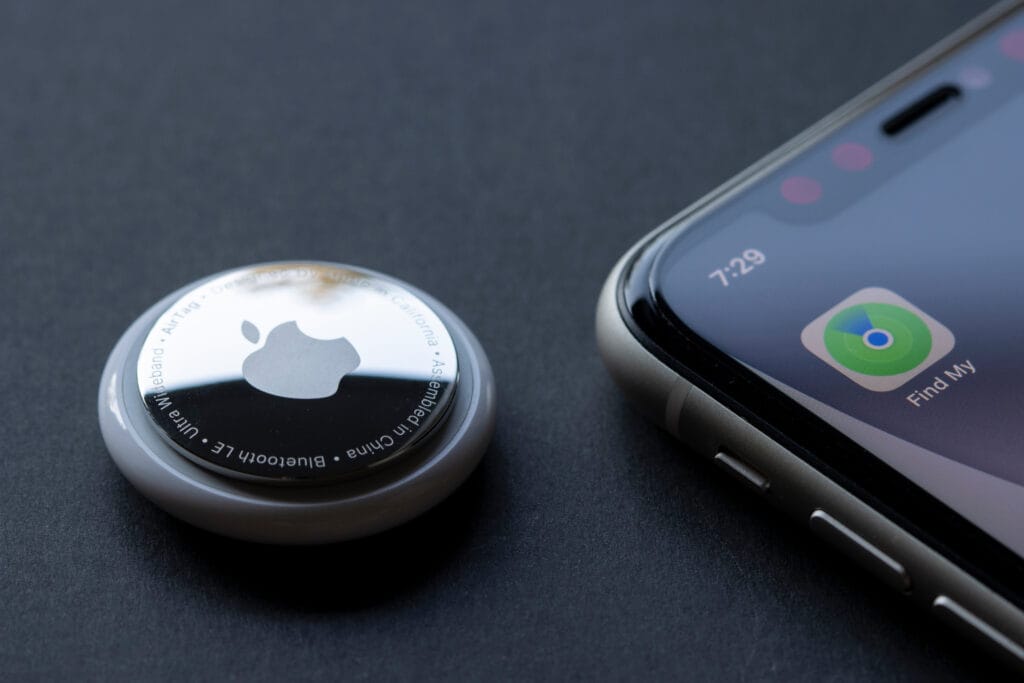
But when we opened the Find My app on our phones, our Apple AirTag still showed the suitcase sitting in Frankfurt.
Not nearby. Not somewhere behind the scenes at baggage claim. Still in Germany.
Instead of standing around waiting and wondering, we immediately walked to the airline baggage service office. At first, the employee politely insisted the luggage had arrived.
Then we showed her the AirTag location.
She paused, looked at the screen again, and smiled. “Darn it,” she said. “That happens all the time.”
Sure enough, the luggage had never made the flight.
Saved Long Lines and Stress
Because we caught the issue immediately, the airline was able to prioritize the suitcase and place it on the next available flight. Without the AirTag, we likely would have spent a long time standing at baggage claim, hoping the bag might eventually appear before finally filing a delayed baggage report.
That experience reinforced something we had already started learning years earlier with the stolen suitcase.
Technology cannot prevent every travel problem.
But it absolutely can make navigating those problems easier.
Cruise Line Mishap
This was one we had not considered, but it saved us again. When we got to our cabin, one of our suitcases was missing. Turns out it had been delivered to the wrong room; the Airtag told us it was on the ship and where it was. Definitely saved the staff lots of anxiety, and the suitcase was recovered quickly.
The Peace of Mind Matters More Than Anything
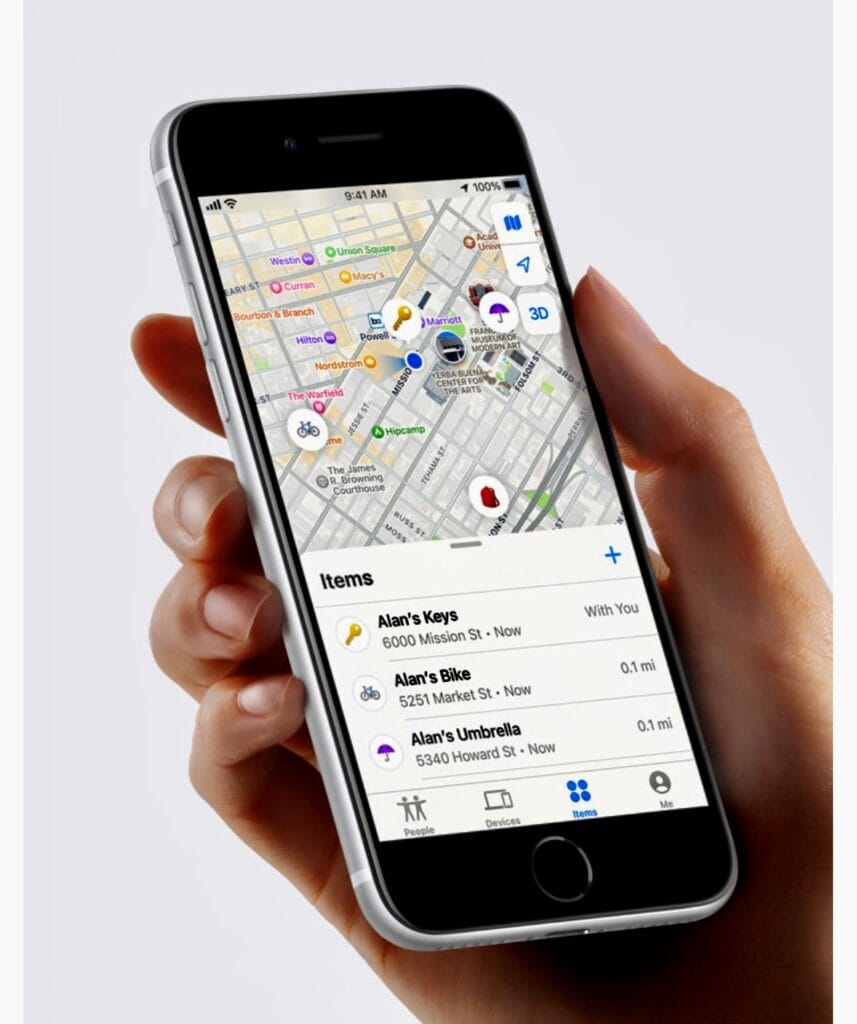
Ironically, most of the time, our Apple AirTags don’t help us solve dramatic travel situations. Most of the time, they reduce stress.
Frequent travelers know how exhausting travel days can become. After overnight flights, time zone changes, delayed connections, crowded airports, and unfamiliar transportation systems, even experienced travelers begin feeling worn down.
Standing at baggage claim after a long journey can quickly create anxiety when luggage takes longer than expected to appear. Your mind immediately starts replaying the trip.
Did the bag make the connection?
Was the layover too short?
Did it get loaded correctly?
These days, before frustration even has a chance to build, we simply open the Find My app.
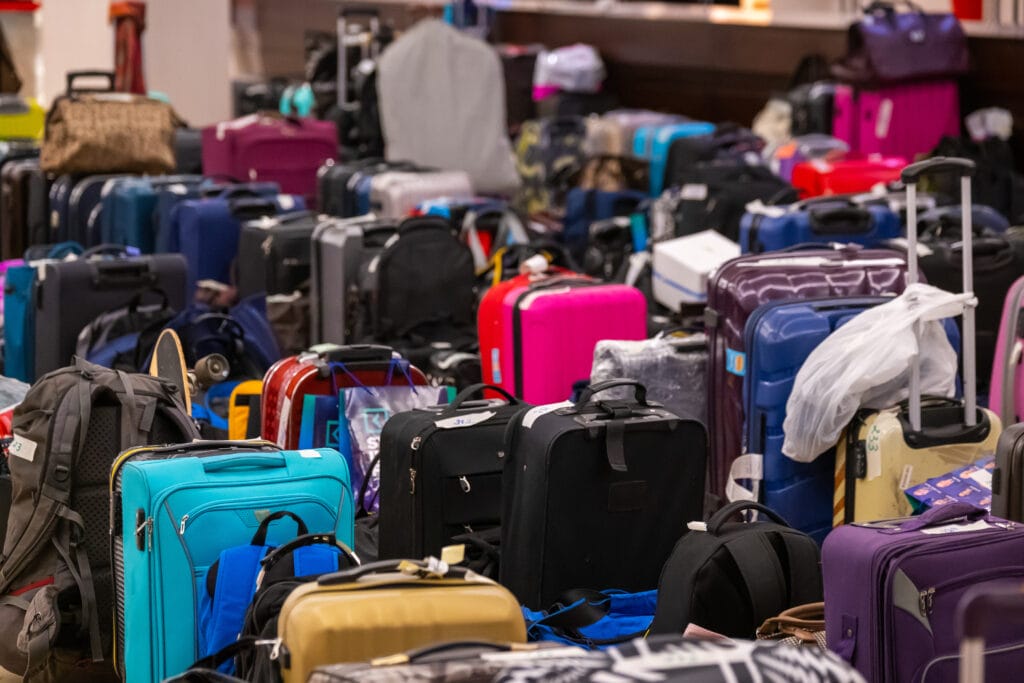
If the AirTag shows our luggage nearby, we relax almost immediately. At least we know the bag made it to the airport and is somewhere behind the scenes. If needed in a sea of luggage, it will direct you right to it.
That reassurance may sound small, but after years of global travel, we have learned that reducing unnecessary stress matters.
Travel is supposed to feel exciting and inspiring. The last thing we want is to begin a trip worried that our belongings are still sitting in another country.
FAQ
AirTags Became Part of How We Travel
Originally, we only used AirTags in checked suitcases.
That changed quickly.
Over time, we realized they were useful in all kinds of travel situations beyond luggage alone.
Now they quietly travel with us everywhere.
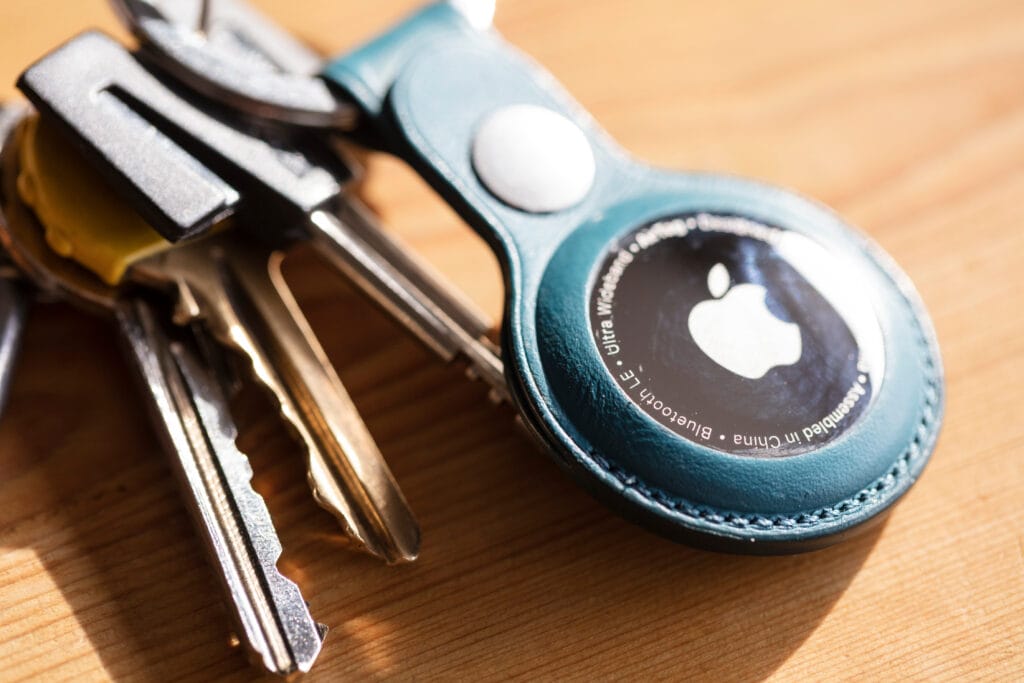
Today, we regularly travel with AirTags in checked luggage, carry-on backpacks, camera bags, small daypacks, and laptop bags. We also place them in rental car keys because after long international flights, it becomes surprisingly easy to misplace keys.
We have even tucked them into rental cars themselves while traveling overseas. That may sound excessive until you find yourself wandering through a massive parking structure after a long overnight flight, trying to remember exactly where you parked or even what the car looks like.
We have even used them while traveling by train in Europe, where luggage is often stored several rows away or in completely separate train cars. Being able to quickly confirm that your belongings are still where they should be provides an extra layer of reassurance during busy travel days.
The more we traveled, the more we realized AirTags quietly solve dozens of small travel frustrations. Back at home, they are on our keys, and when we pet sit, we put them on the dogs.
A Few Things We Have Learned
After years of traveling with AirTags around the world, we have picked up a few practical lessons along the way.
We always place them somewhere discreet inside luggage rather than in an obvious location. We also make a habit of putting one inside every checked suitcase, regardless of how short the trip may be. For those who say I never check luggage, this doesn’t apply to me. We have been on too many flights where the overhead space was filled, and people were forced to check their carry-on.
Before major international trips, we usually take photos of our luggage as well. If something ever goes missing, having both photos and AirTag tracking information makes conversations with airlines significantly easier.
We have also learned that AirTags are not magic. They cannot stop luggage from being delayed or stolen, and they are not perfect GPS devices. In remote areas, updates can sometimes take longer because the system relies on nearby Apple devices.
Still, we have found them remarkably reliable at airports, in cities, at hotels, at cruise ports, at train stations, and at transportation hubs around the world.
Most importantly, they provide clarity.
And during stressful travel situations, clarity matters.
Where To Buy Apple AirTags

At this point, Apple AirTags have become one of those travel items we simply do not leave home without.
They are relatively inexpensive compared to the amount of stress they can potentially save during travel. Individual AirTags are usually priced around $25, while four-packs are often priced between $80 and $100, depending on sales and promotions. Watch out for sales as the four-pack can drop to $69. Batteries can be replaced, but they have lasted us for years.
We typically recommend purchasing the four-pack because once you start using them, you quickly realize how many travel situations they can help with beyond just checked luggage.
We purchased ours through Amazon because they are easy to find there, frequently discounted, and simple to replace or add to over time as our travel needs evolve.
For travelers who fly frequently, travel internationally, use trains, cruise ships, rental cars, or simply want more peace of mind while moving through busy airports, they have honestly become one of the best travel investments we have made.
Final Thoughts
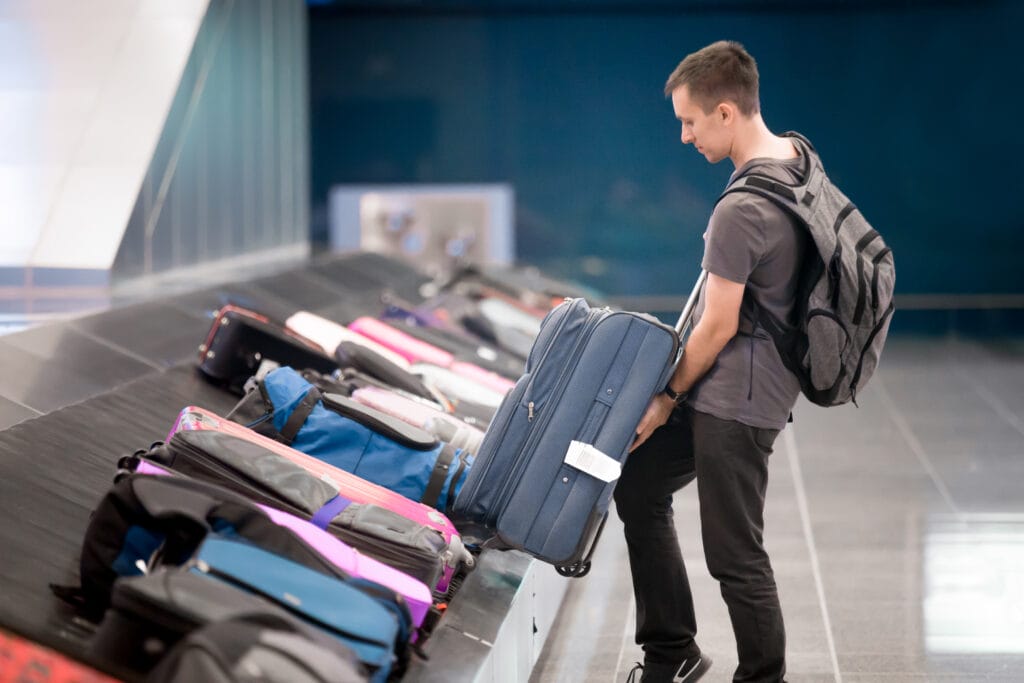
Looking back now, it is interesting how one stolen suitcase changed the way we approach travel. At the time, the situation felt frustrating and exhausting.
Today, we view it differently.
It taught us an important lesson about modern travel. Technology cannot prevent every problem, but the right tools can absolutely make travel smoother, less stressful, and easier to navigate.
For us, Apple AirTags have quietly become one of the single most useful travel items we carry.
Sometimes they help recover missing luggage.
Sometimes they help prove the airline system is wrong.
Most of the time, they simply provide peace of mind.
And honestly, after years of traveling the world, that alone makes them worth carrying.
Lessons Learned
1. DO NOT stop at Go or DO NOT doddle along the way; NO bathroom or coffee stops.
GET TO BAGGAGE CLAIM!
2. Place Apple AirTags in all luggage you have with you, even carry-on. Place it in a discreet place. In this case, the suspect removed all identifying tags from the bag, but obviously did not know that an AirTag was sitting in full view on the zipper. He likely thought it was a zipper pull.
I have now moved the AirTag into the zippered section that provides access to the rails. I taped it to a rail while adding lots of duct tape to other parts of the rail to make it look like a repair.
3. Always have travel insurance, and don’t rely on what your credit card offers. We exclusively use Squaremouth for all our travel insurance needs. Here is an article on the importance of travel insurance and how to be an intelligent consumer.
Check out our blog post on the importance of travel insurance by clicking here
4. Always take a picture of your suitcase with your phone. I can’t begin to tell you how valuable that was during the process.
5. Take a picture of your packed suitcase before heading to the airport. It will assist in your insurance claim. If you always have certain items in your suitcase (in my case, a knee brace), keep that receipt, take a pic, and keep a list of those items.
6. Buy luggage that looks unique so you can easily identify if theft occit urs. Placing tags on the handles isn’t enough, as someone can easily remove them. I currently have a Travel Pro Bold, my favorite ever! You can find it by clicking here.

7. I have often sat with people who had to check their carry-on on a crowded plane. They left their meds, electronics, laptop, etc., in the suitcase as it was a last-minute decision. They would say, “Well, I won’t need it on the flight; it’s not a big deal.” But that luggage goes to baggage claim, where it is now a potential target for theft. Most luggage insurance coverage does not include electronics.

© 2026 Wanderers Compass All Rights Reserved
*We have NO affiliation with Apple, and when we purchased our Apple AirTags, we paid full price on Amazon*
Our most recent blog posts

Returning to Venice: Why We Keep Coming Back
September 28, 2026
Savoia Excelsior Palace: Where Trieste’s History Meets the Adriatic
September 6, 2026
Global Entry for Kids: What Parents Need to Know Before Traveling
September 5, 2026
Rovinj Beyond the Postcard: Exploring Croatia’s Istrian Coast
August 29, 2026
When the Hotel Becomes Part of the Journey: Ettington Park Hotel
August 27, 2026

How We Balance Luxury Travel With Authentic Experiences
August 25, 2026

Want to Learn the Story Behind Wanderers Compass?
Our Top Recommended Travel Products
Travel Insurance
Squaremouth.com
Our Favorite Travel Insurance Site!
We strongly advocate comprehensive travel insurance, not only for minor inconveniences but also for major, unexpected events such as medical emergencies. We never leave home without it. Our go-to resource is Squaremouth.com. which offers a user-friendly platform that connects you with top-rated, reputable insurance carriers. Plus, they’ll mediate on your behalf if you run into any issues.
To empower you as a consumer, we recommend you read our blog post on why travel insurance is essential and how to secure the best coverage from leading companies at an affordable price.
MedjetAssist
Medical transport back home from anywhere in the world
Medjet is a leading provider of global air medical transport. Unlike traditional travel insurance, which typically covers medical evacuation to the nearest facility, Medjet goes further by ensuring you’re transported back to the U.S. to the hospital of your choice once you’re stable enough to fly. Medjet offers membership plans that focus on medical transport, while Medjet Horizon provides expanded coverage for broader protection. Individual trip policies start at just $99, and annual policies are available for around $300. Most policies have an age limit of 74.
To learn more about how Medical Evacuation membership with Medjet Assist works, check out our blog post for a more detailed review.
Accommodations and Airfare
Booking.com
Hotels, Home rentals, BNBs, Flights, and other Transportation & Tours
Booking.com connects millions of travelers to unforgettable experiences, a wide range of transportation options, and incredible places to stay—from homes to hotels and beyond. As one of the world’s largest travel marketplaces, it supports well-known brands and entrepreneurs of all sizes. For its convenience, variety, and reliability, it’s our preferred booking platform.
Expedia and VRBO
Hotels, home rentals, BNBs, flights, and other transportation & tours
Expedia is a U.S.-based company with a mission to make global travel accessible to everyone, everywhere. At Wanderers Compass, we embrace independent travel, and platforms like Expedia are essential to making that a reality. Expedia allows you to book every aspect of your trip—from flights and accommodations to rental cars, cruises, and activities—making it a one-stop shop for all your travel needs.
Transportation
Daytrip
Personalized city-to-city private car transfer service
Daytrip provides an affordable private car service for city-to-city transfers worldwide, and we absolutely love their service. It’s a cost-effective alternative to renting a car, offering comfortable, stress-free travel with scenic stops along the way. For example, we used Daytrip for travel between Budapest and Vienna, enjoying some fantastic detours to local attractions. With professional drivers and customizable routes, Daytrip ensures a smooth ride while allowing you to explore hidden gems and unique sights along your journey.
To learn more about Daytrip, check out our blog post for a more detailed review.
Travel Experiences
Viator
The leading marketplace for travel experiences
Viator believes that travel is all about creating unforgettable memories. With over 300,000 experiences to choose from—ranging from simple tours to extreme adventures, plus a wide array of unique, niche activities—it’s never been easier to make lasting memories. We frequently use Viator during our travels and especially appreciate its flexible cancellation policy, which provides peace of mind with every booking.
Shopping
Wanderers Compass Amazon Storefront
An excellent source for all travel essentials and guides that we have vetted ourselves
Amazon is one of the world’s most comprehensive online shopping platforms, offering lower prices, a wide selection, and fast delivery through its global fulfillment network.
This page contains affiliate links. When you purchase through these links, we may earn a small commission at no extra cost to you. Thank you for your ongoing support!

3 Comments
Farhana
May 4, 2024 atApple AirTag can be very helpful for luggage because it allows you to track your luggage’s location using your iPhone or iPad. You can attach an AirTag to your luggage and then use the Find My app to see its location on a map. If your luggage gets lost or misplaced, you can play a sound on the AirTag to help locate it, or put it in Lost Mode to receive notifications when it’s found by others. This can be especially useful in crowded airports or when traveling to unfamiliar destinations.
Karim
July 28, 2024 atI am not sure this would always work. Unfortunately the thief will be notified that an unknown AirTag is travelling with him,. He will find it and remove it. I think the AirTag is ok for misplaced item but I am. Not sure it is designed for stolen items.
Joelle
July 28, 2024 atIt is not designed for stolen items but it sure worked well for us. It depends how well it is hidden first. As noted in the article the Police were able to trace our stolen luggage as the AirTag took them right too it. In the process they found a large amount of other stolen bags. An AirTag would only notify the thief if we had activated it as being lost. Since we knew it was stolen, as it was observed on the airport security cameras, we did not activate that feature. It also has served as beautifully once when our luggage did not make it to our destination. The United App said it was there but our AirTag had the luggage still sitting on the tarmac in Frankfurt. When we showed that the to baggage office their first response was this happens to often, they scan to luggage before it is actually on the plane. Our luggage was on the next flight as a result. If not for the AirTag they would have never escalated the search as their system reflected it was there. We love our AirTags. Use them at home for keys and for our pets too.