

“Valletta Is The City Of Knights”
unknown
We Came for a Day… and Stayed for So Much More

When we first arrived in Malta, we didn’t have any big expectations. It was meant to be a convenient stop, a sunny, Mediterranean detour between larger destinations. Valletta, the capital city, was just supposed to be a day trip on our itinerary. A quick walk through a UNESCO-listed town, maybe a few photos, and off we’d go.
But the moment we passed through City Gate, everything shifted. Suddenly, we weren’t rushing to check off tourist sites. We were lingering in alleyways, watching the light play off honey-colored limestone walls. We were chasing the scent of fresh bread down steep, winding streets. Valletta wasn’t just charming; it was magnetic.
That quick visit turned into several return trips. Valletta, Malta, drew us back with every sunbeam bouncing off its balconies, every hidden staircase leading to a view, every bite of pastizzi. This city may be small, about two-thirds of a mile long and just over a third of a mile wide (1 km by 650 meters), but don’t let its size fool you. Valletta is alive with layers of history, color, and culture that we’ve rarely found anywhere else.
Where Is Valletta, Malta?
Valletta is located on the northeastern coast of Malta, the largest island in this tiny Mediterranean nation. It’s perched between two natural harbours, Marsamxett and the Grand Harbour, which have long made it a strategic and economic powerhouse in the region. You can fly into Malta International Airport, and in less than 20 minutes, you’ll find yourself standing before Valletta’s monumental gates.
Valletta’s Rich and Storied Past
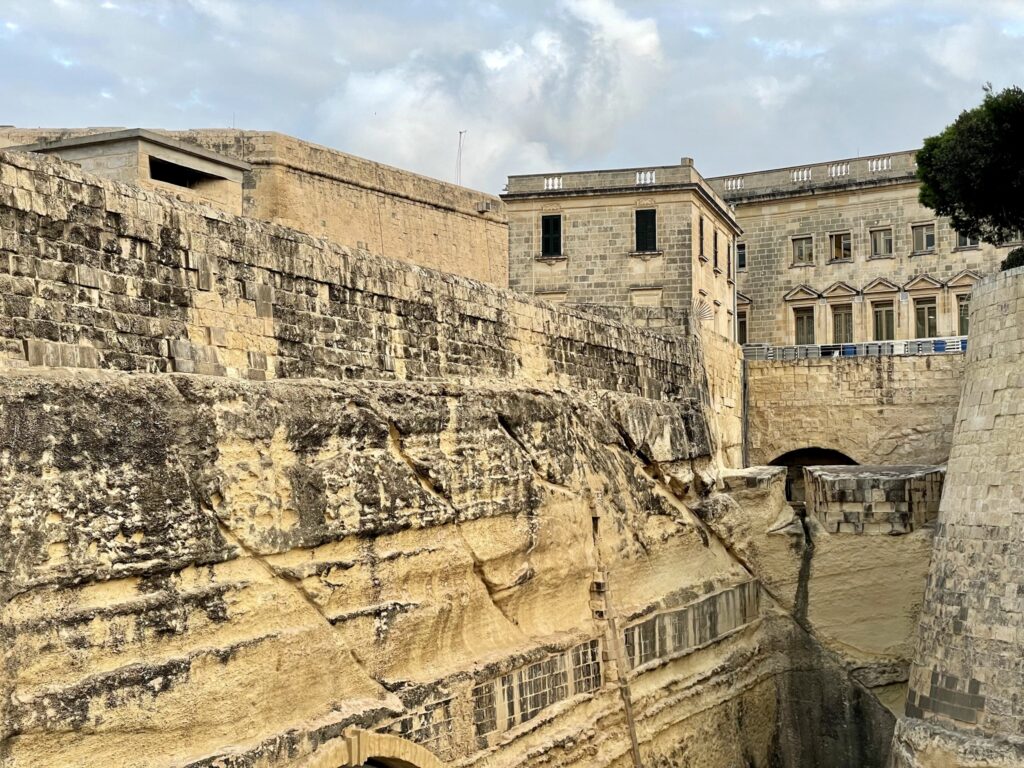
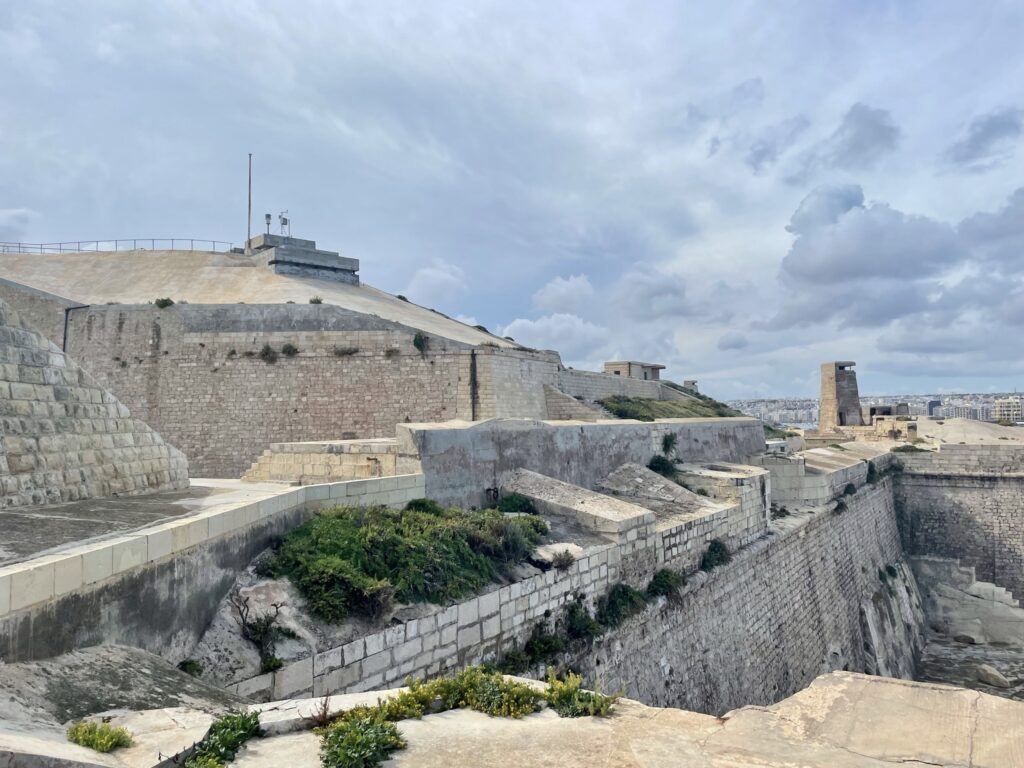
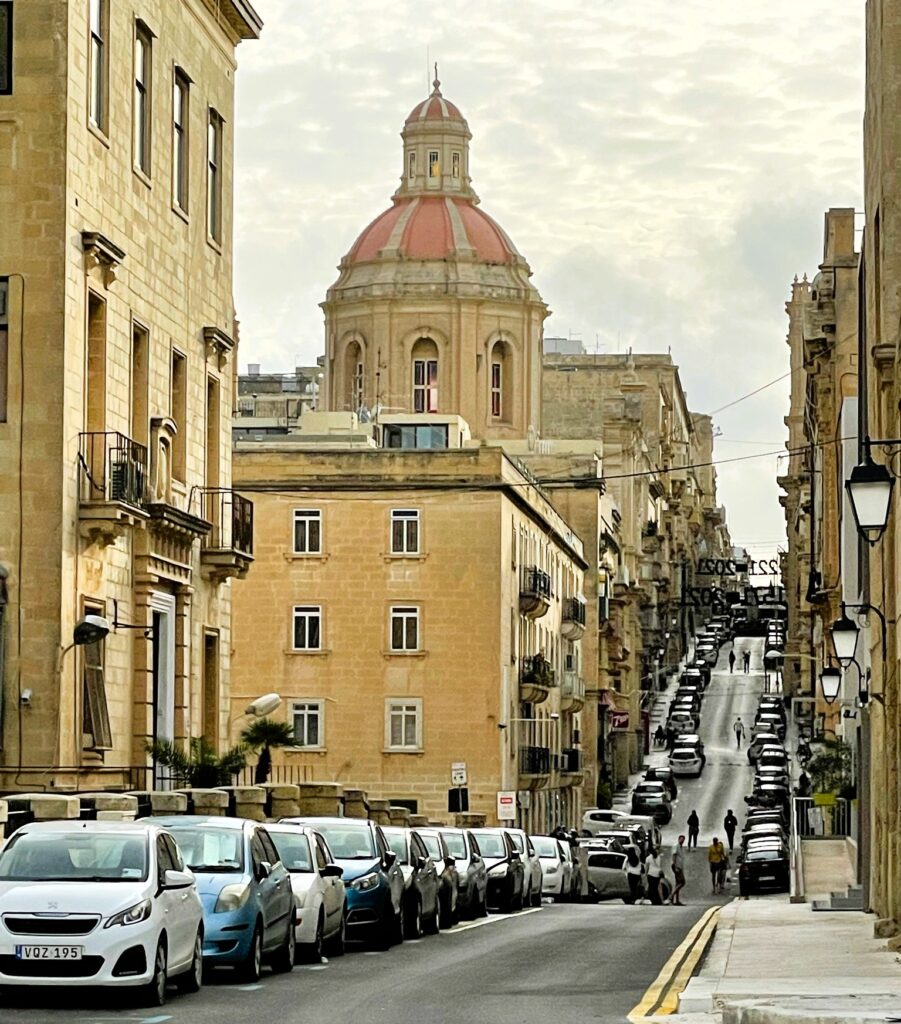
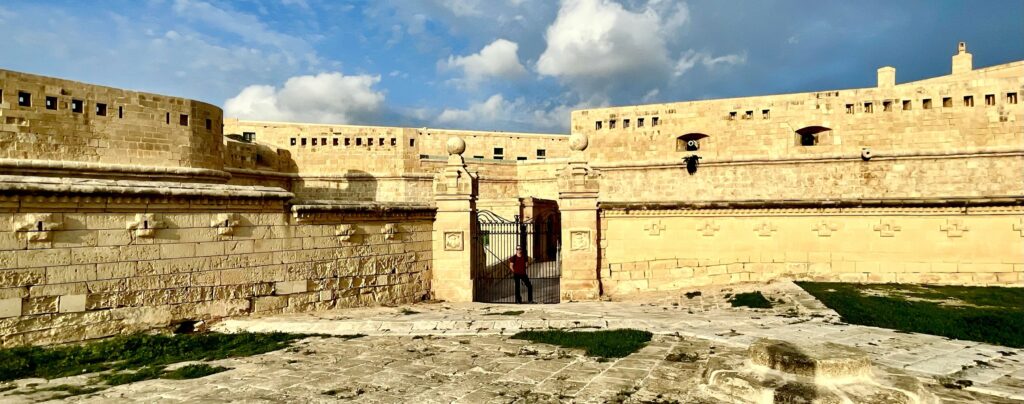
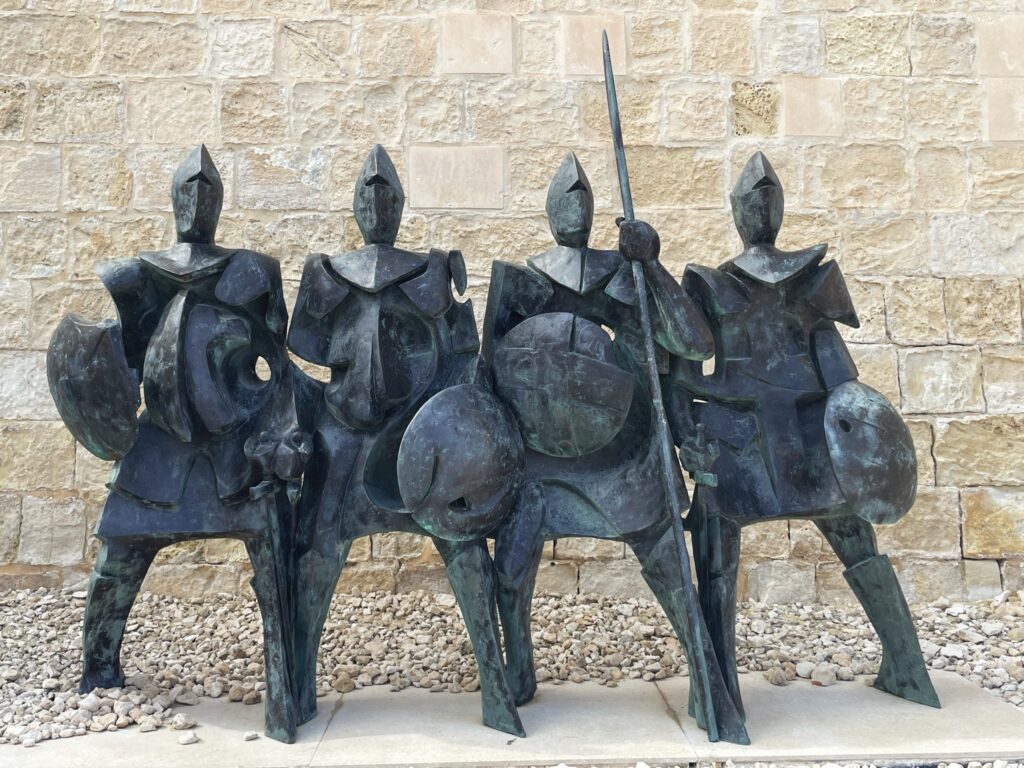
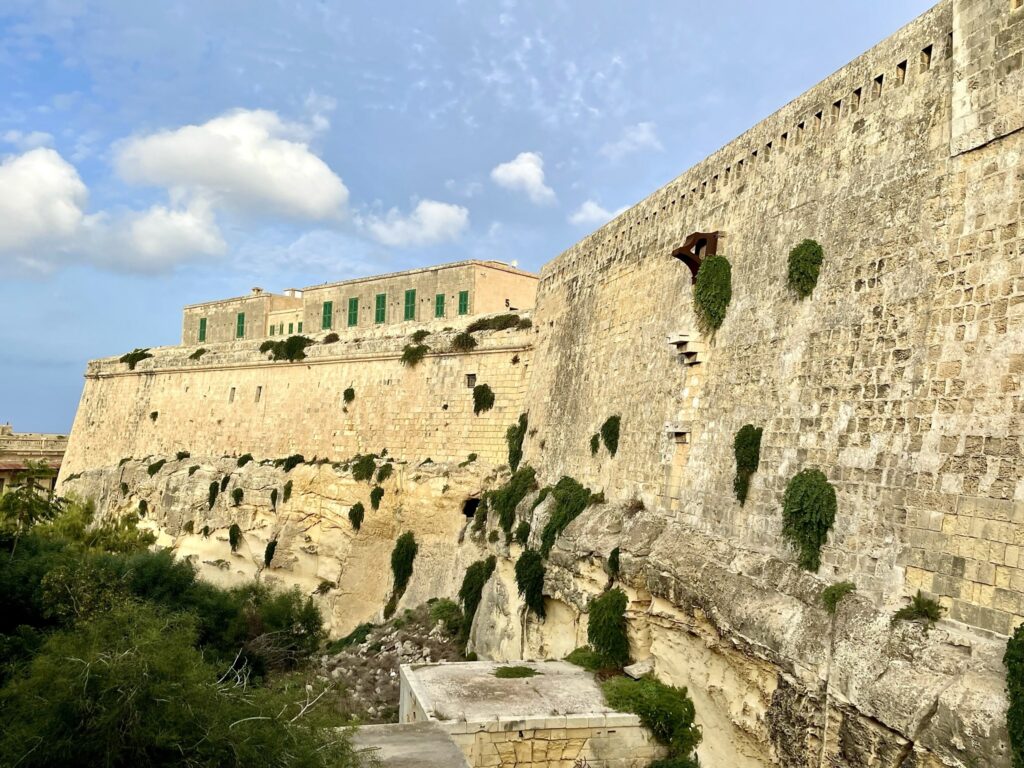
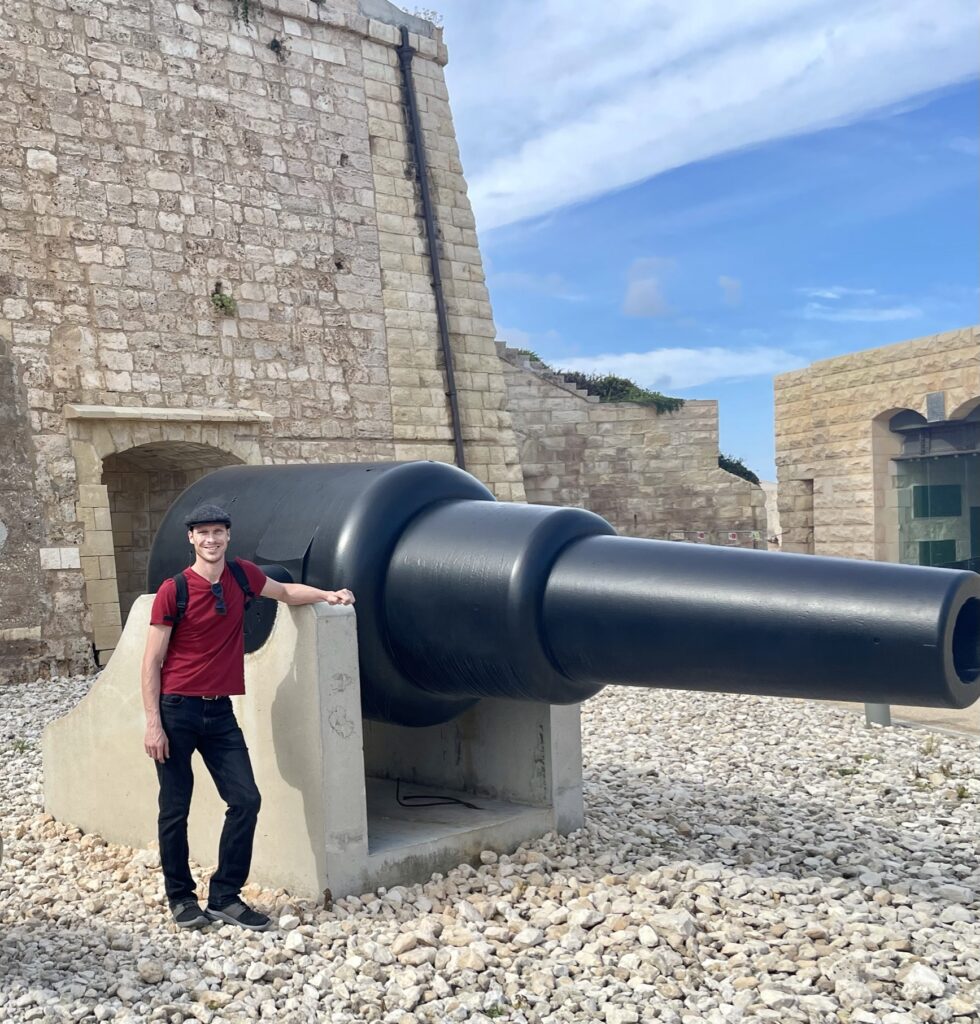
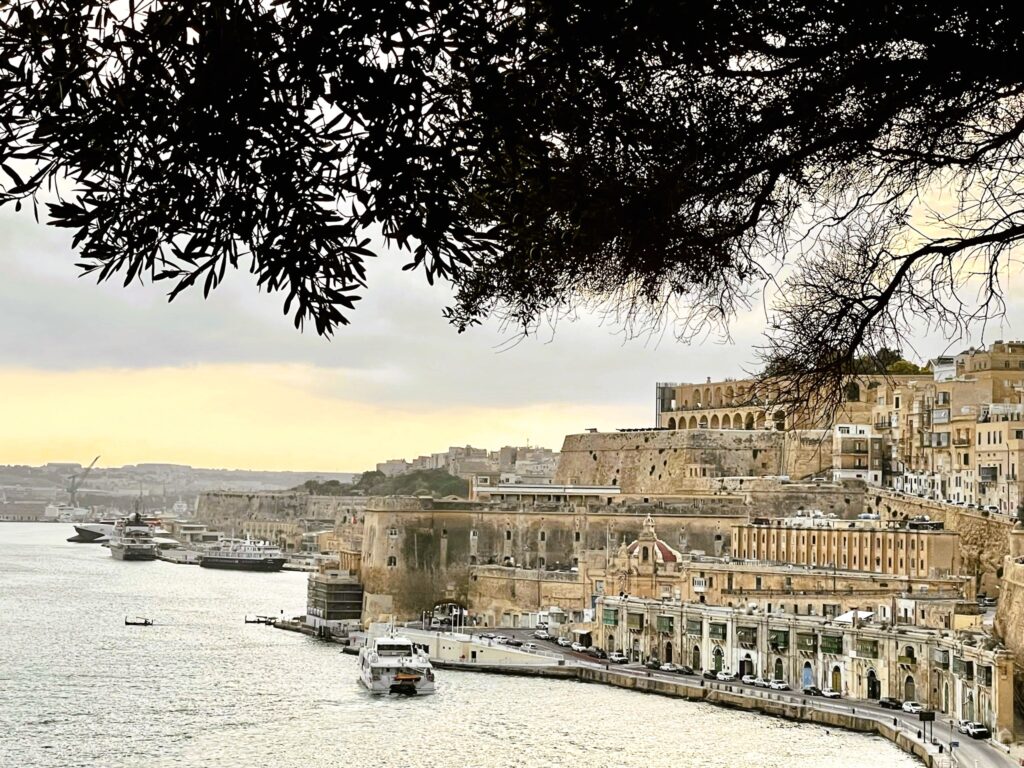
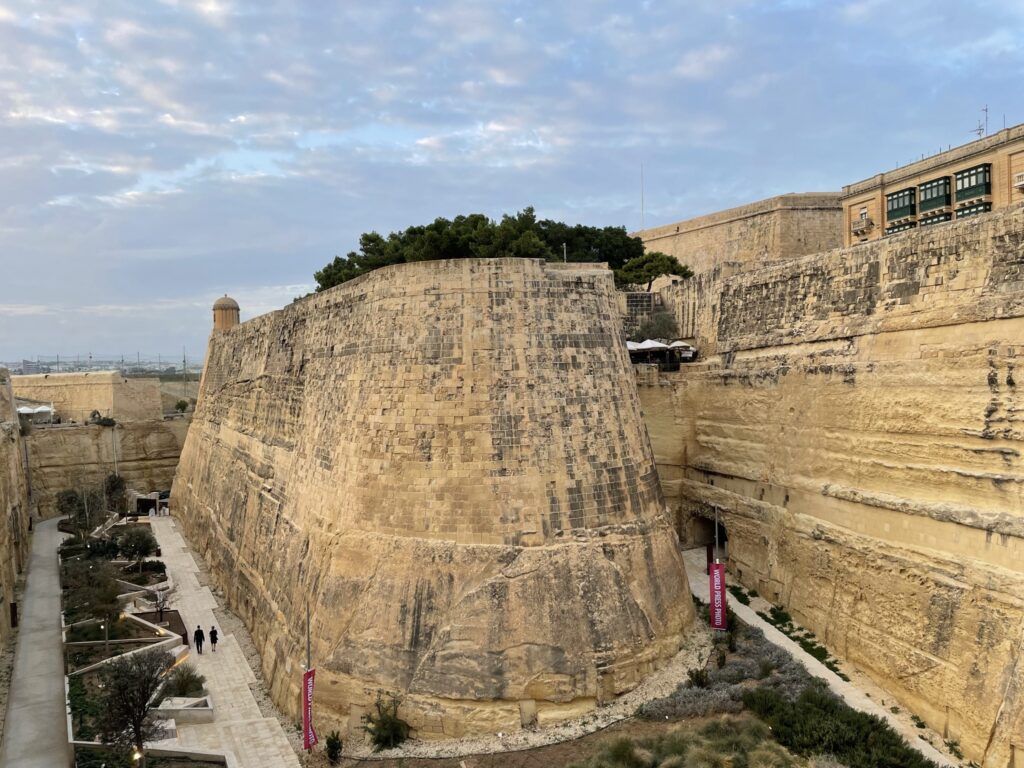
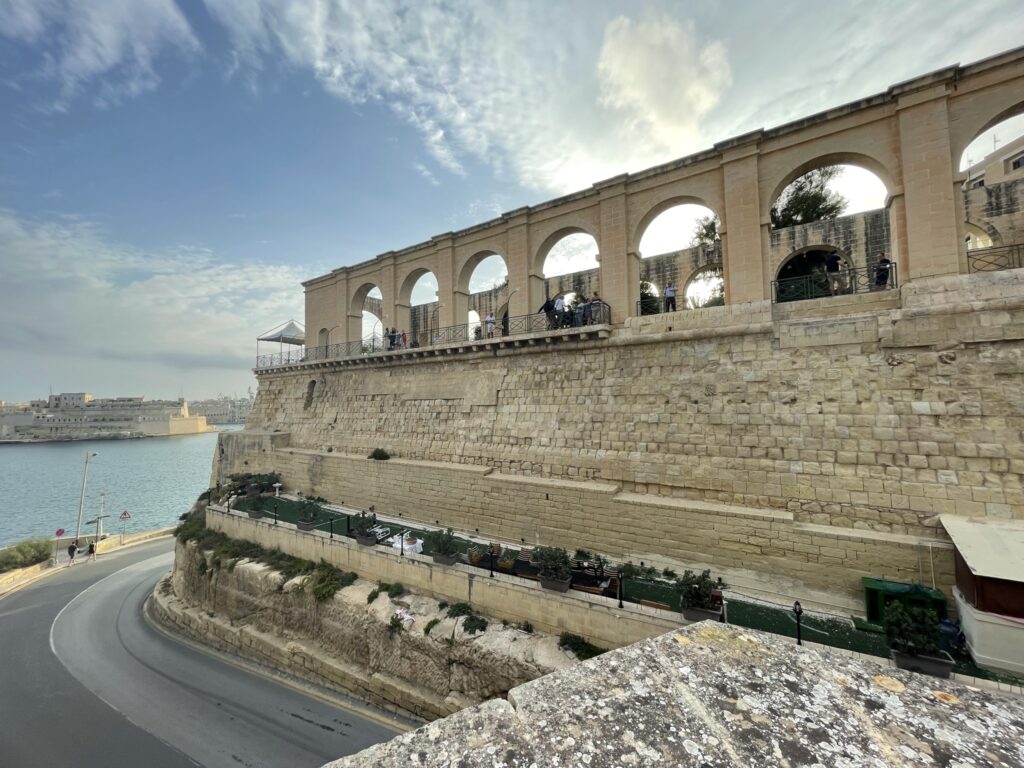
Valletta’s story begins in blood and triumph. After the Knights Hospitaller, also known as the Order of St. John, successfully defended Malta against the Ottoman Empire during the Great Siege of 1565, they vowed to fortify the island in case of another attack. Grand Master Jean Parisot de Valette took on this challenge and laid the first stone of the city that would bear his name in 1566.
Valletta was groundbreaking from the start. It was the first planned city in Europe, designed on a grid system with wide streets to promote air circulation and support strategic defense. European architects and engineers from Italy and beyond were brought in to help craft this city of stone. Their vision blended military necessity with baroque splendor—churches, palaces, and piazzas rose alongside fortified walls and bastions.
Throughout the 17th and 18th centuries, Valletta blossomed into a center of art, commerce, and religion. Its Grand Harbour attracted traders from around the Mediterranean. Religious orders commissioned elaborate churches like St. John’s Co-Cathedral, while the aristocracy and knights built stately homes.
The arrival of Napoleon in 1798 marked a brief but dramatic chapter. The French took the city without a fight, but their anti-clerical policies and looting led to a Maltese uprising. British forces, allied with local insurgents, laid siege to Valletta until the French surrendered in 1800. Malta then became a British colony, and Valletta served as a strategic naval base throughout the 19th and early 20th centuries.
The English Arrive
The British era brought changes: red telephone boxes, Anglican churches, and even new architectural styles. But Valletta retained its Maltese soul. After World War II and eventual independence in 1964, the city remained a symbol of resilience and identity for the Maltese people.
In recent years, Valletta has experienced a cultural revival. Its historic buildings have been restored, its streets revived with festivals and art, and its story continues to unfold with each generation.
Valletta, Malta, in World War II
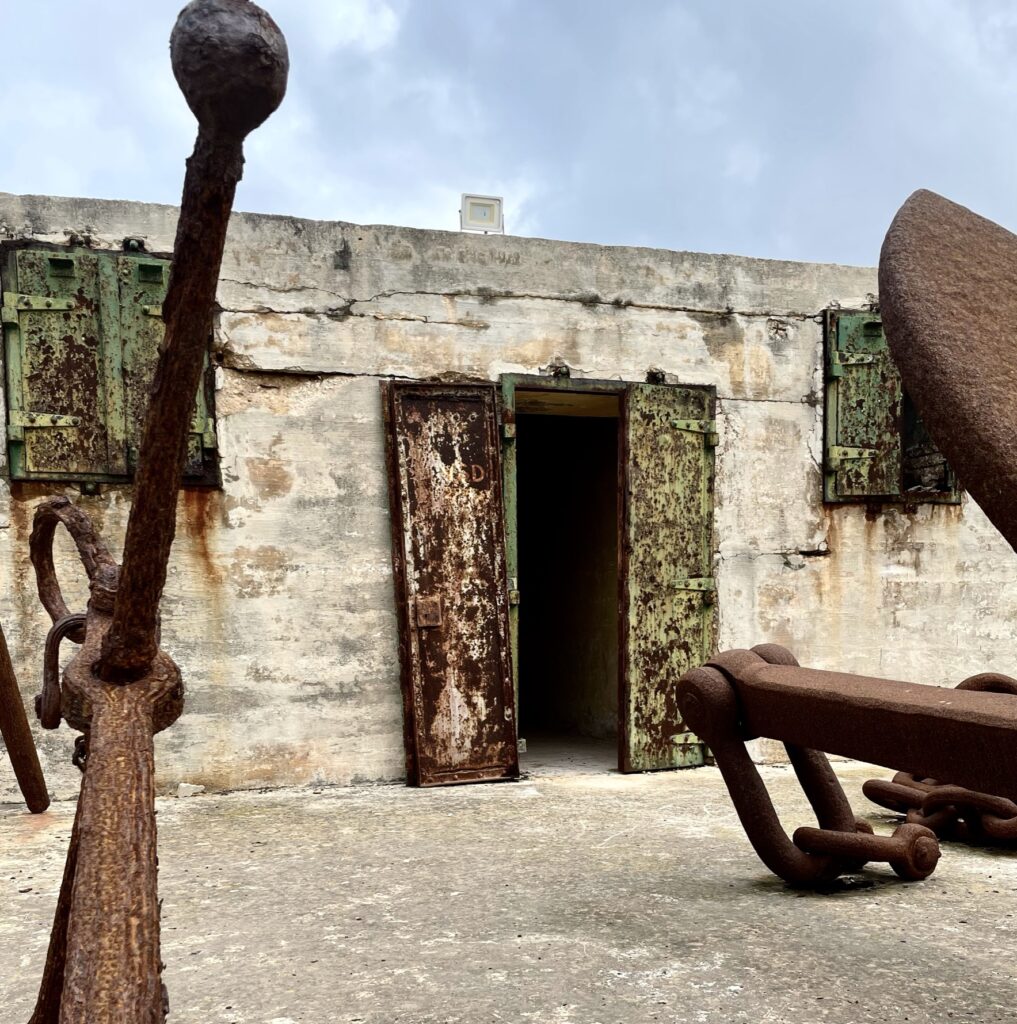
During World War II, Valletta and the rest of Malta became among the most heavily bombed places on Earth. Its harbours, fortresses, and position between Europe and North Africa made it a strategic prize and target. The city suffered severe destruction from Axis bombing campaigns between 1940 and 1942, yet never broke.
In fact, the bravery of the Maltese people during this time was so extraordinary that King George VI awarded the entire island the George Cross, which remains on Malta’s flag to this day. Walking through Valletta today, you’ll see tributes to this legacy in plaques, museums, and stories told by locals whose grandparents lived through the siege.
The Lascaris War Rooms and the National War Museum at Fort St. Elmo are both essential stops to understand just how much this tiny city endured and how heroically it survived.
A Cultural Crossroads: Where Italy, North Africa, and Britain Collide
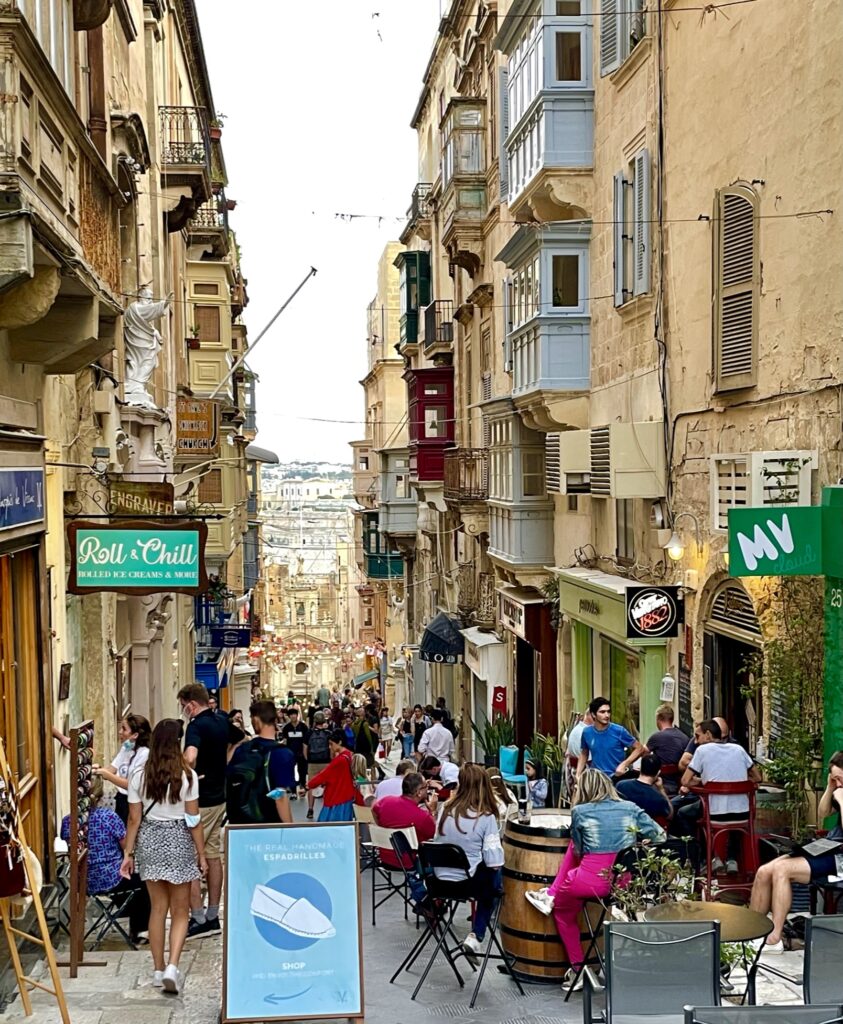
One of the things we fell in love with is how seamlessly Valletta blends Mediterranean, North African, and British influences. You can hear it in the language, a musical mix of Arabic roots, Italian cadence, and English phrasing. You taste it in the food: flaky pastizzi filled with ricotta, rabbit stew, and ftira bread with tuna and olives.
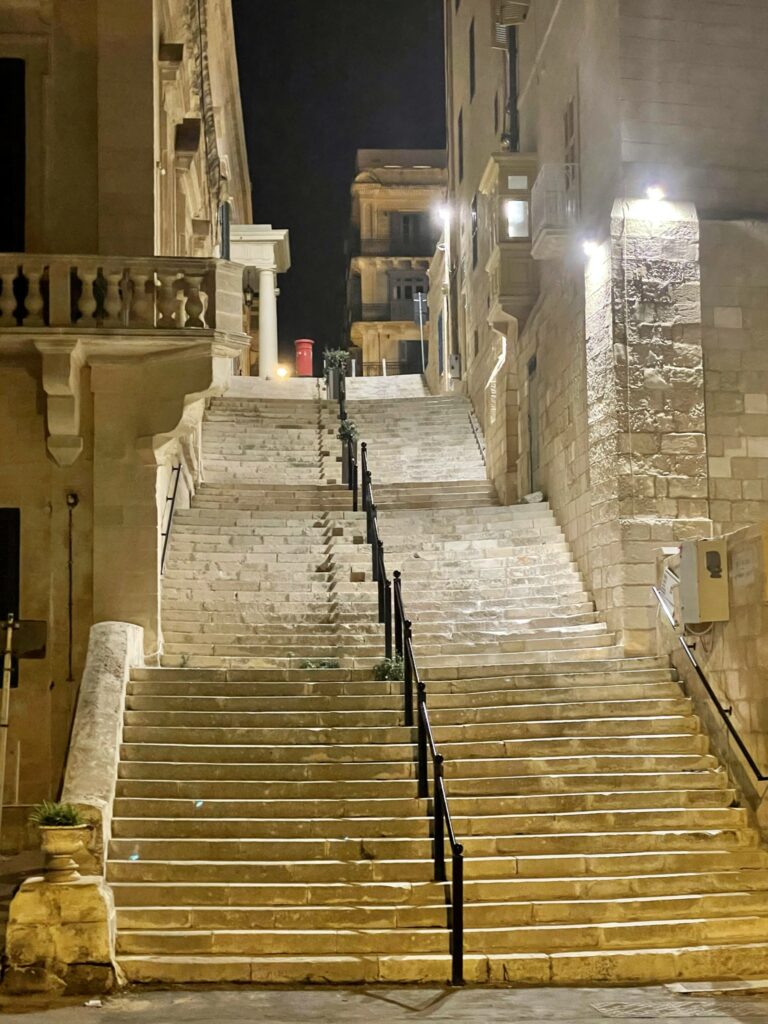
The architecture speaks to this blending, too. Some streets feel like Naples, with their narrow staircases and busy balconies. Others echo Moorish design with colorful tiles and wooden screens. And then you turn a corner and spot a red telephone booth, a British legacy standing proud beside a centuries-old church.
Valletta isn’t one thing. It’s many. That’s what makes it endlessly fascinating.
Our Favorite Thing: The Balconies!
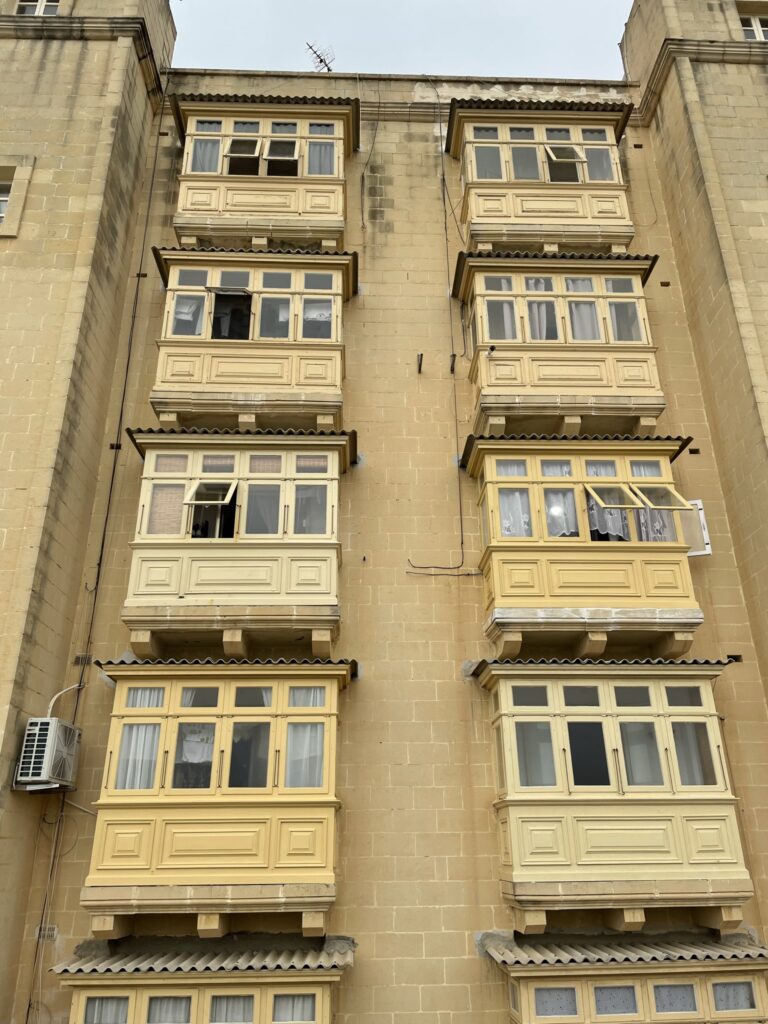
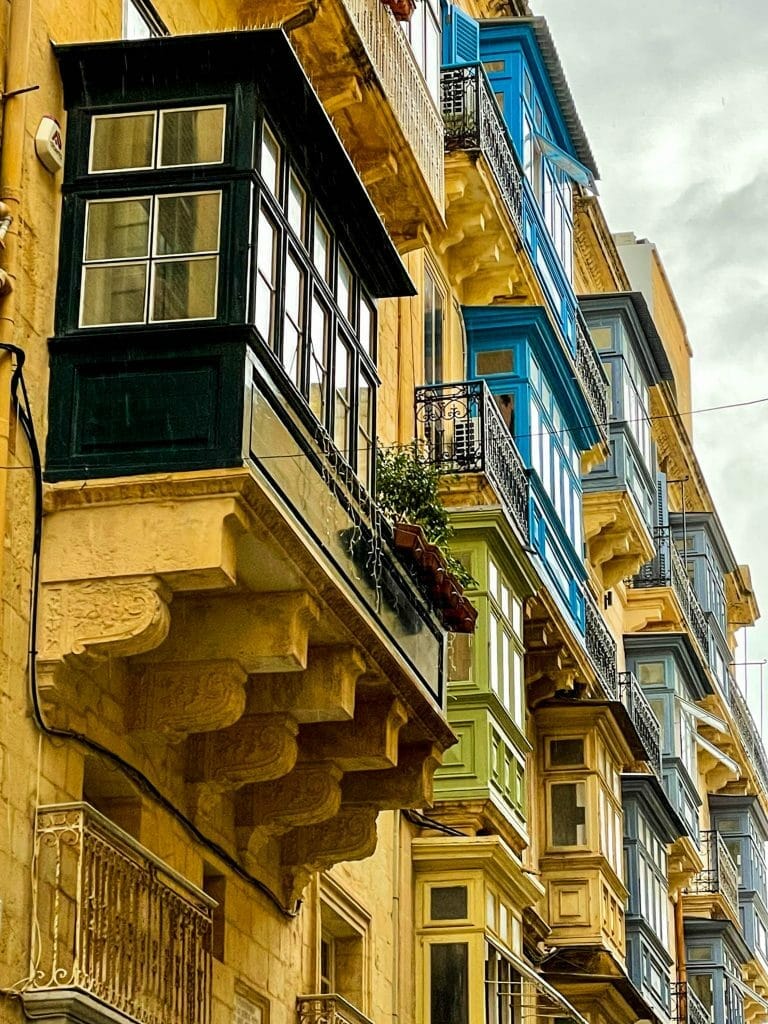
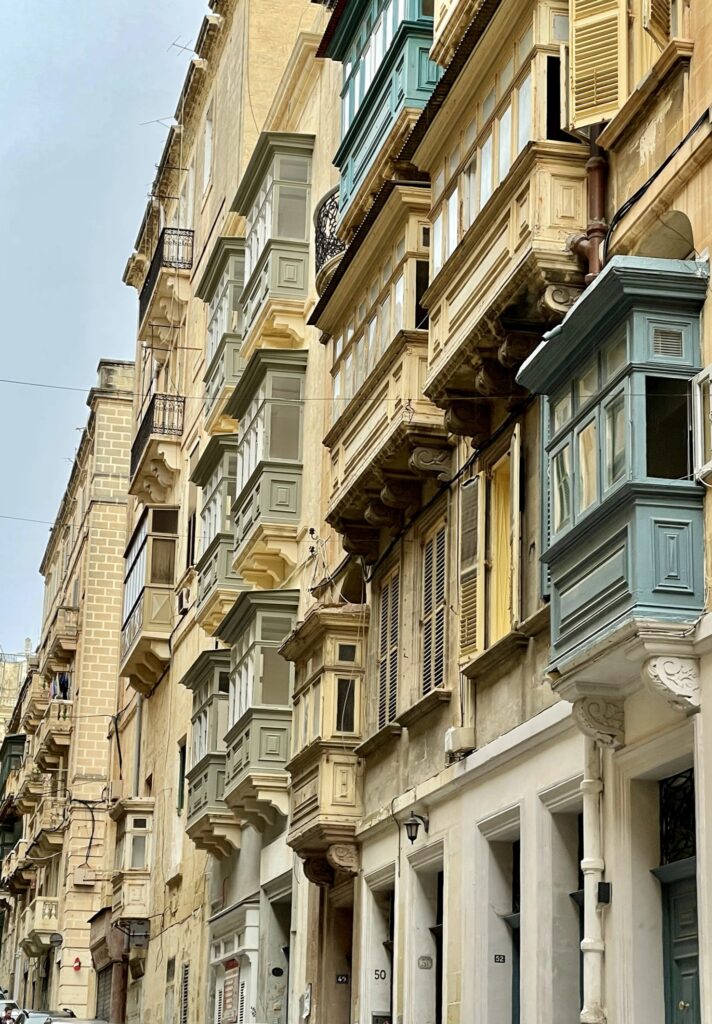
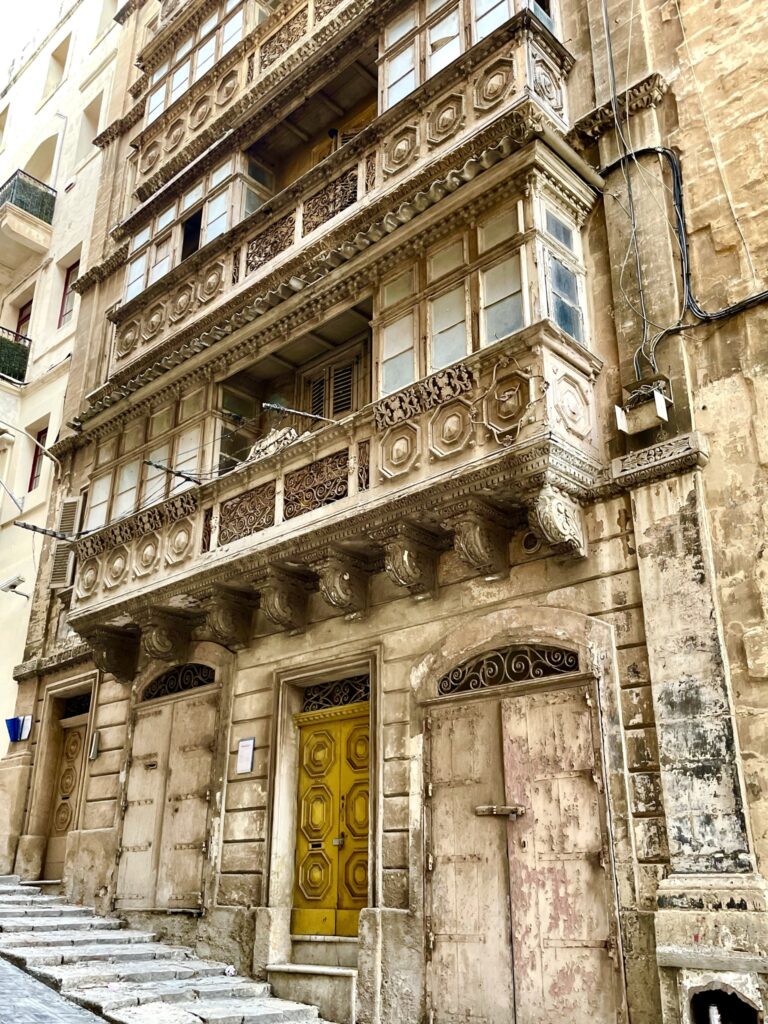
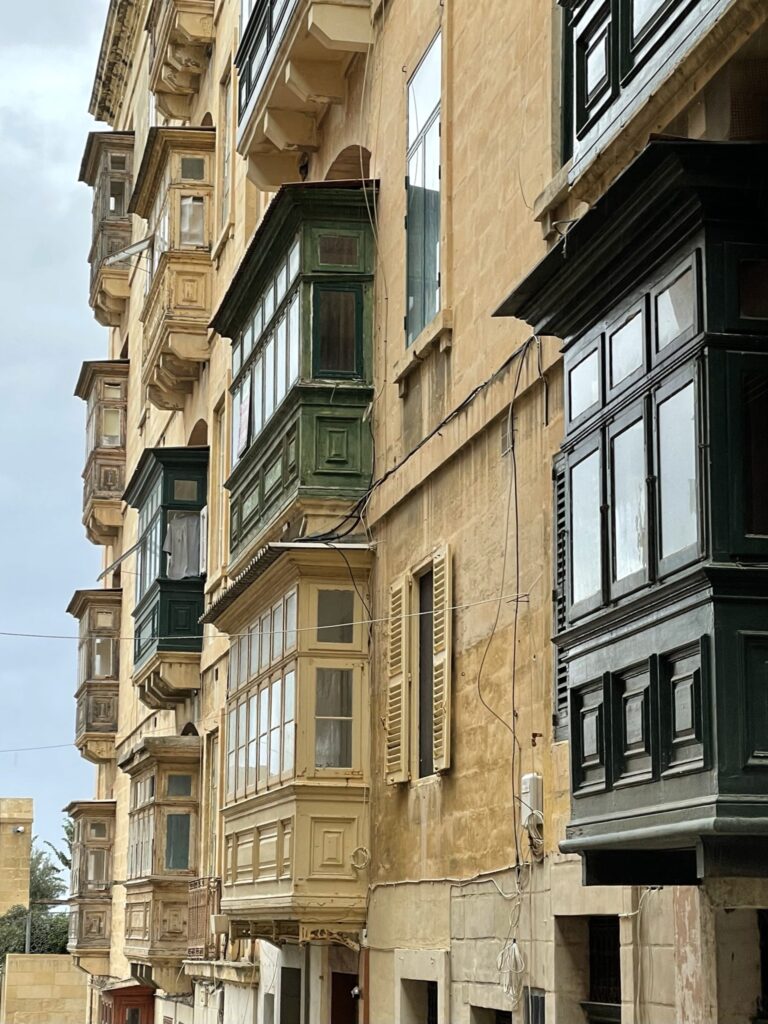
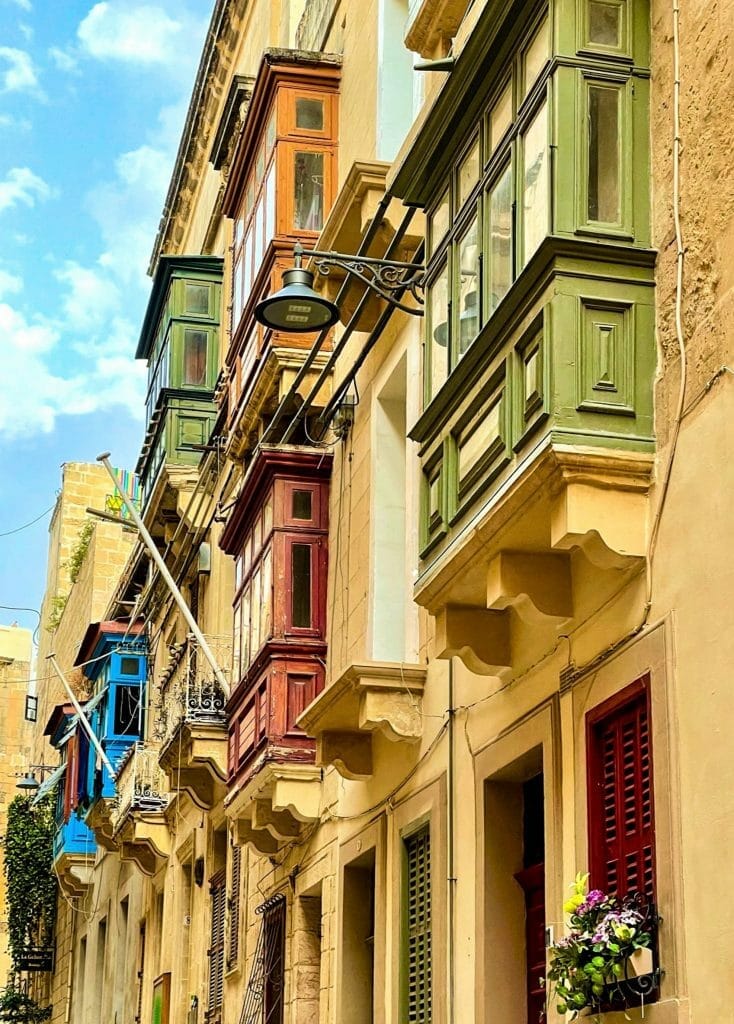
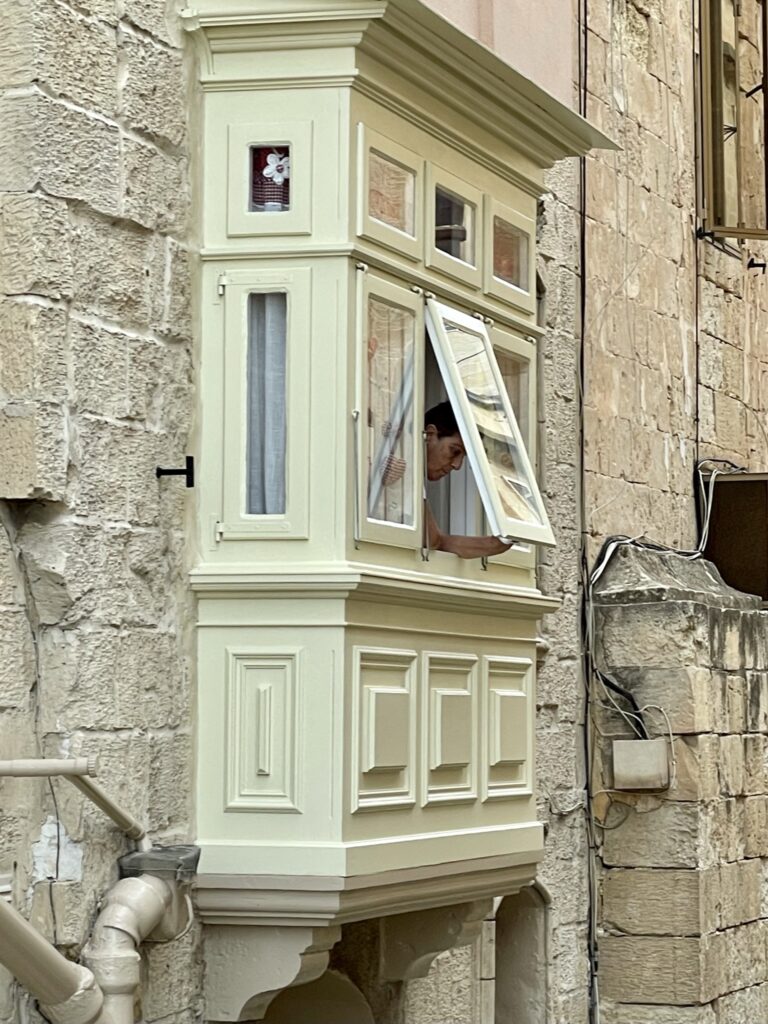
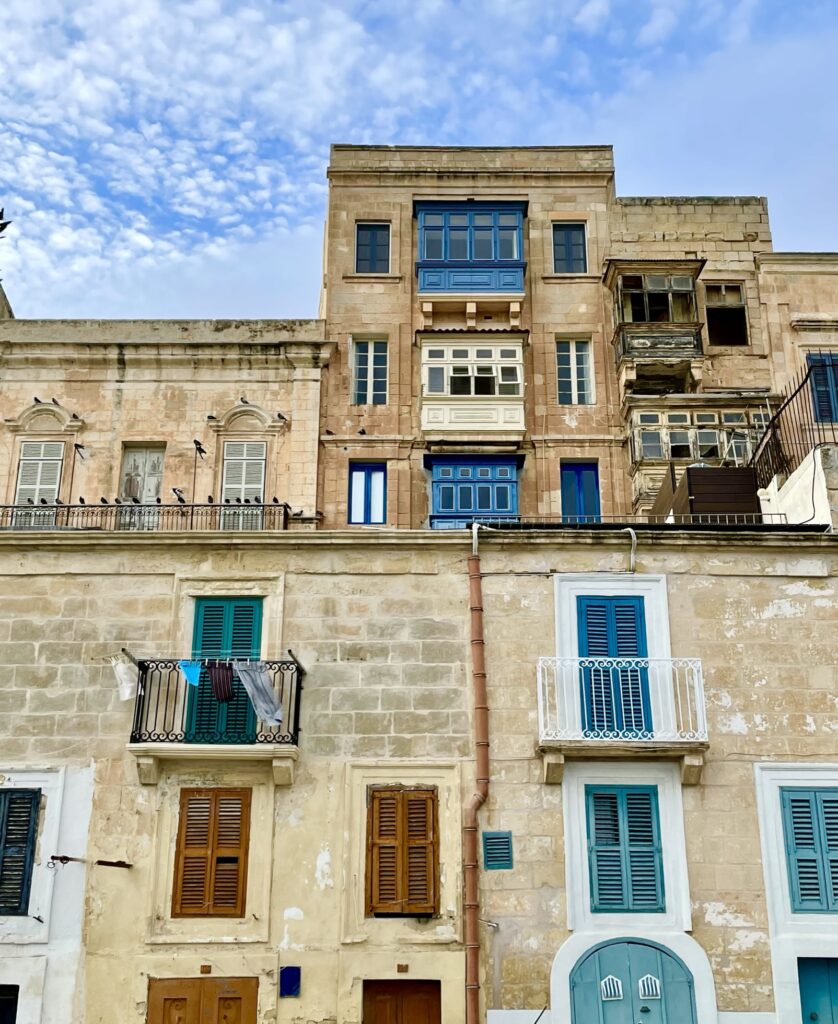
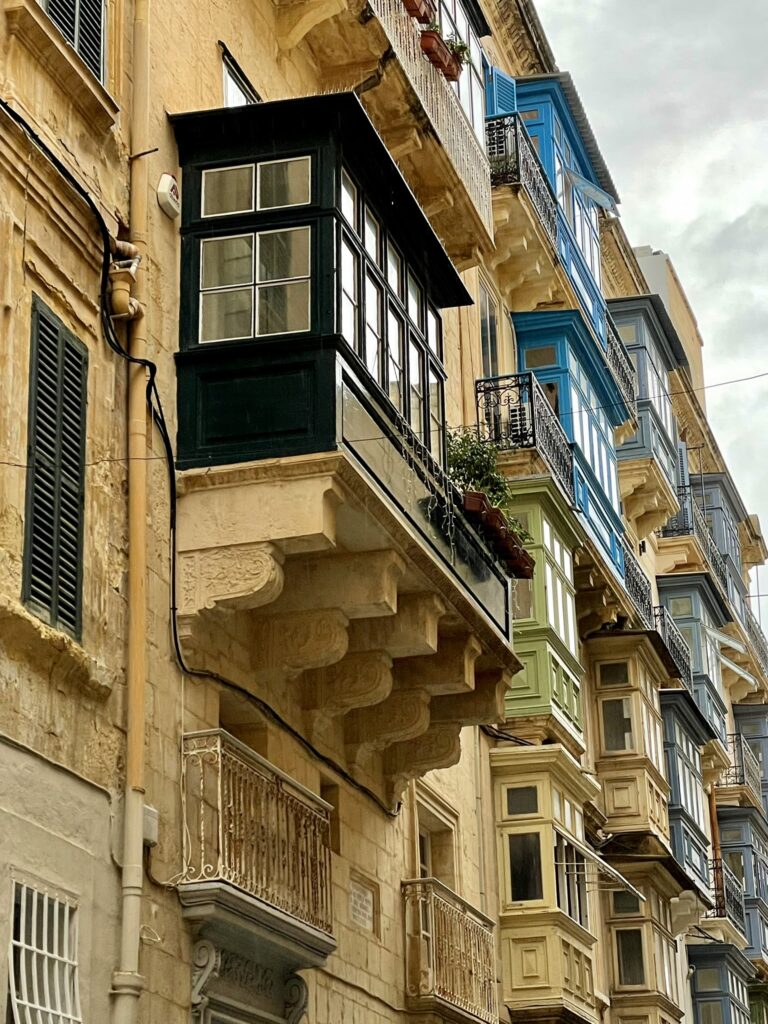
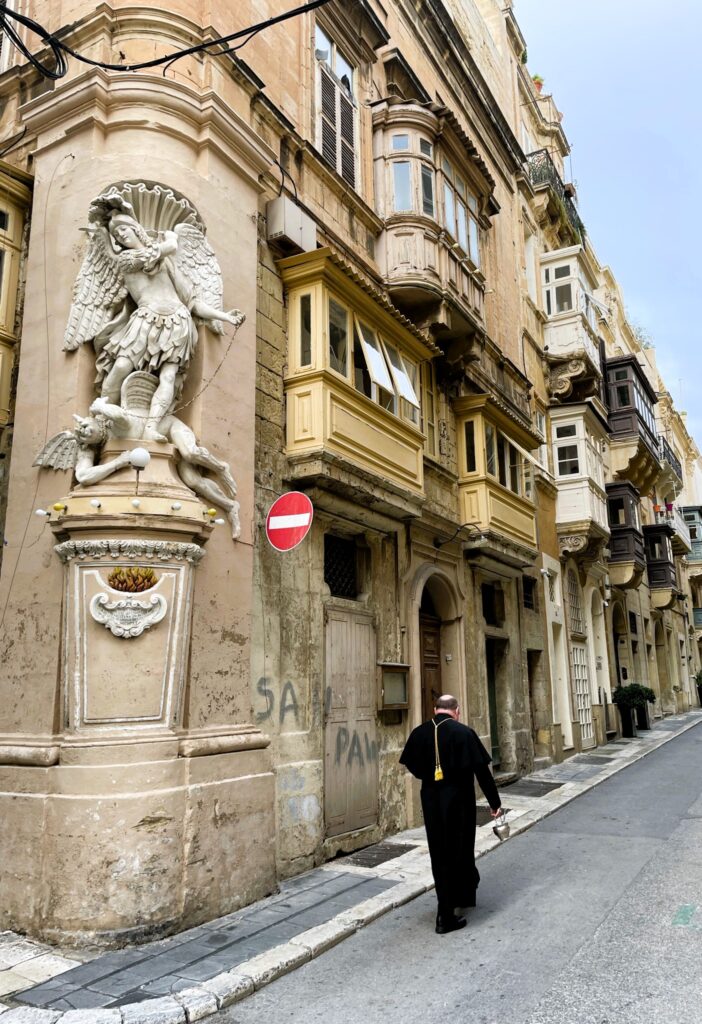
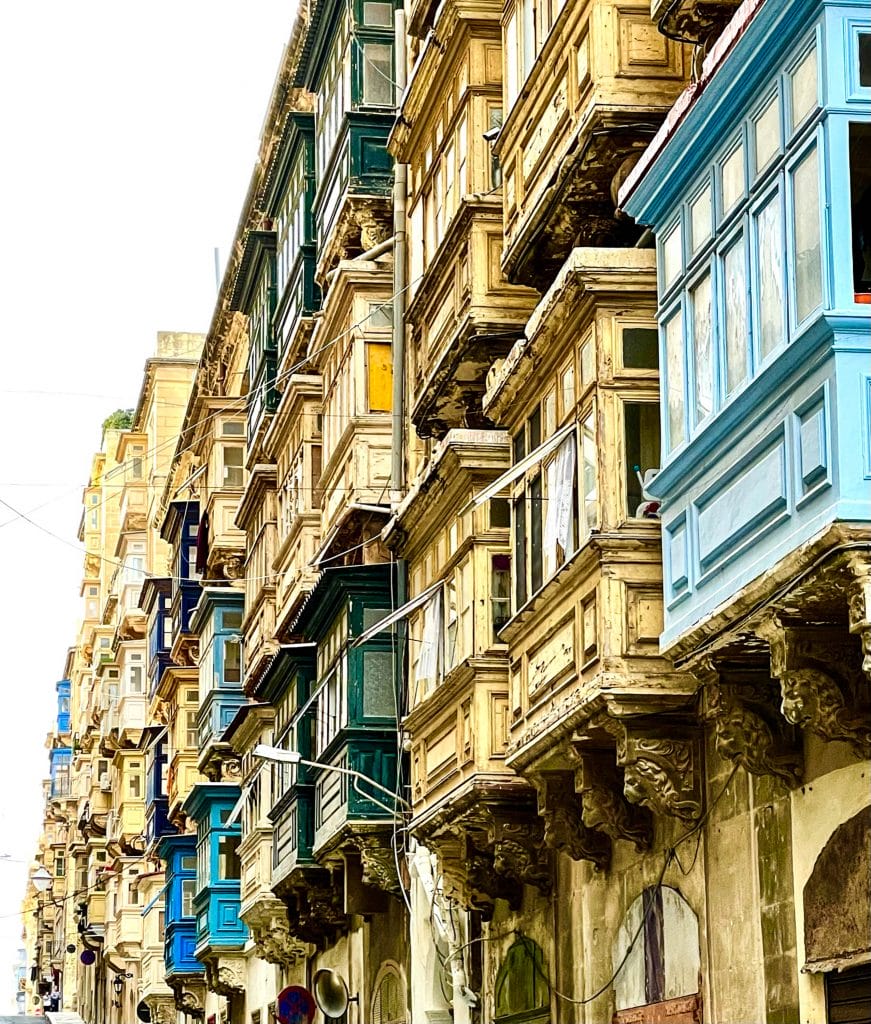
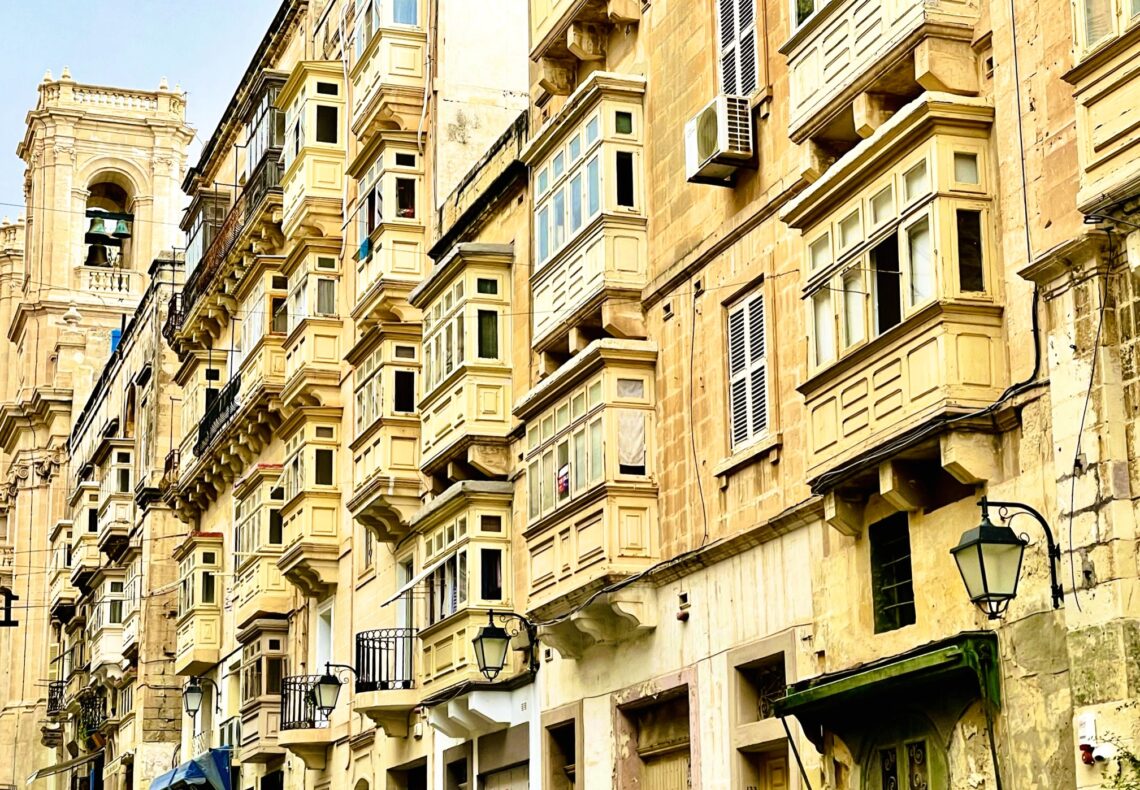
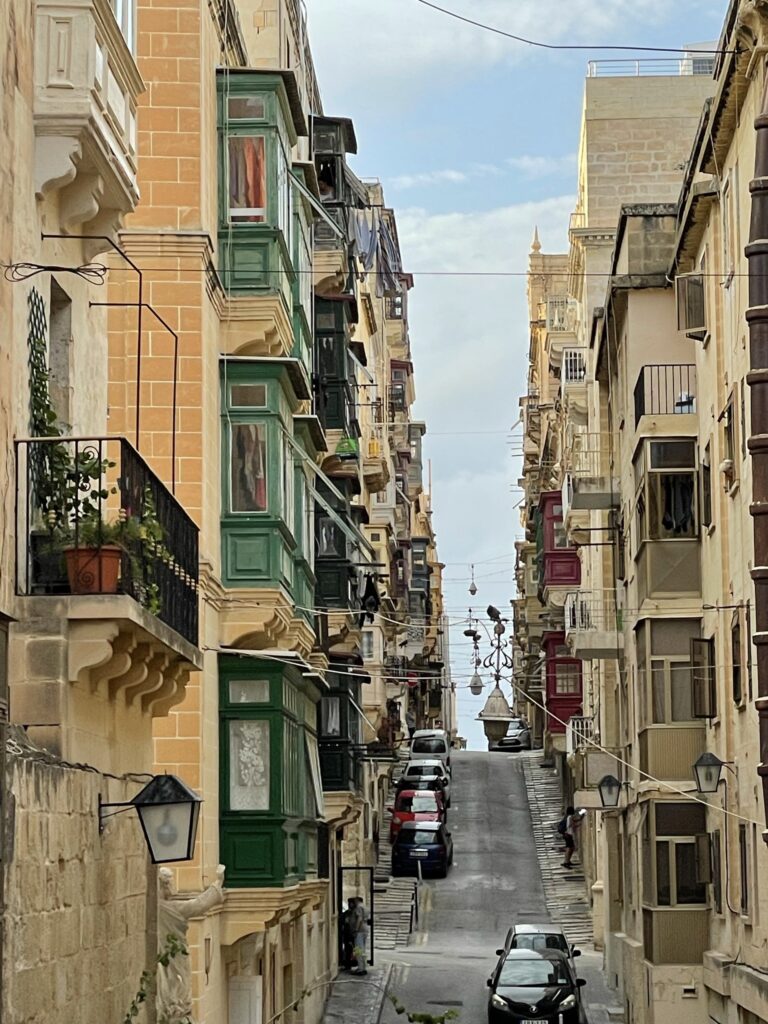
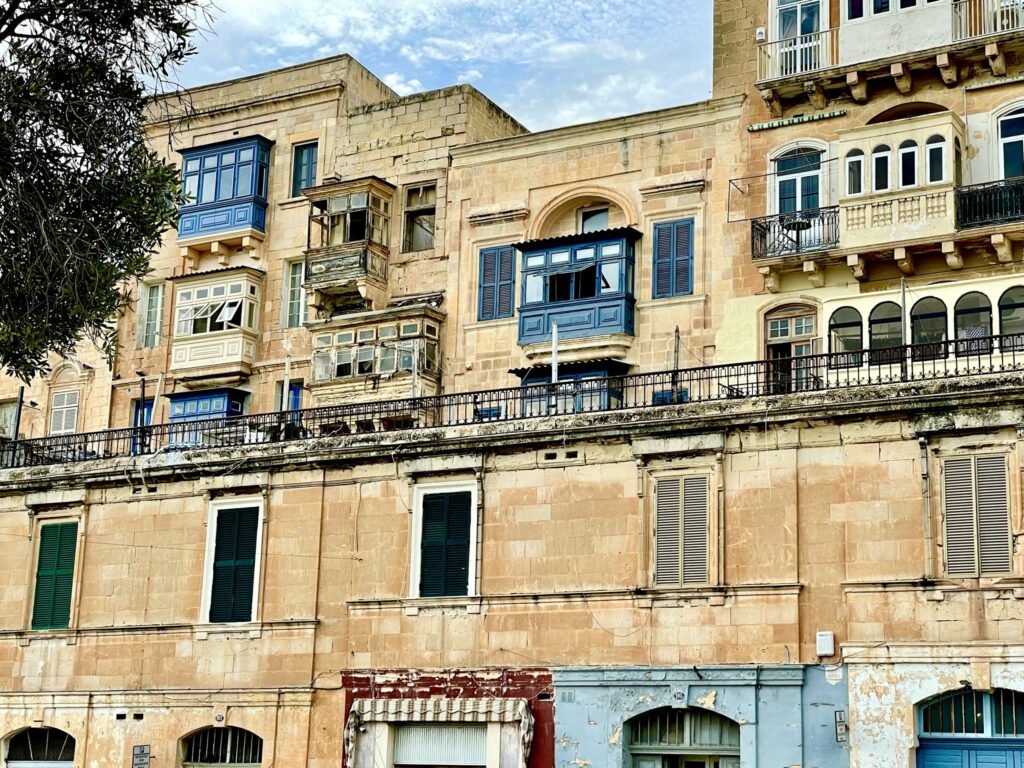
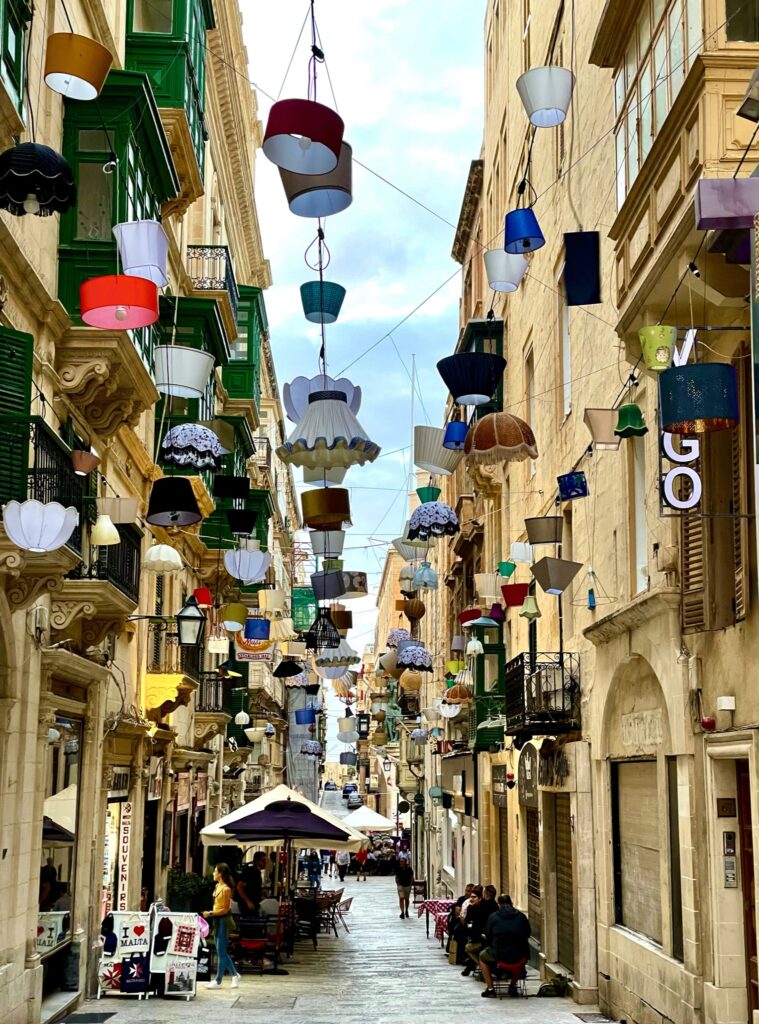
We became slightly obsessed with Maltese balconies. These traditional wooden enclosures jut out from buildings like colorful puzzle pieces, creating an ever-changing mosaic across the skyline. Some are crumbling and sun-worn, others freshly painted in vibrant blues, reds, or greens. Every single one has character.
These balconies aren’t just aesthetic. They were once designed for privacy and to allow families to observe street life discreetly. Now, they are one of the city’s most charming features, and we found ourselves constantly stopping to admire or photograph them. Let’s be honest: we could probably take a complete photo book of just Valletta balconies.
Learn More About Malta in Our Feature: Unveiling the Secrets of Malta: History, Beauty, and Resilience
Top Eleven Things to Do in Valletta, Malta
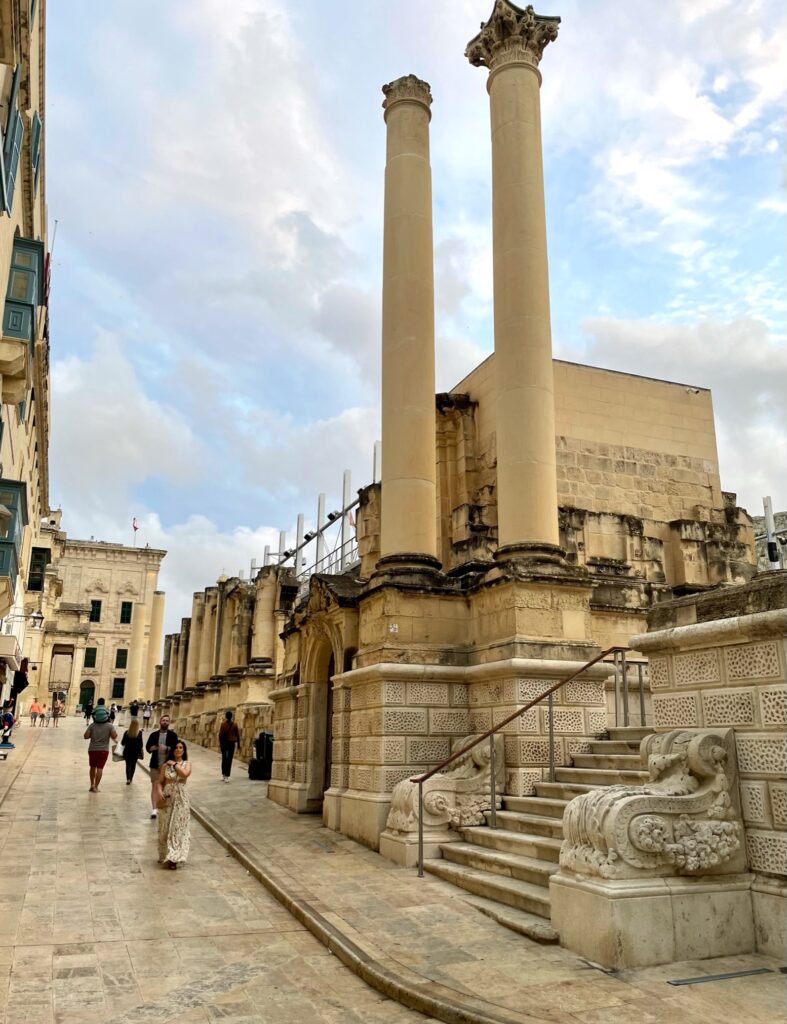
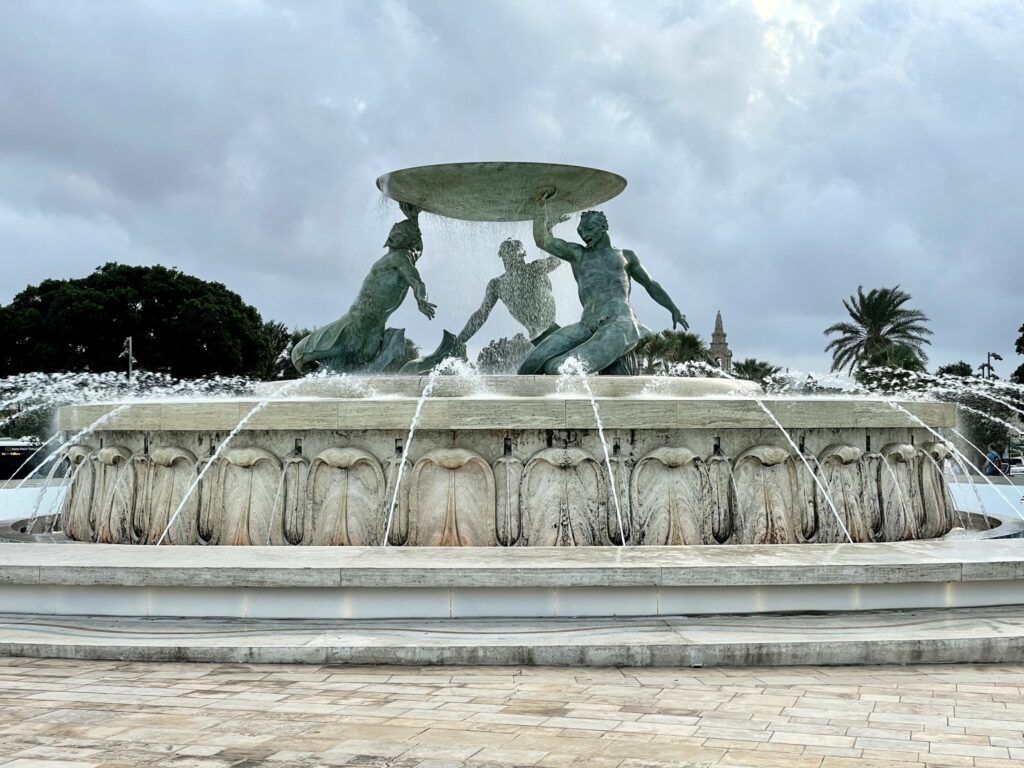
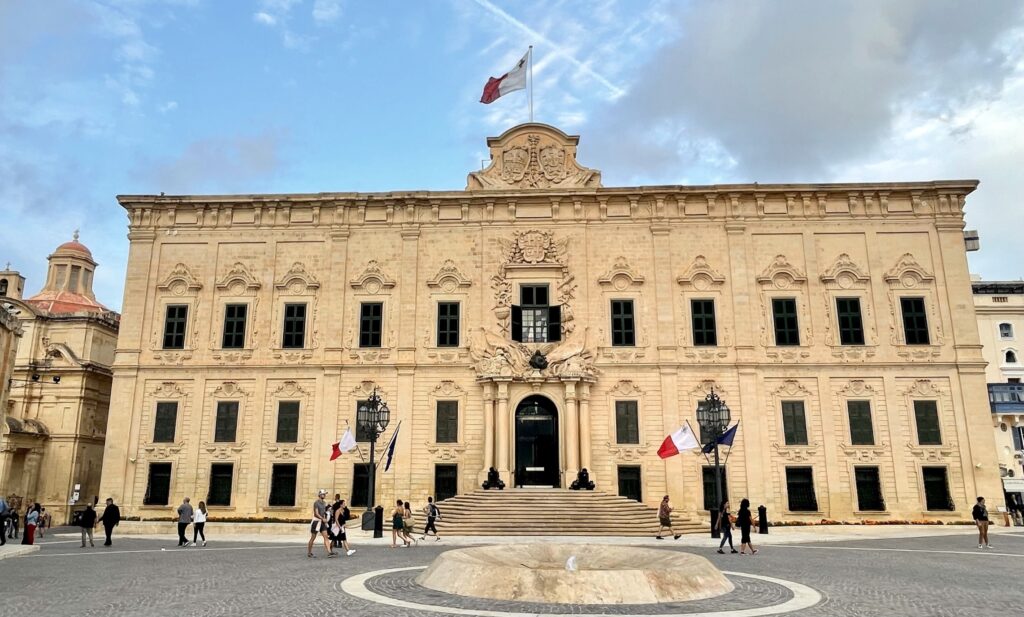
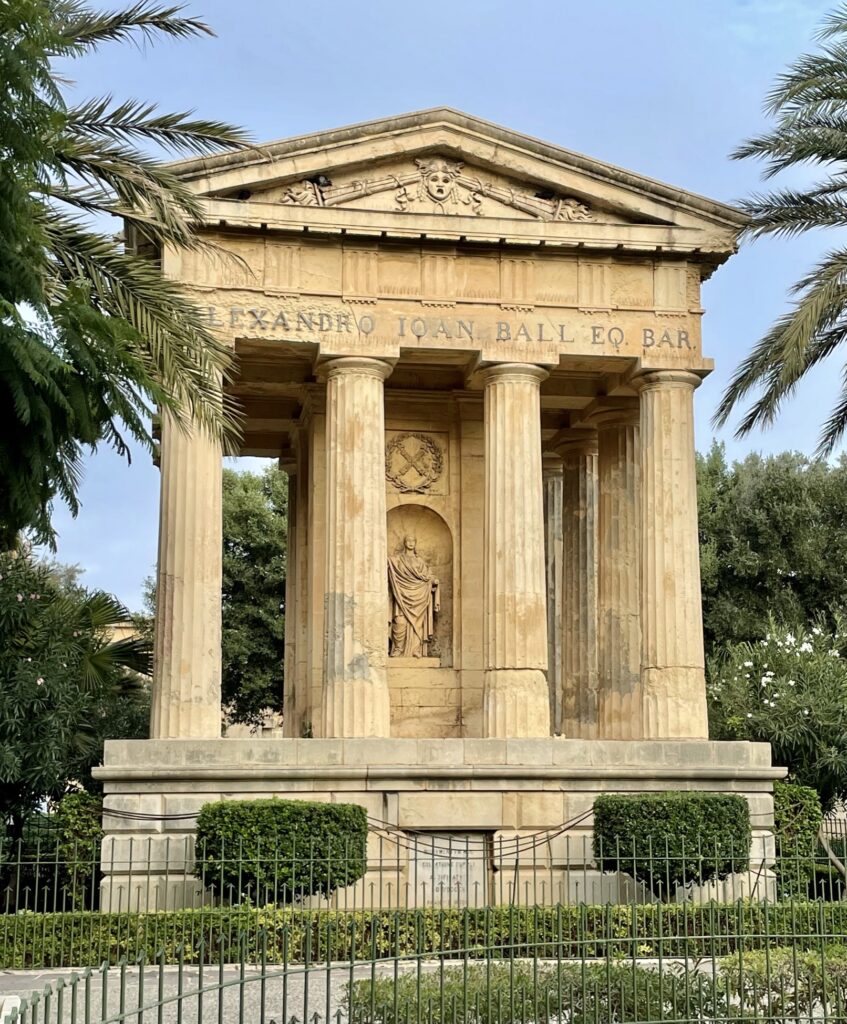
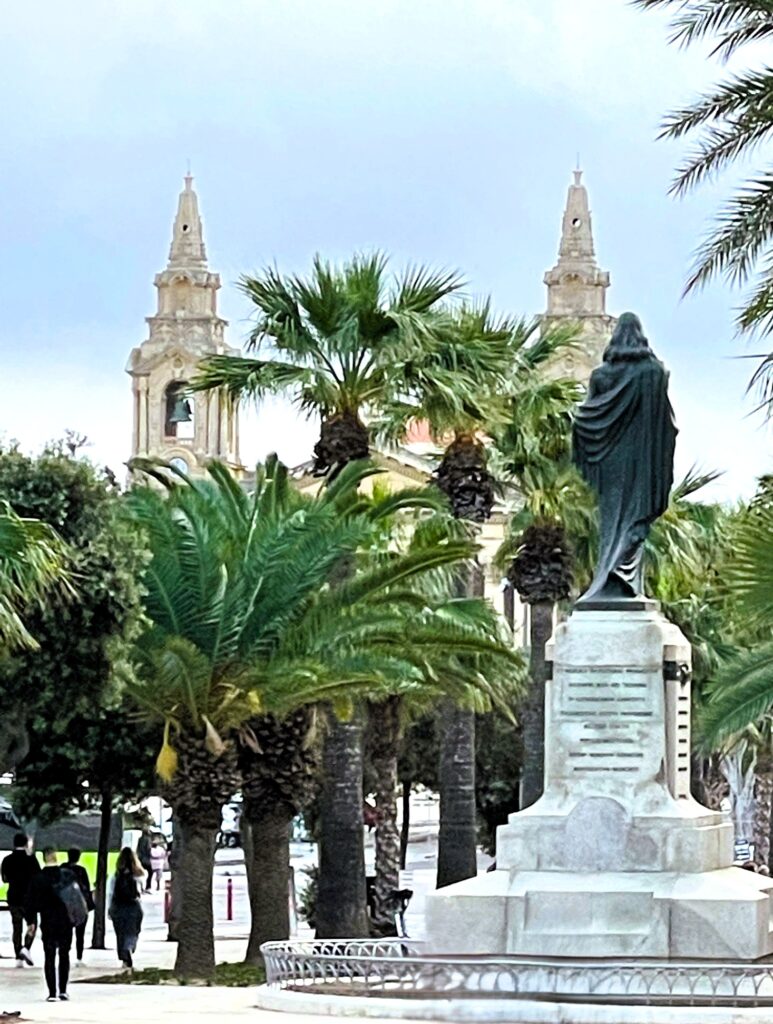
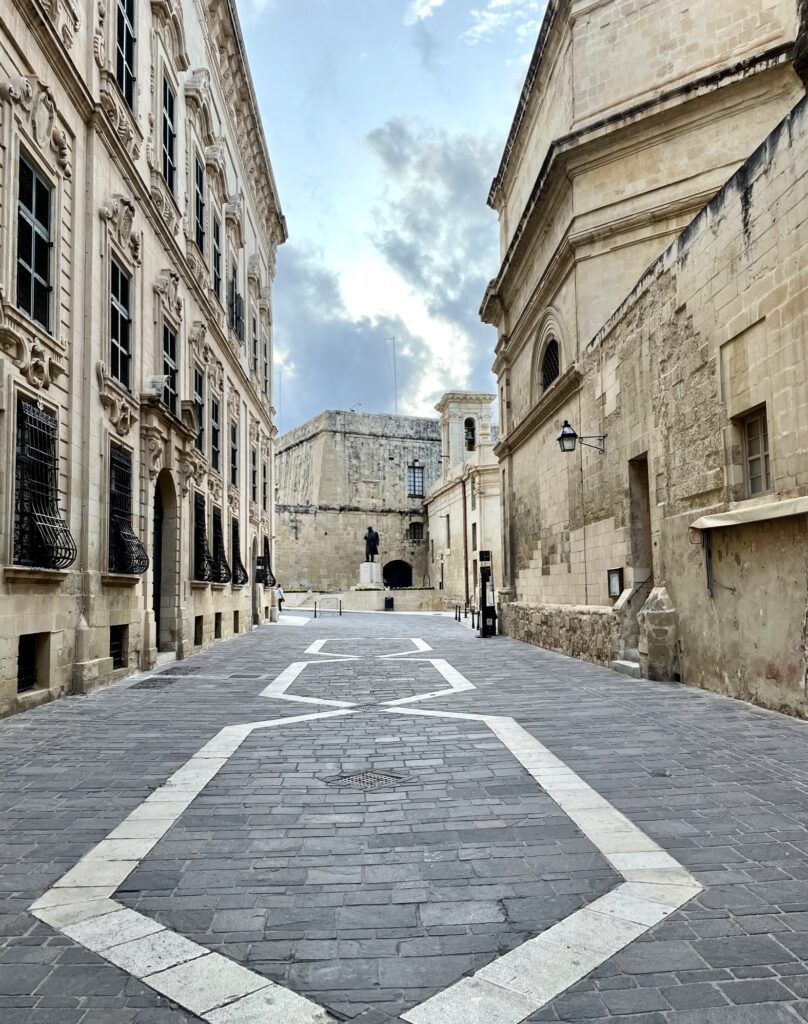
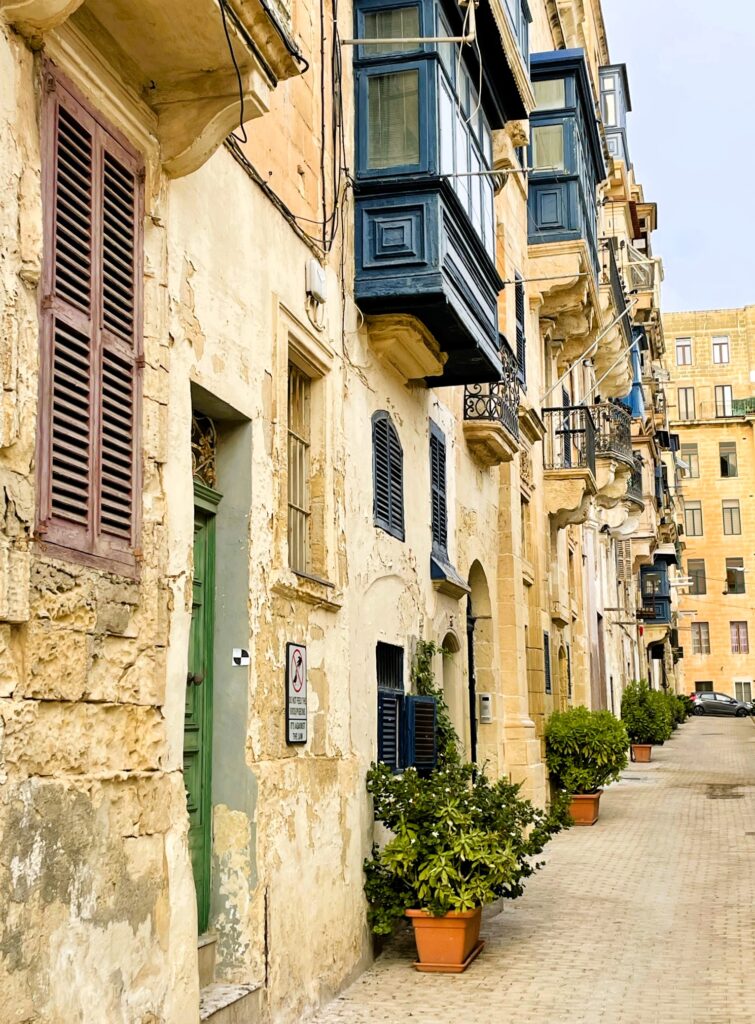
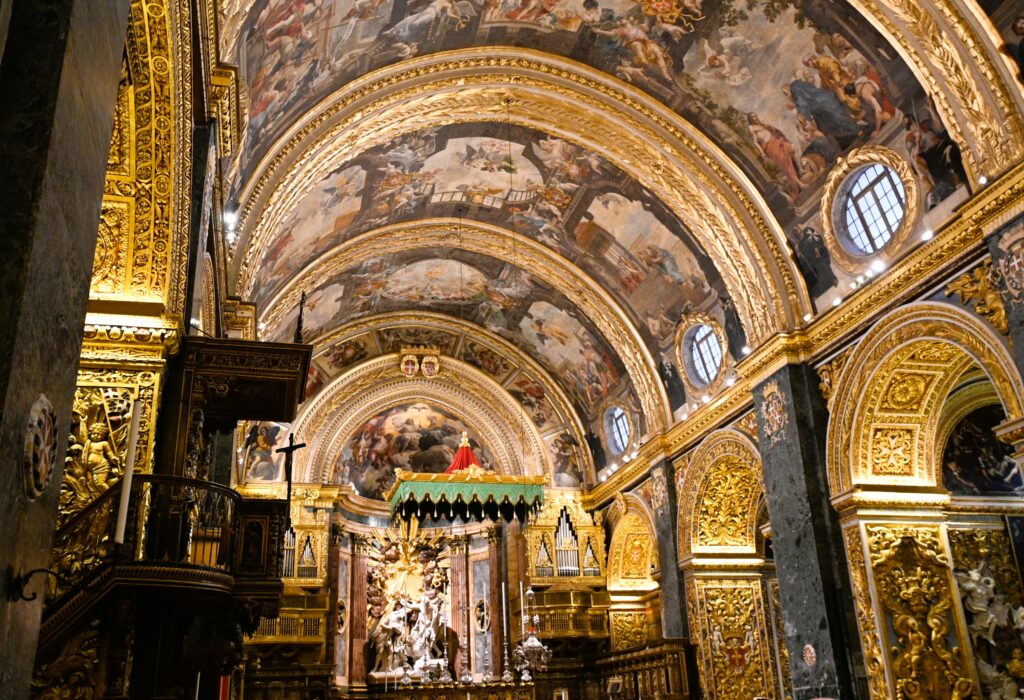
1. Upper Barrakka Gardens
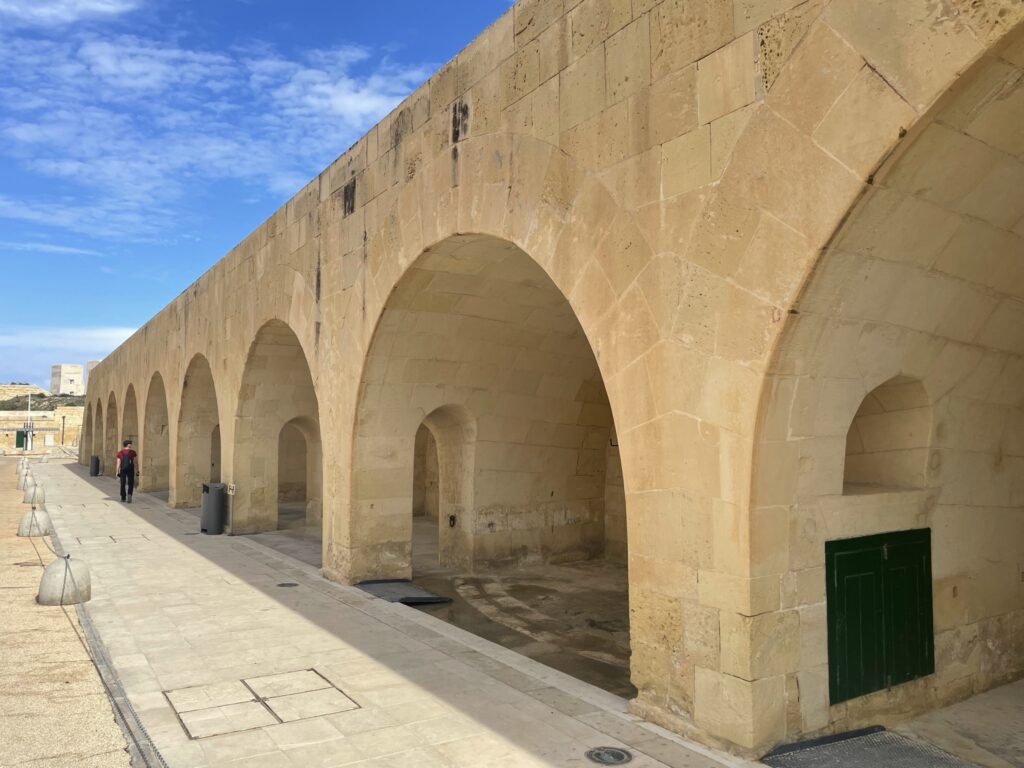
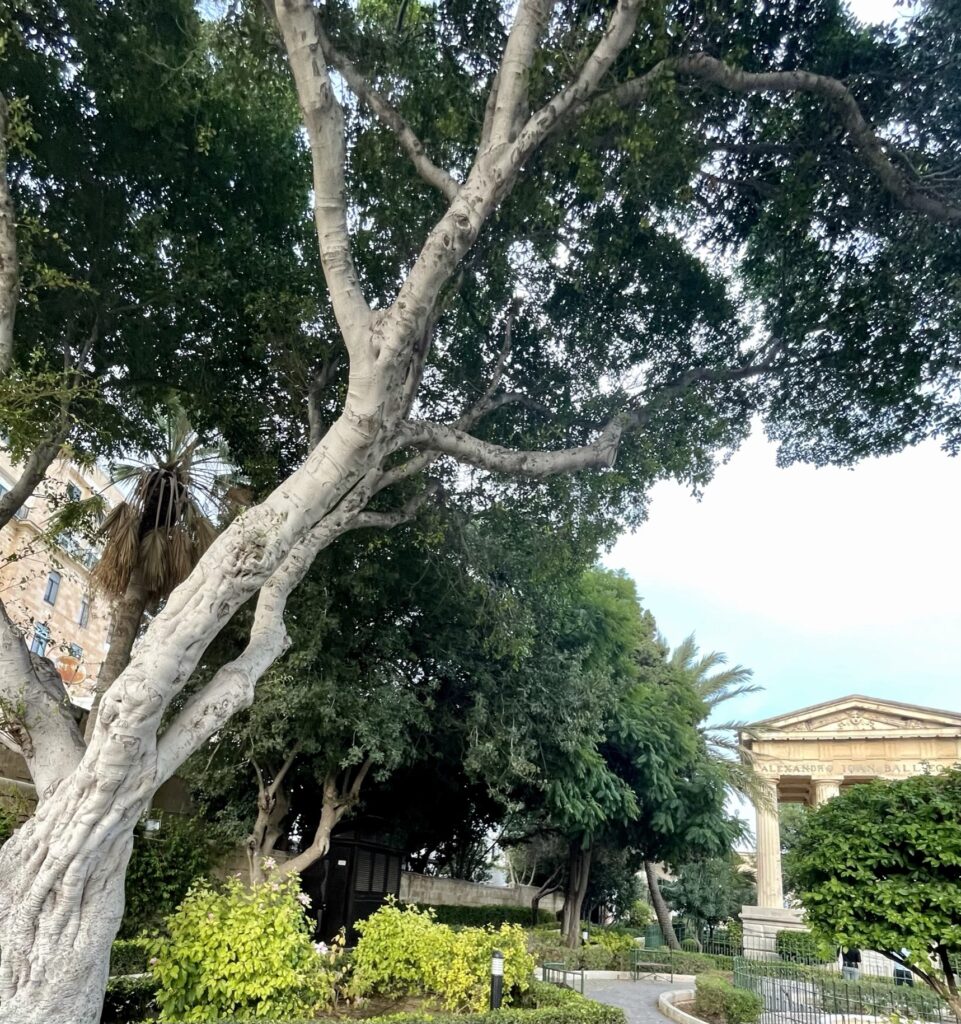
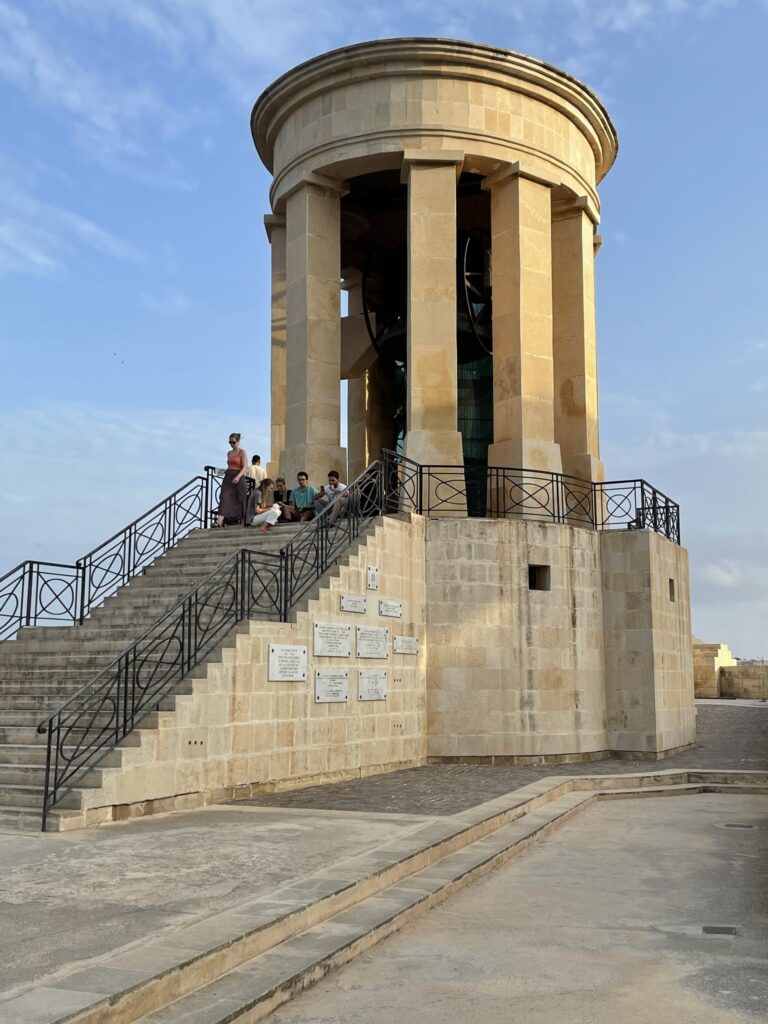
These beautifully manicured gardens are perched on Valletta’s highest point and offer a sweeping view of the Grand Harbour and the Three Cities beyond. Initially built in the 16th century as private gardens for the Knights of St. John, they are now open to the public and are among the most peaceful places in the city. You can stroll among fountains and statues, rest under shaded arcades, or grab a coffee from the small kiosk. At noon, a daily cannon-firing ceremony at the Saluting Battery below adds a touch of drama to the experience.
2. St. John’s Co-Cathedral
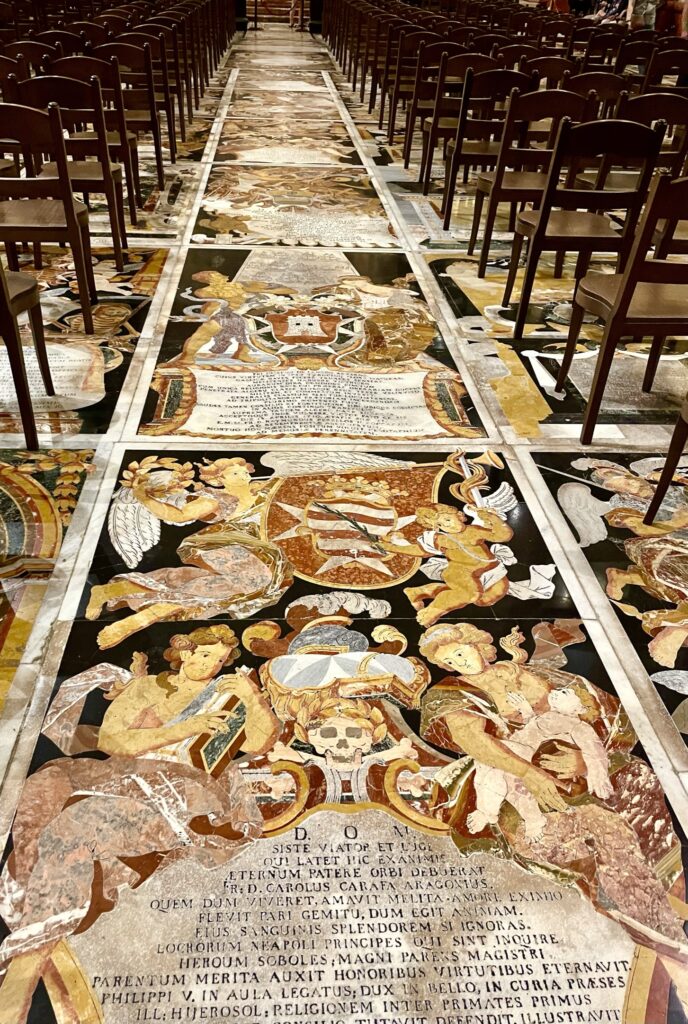
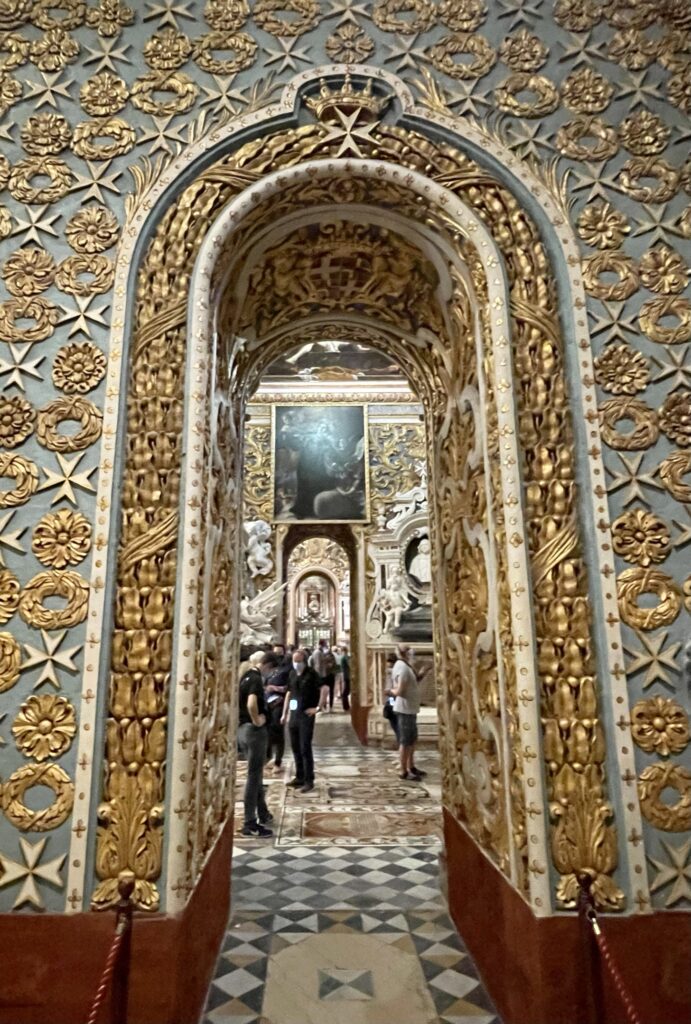
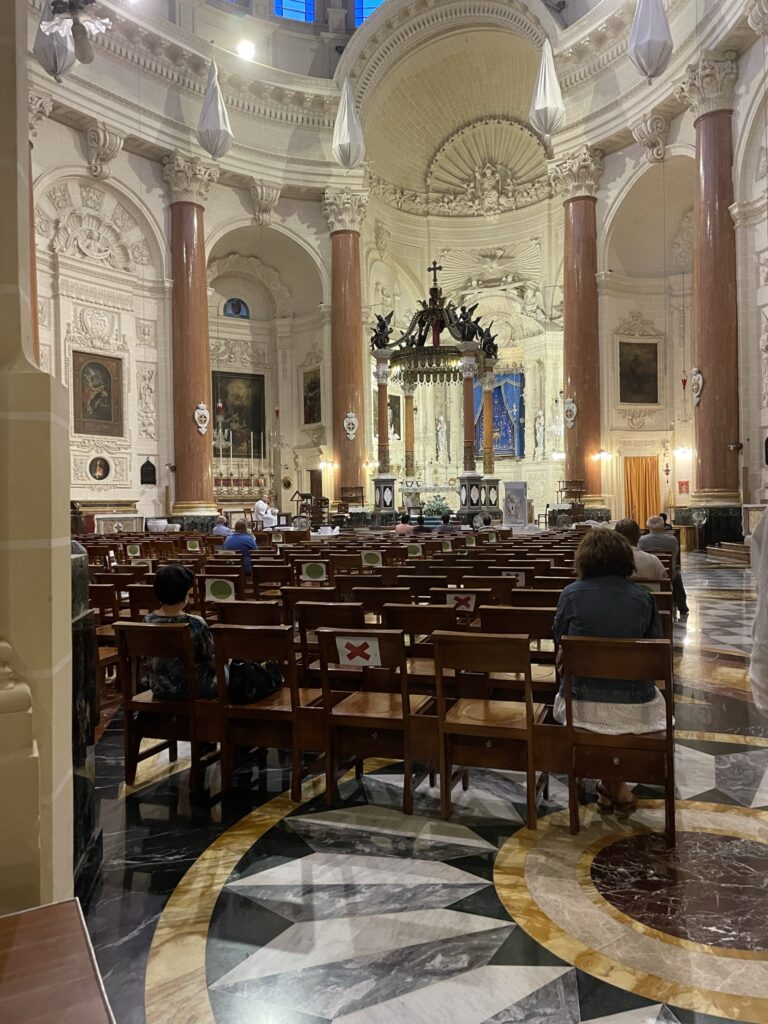
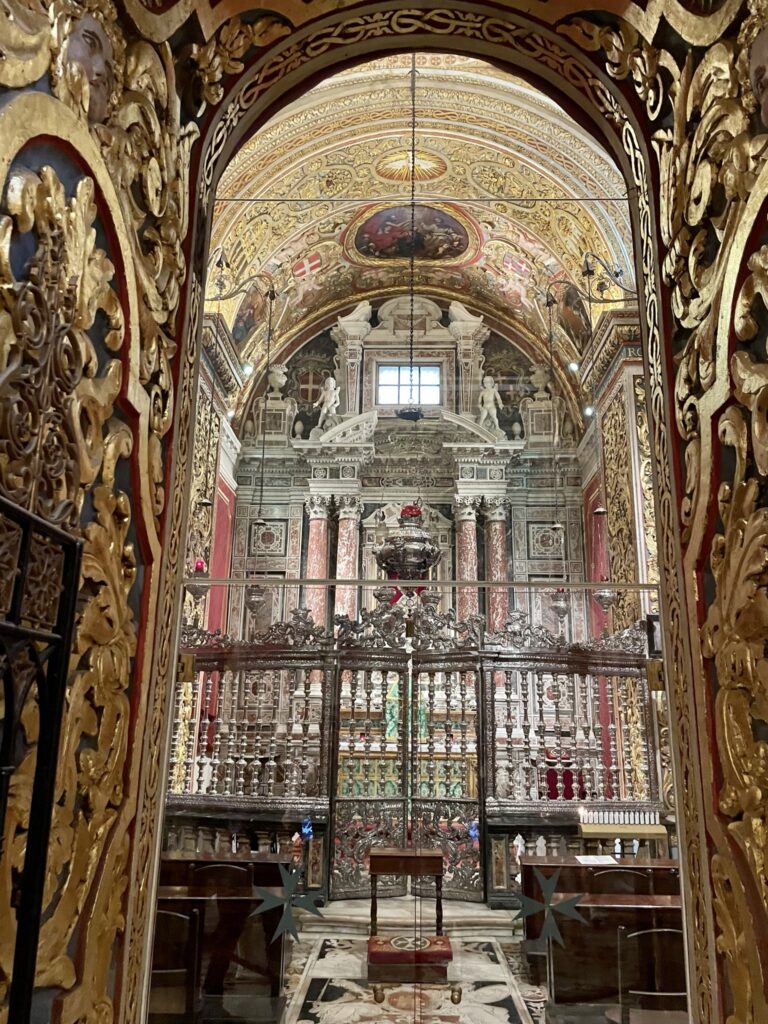
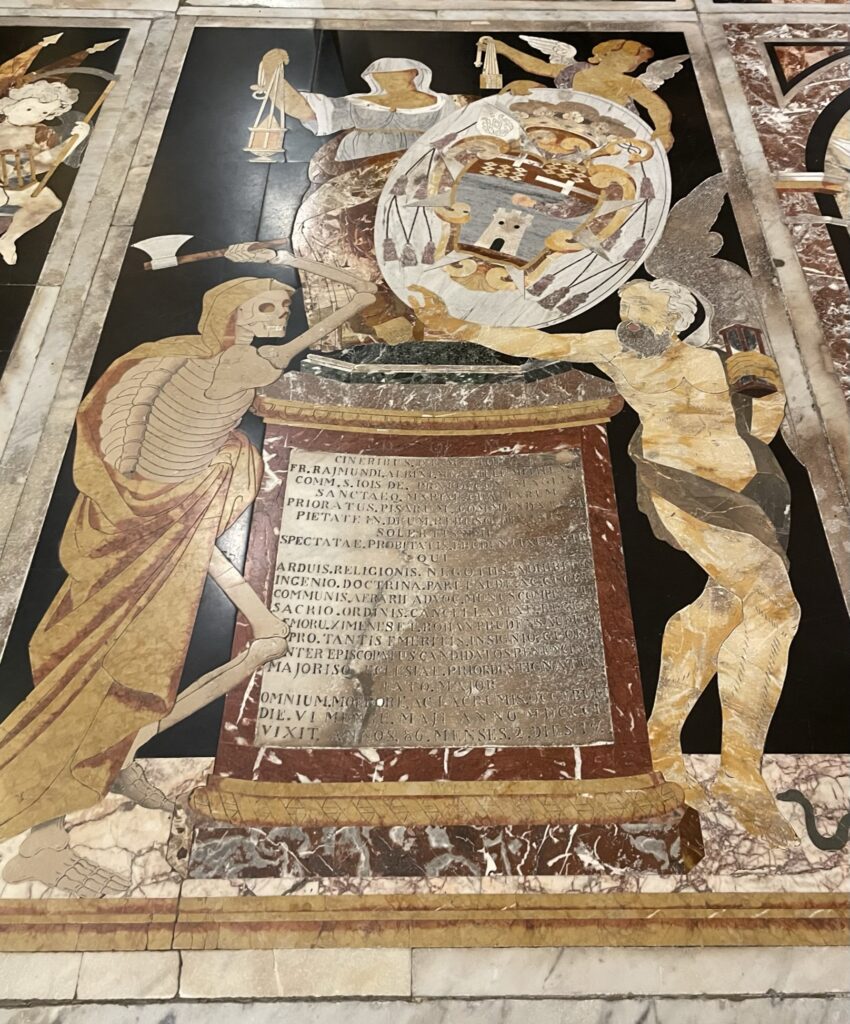
This church might look plain from the outside, but step inside and you’ll find yourself surrounded by opulence. Built between 1572 and 1577, the cathedral is a high point of Baroque architecture. Its interior is lined with gilded carvings, marble floors inlaid with knights’ tombs, and ceiling frescoes that dazzle the eyes. The Oratory houses Caravaggio’s massive painting, “The Beheading of Saint John the Baptist,” his only signed work. Visiting with a guide or on an audio tour helps you appreciate the symbolism and stories behind every artwork and architectural detail.
3. National War Museum at Fort St. Elmo
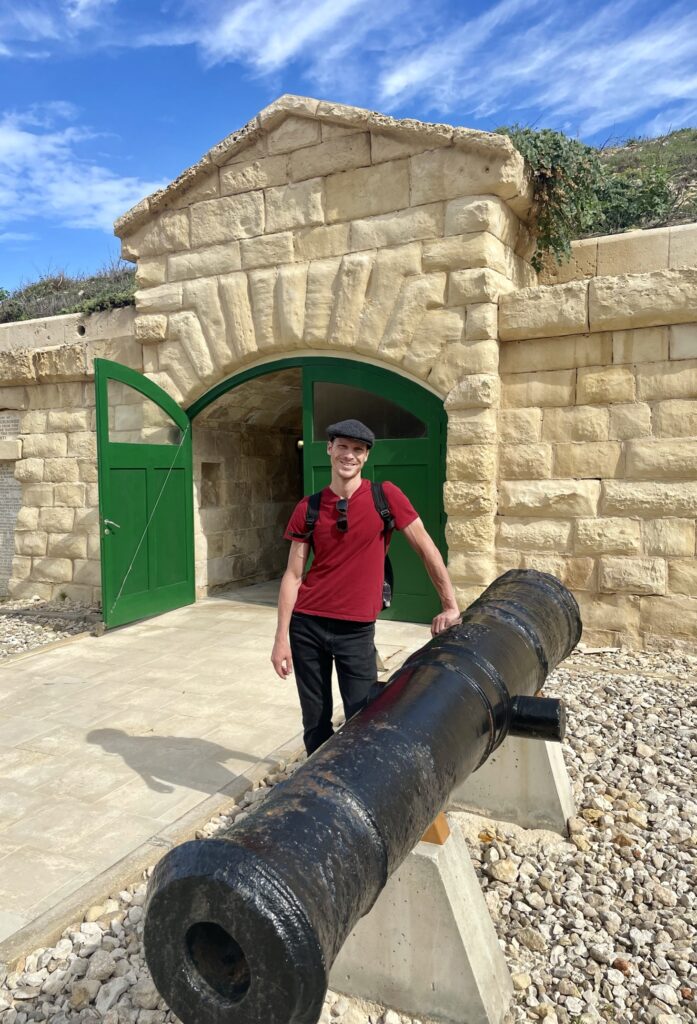
This museum, housed within a star-shaped fort at the tip of the peninsula, walks you through Malta’s military past. It covers everything from the Roman period to Malta’s EU accession, but its primary focus is on World War II. Exhibits include photographs, uniforms, and war relics, such as the George Cross medal. The setting itself adds weight to the experience. Fort St. Elmo was severely bombed during the war and stands as a testament to Malta’s resilience. The views of the sea from its ramparts are also breathtaking.
4. Lascaris War Rooms
Tucked away beneath the Upper Barrakka Gardens, the Lascaris War Rooms are a maze of underground tunnels that served as the Allied command center for the Mediterranean during World War II. Walking through the rooms, you’ll see original maps, communications equipment, and strategy boards. Guided tours vividly recount how British officers coordinated naval battles and defended Malta from here. It’s an immersive experience that gives insight into the pressure and precision of wartime strategy.
5. Manoel Theatre
Built in 1731 by the Grand Master of the Knights of Malta, the Manoel Theatre is one of the oldest operating theaters in Europe. The intimate auditorium features gold-leafed boxes and a stunning painted ceiling, creating an atmosphere of old-world elegance. Whether you attend a live opera or a classical concert, or take a daytime tour, the theater offers a deep dive into Malta’s cultural life. Performances often include English-language productions, making it accessible for tourists.
6. Casa Rocca Piccola
A 16th-century noble residence still occupied by descendants of the original family, Casa Rocca Piccola offers an unusually personal window into Malta’s aristocratic life. Guided tours take you through antique-filled rooms, family heirlooms, and a collection of historical artifacts. A highlight is the World War II air-raid shelter, carved into the rock below the house. You’ll leave with a sense of what life was like for Malta’s elite through centuries of war, colonial rule, and modernization.
7. Valletta Food Market (Is-Suq tal-Belt)
Located on Merchant Street, this Victorian-era market has been beautifully restored and now combines traditional market stalls with gourmet food vendors. You can sample everything from Maltese sausage and ftira bread to sushi and Neapolitan pizza. It’s a great place to try local dishes in a casual setting and mingle with both locals and other travelers. Live music performances often take place here in the evenings, adding to its lively atmosphere.
8. Grand Harbour Boat Tour
Exploring Valletta from the water is an entirely different experience. A Grand Harbour boat tour, especially in a traditional Maltese dghajsa, lets you appreciate the city’s massive fortifications, the shipyards, and the beautiful Three Cities across the harbour. Many tours offer historical commentary, detailing how the harbours played key roles in wars and commerce. Sunset cruises are especially magical as the limestone buildings glow in golden light.
9. St. James Cavalier (Spazju Kreattiv)
This 16th-century fortress has been transformed into Malta’s national center for creativity. Spazju Kreattiv houses galleries, theaters, and artist studios, and regularly hosts exhibitions, performances, and workshops. It’s a place where old meets new, and visitors can enjoy everything from indie films and contemporary dance to Maltese art retrospectives. The building itself, with its thick walls and modern adaptations, is worth exploring.
10. Valletta Nightlife and Wine Tasting
Valletta’s nightlife is a blend of cozy sophistication and local charm. Bridge Bar is a must on Friday nights, when local jazz musicians play to a crowd lounging on cushions along the stone steps. For a more curated experience, join a guided wine tasting at local bars or wineries specializing in Maltese grape varietals. You’ll try reds and whites made from Gellewza and Girgentina grapes, often paired with local cheeses, olives, and sun-dried tomatoes.
11. Take It All In
Some of our favorite moments in Valletta were not tied to a museum, church, or historic site.
Built on a peninsula and surrounded by water, Valletta seems to offer a new view around every corner. One moment you are looking down a limestone street toward the Mediterranean. The next, you are gazing across the Grand Harbour toward the Three Cities.
While the Upper Barrakka Gardens provide the most famous panorama, some of our favorite viewpoints were the ones we discovered by simply wandering. Valletta rewards those who slow down and explore beyond a checklist.
Sometimes the best thing to do in Valletta is find a quiet spot, take in the harbour views, and appreciate one of the Mediterranean’s most beautiful historic cities.
The Most Attractive Feature of Valletta, Malta

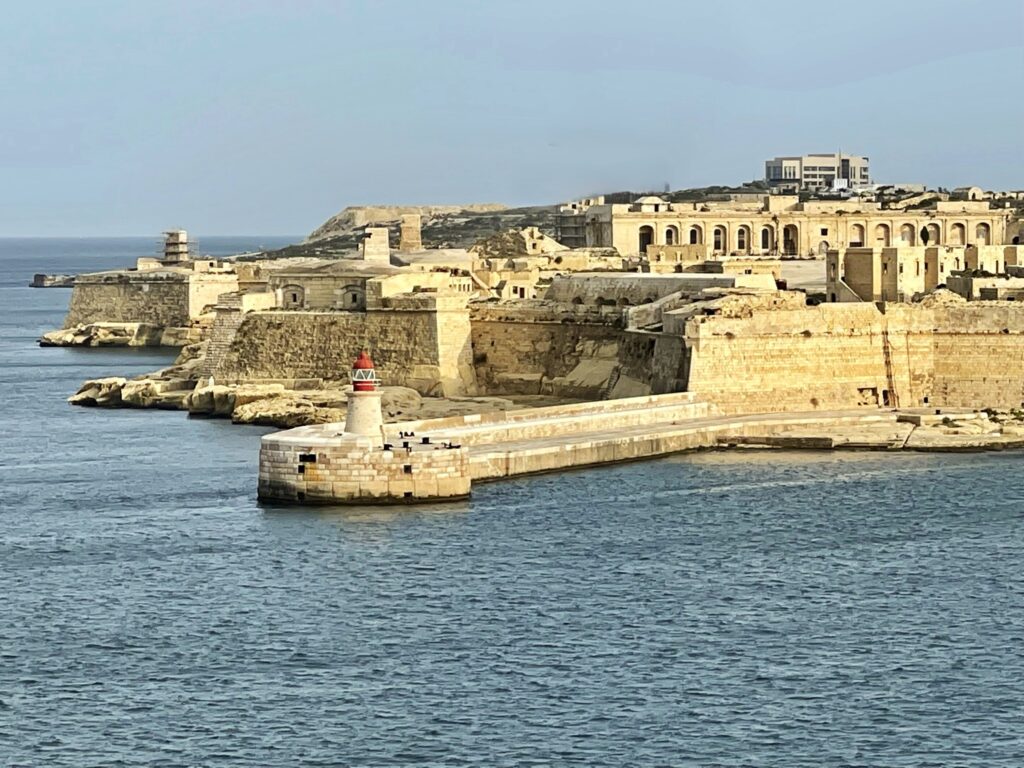
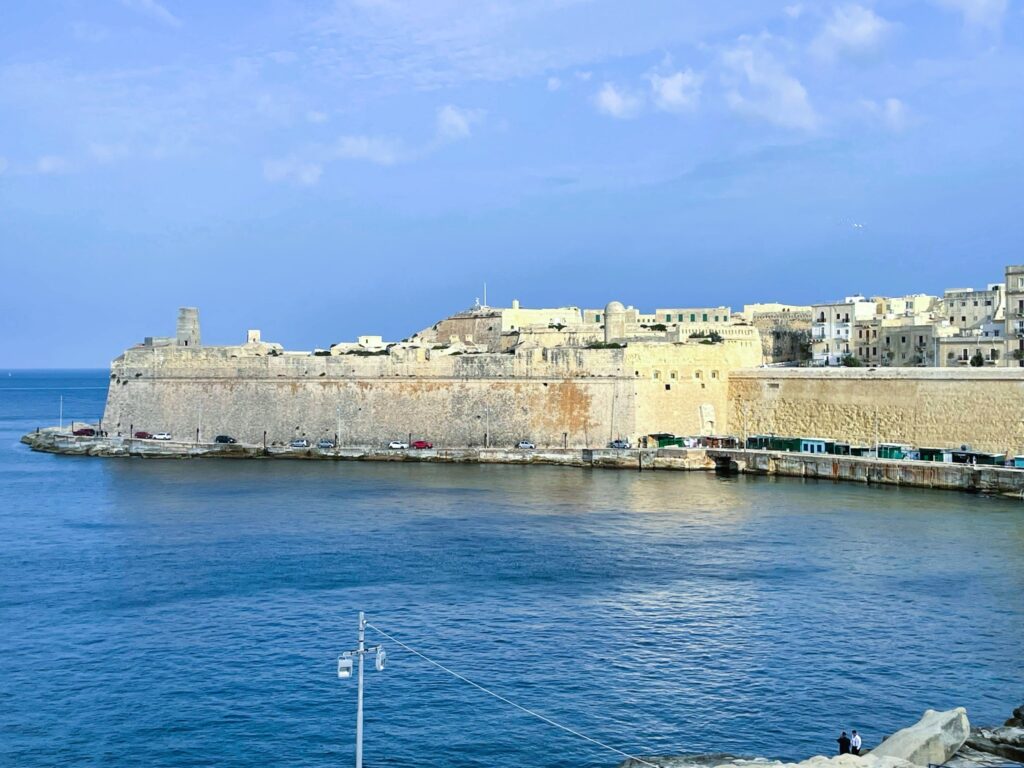
If Valletta has a defining feature, it is not a building, museum, or monument. It is the Grand Harbour.
Everything about Valletta begins and ends with the harbour. It was the reason the city was built, the source of its wealth, and the stage upon which some of Malta’s most important moments unfolded. Long before modern tourism arrived, ships from across the Mediterranean entered these waters carrying merchants, warriors, pilgrims, and empires.
Standing along the harbour today, it is easy to understand why the Knights of St. John chose this location after the Great Siege of 1565. The deep natural harbour provided one of the finest anchorages in the Mediterranean and allowed Malta to become a strategic crossroads between Europe, North Africa, and the Middle East.
Yet history is only part of what makes the Grand Harbour special.
The views are extraordinary. From the Upper Barrakka Gardens, visitors can look across the water toward the Three Cities of Vittoriosa, Senglea, and Cospicua, where centuries-old fortifications still dominate the skyline. Traditional Maltese luzzu fishing boats share the harbour with ferries, yachts, and cruise ships, creating a scene that feels both historic and alive.
We found ourselves returning to the harbour repeatedly during our time in Valletta. The perspective changes throughout the day as sunlight moves across the limestone buildings and fortifications. Early morning brings a sense of calm. Midday highlights the honey-colored stone for which Malta is famous. By evening, the harbour becomes one of the most beautiful places in the city to watch the sun begin to set.
For visitors seeking a different perspective on the harbour, ferry rides and harbour cruises offer an opportunity to appreciate the scale of Valletta’s defenses and the remarkable geography that shaped Malta’s history.
Many destinations have impressive waterfronts. Few have one that tells the story of an entire nation.
For us, the Grand Harbour is the feature that best captures Valletta itself, a place where history, beauty, resilience, and everyday life continue to meet on the water just as they have for centuries.
Fun Facts About Valletta, Malta

- Valletta is the fourth smallest capital in Europe.
- It was named European Capital of Culture in 2018.
- Valletta has only about 6,000 residents within the city walls.
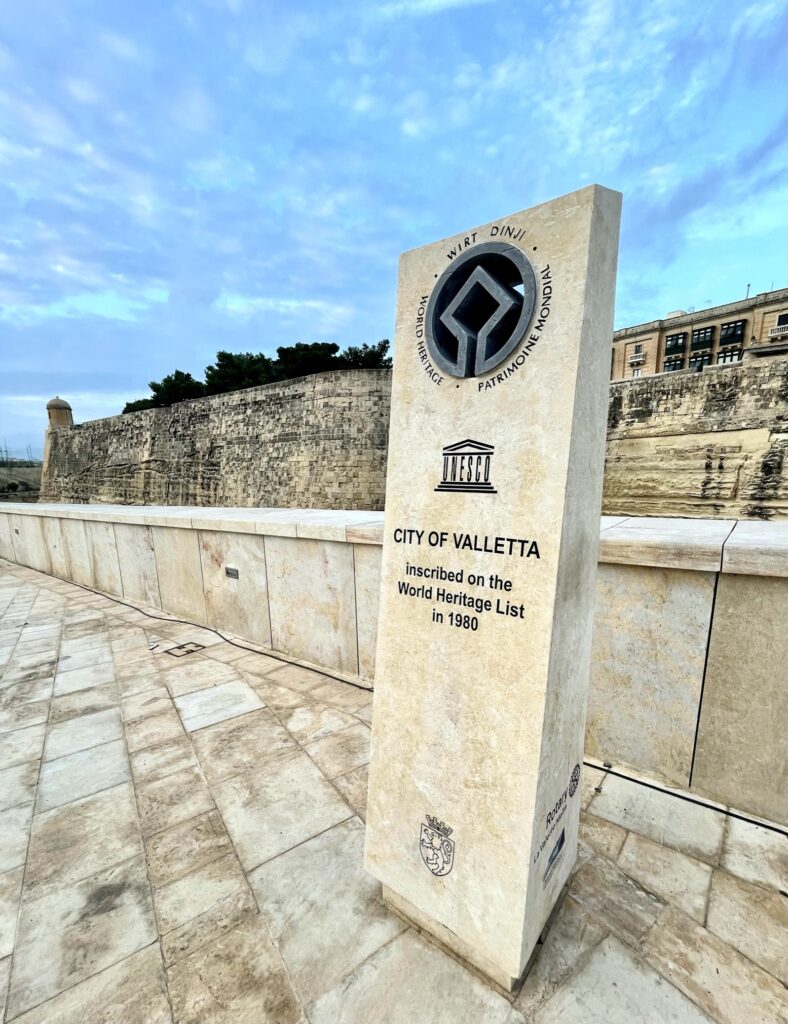
- The city was awarded UNESCO World Heritage status in 1980.
- Valletta’s streets were designed initially for strategic defense, not aesthetics—yet they turned out beautifully.
- Malta was a British colony until 1964, and English remains one of the two official languages.
- Valletta is home to Malta’s first purpose-built parliament building.
Locals still hang religious shrines and porcelain saints on the facades of their homes.
If you are considering a trip to Malta, then check out our Malta Travel Guide.
When to Visit Valletta

Spring (March to May) is our favorite time to visit. The weather is warm but not hot, flowers are in bloom, and the city hosts several cultural festivals. This season feels vibrant but not overwhelming, and you’ll get great lighting for photography.
Summer (June to August) is ideal for beach lovers and festival-goers. However, Valletta gets crowded and very hot. If you visit in summer, do your sightseeing early in the morning or in the cooler evening hours.
Autumn (September to November) brings comfortable temperatures and a more relaxed vibe. It’s an excellent time for food lovers, with many restaurants updating their menus to reflect the seasonal harvest.
Winter (December to February) is quiet and cooler but still pleasant compared to most of Europe. While some festivals and events slow down, it’s the best time to enjoy museums, cozy cafés, and fewer tourists.
Where to Eat in Valletta
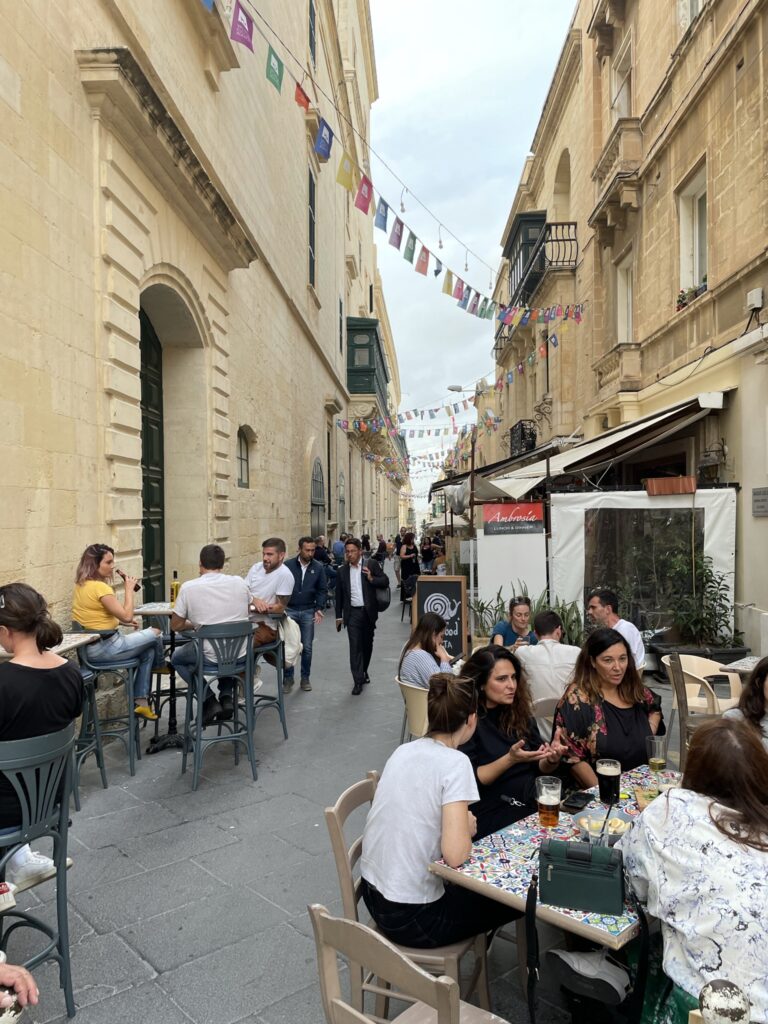
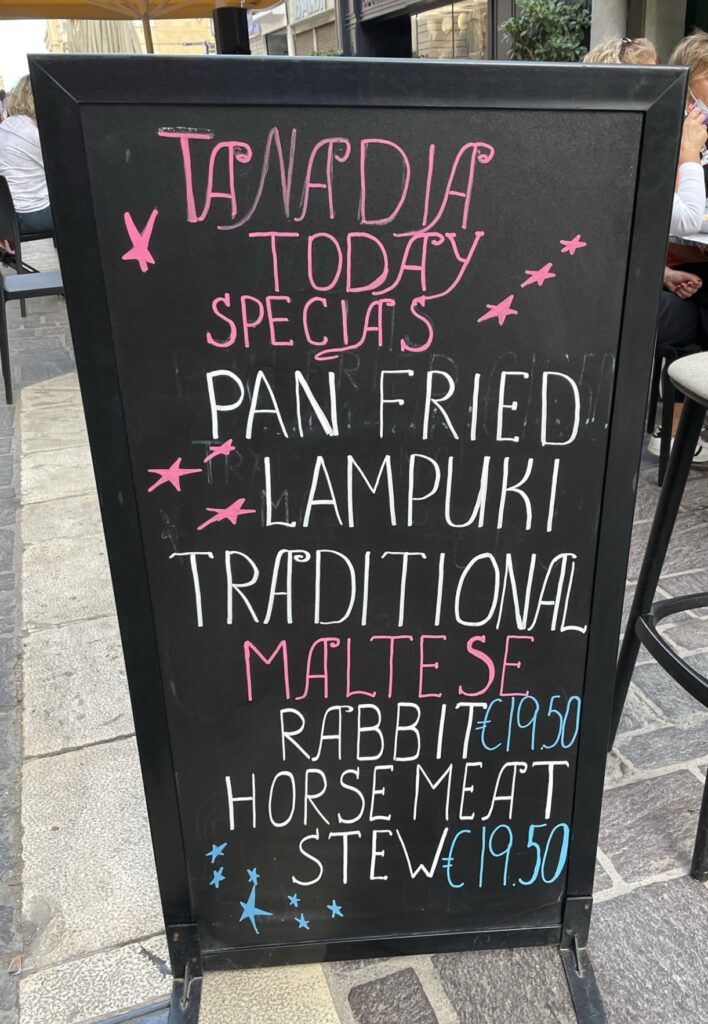
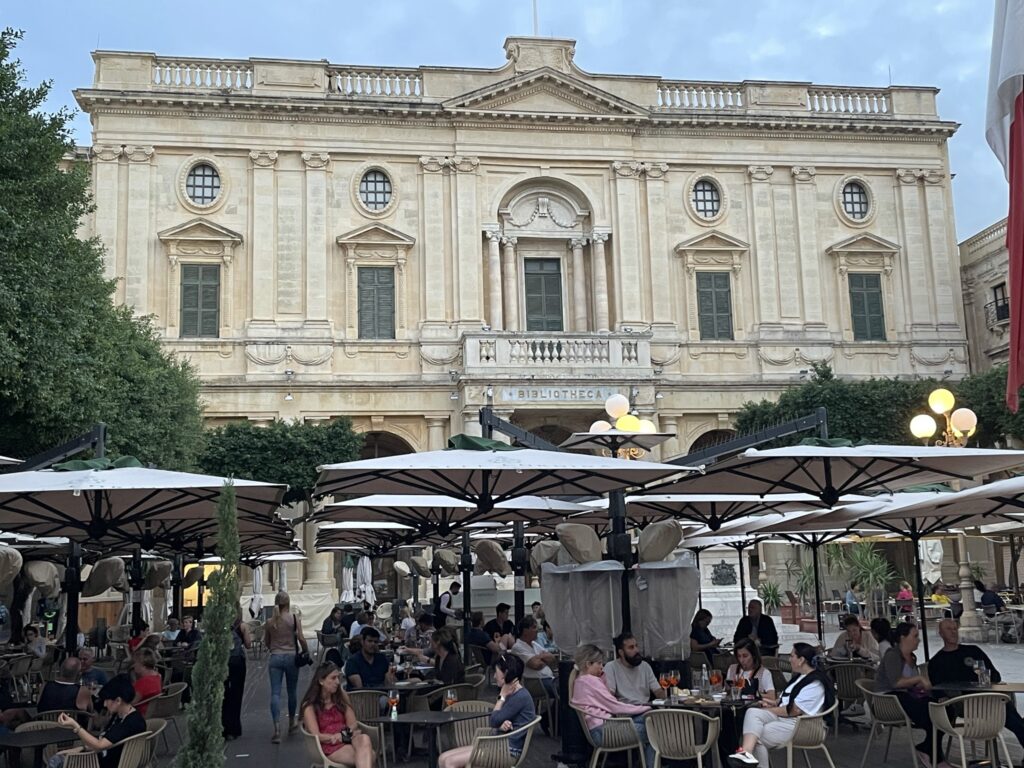
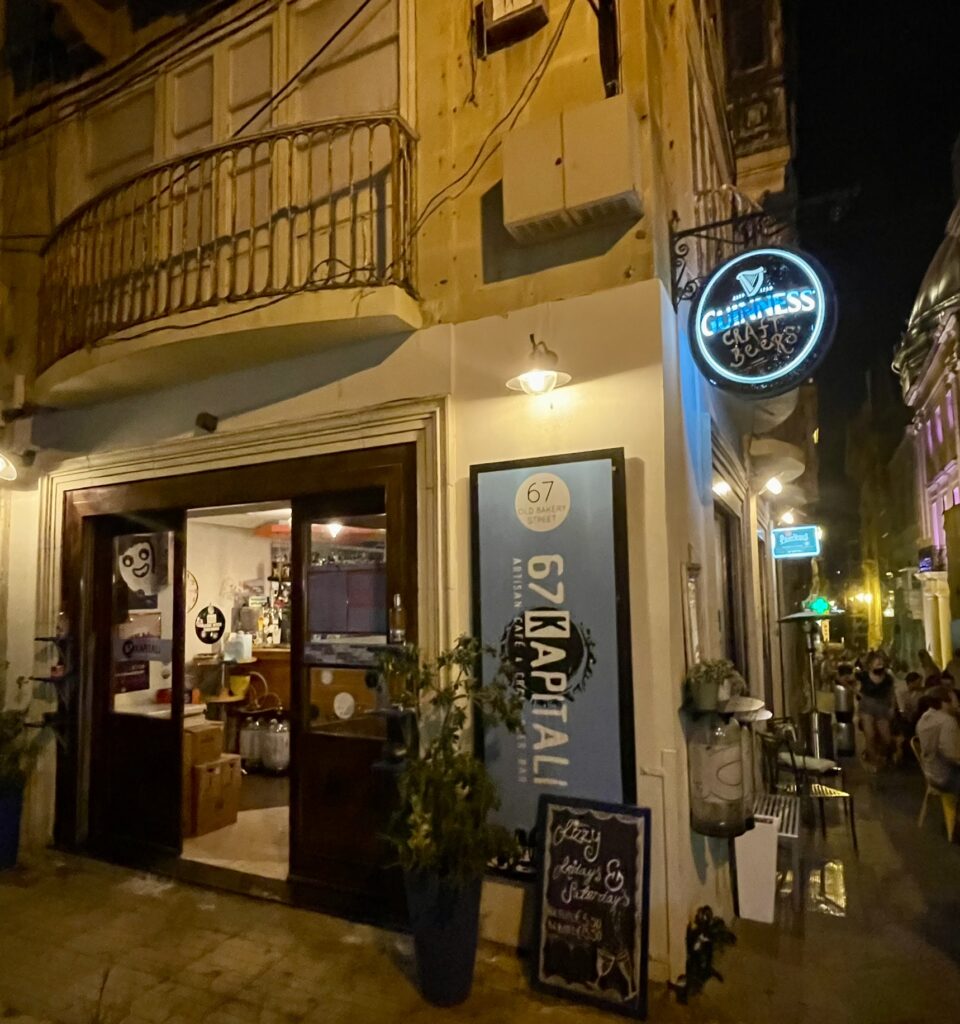
- Noni is a Michelin-starred restaurant that offers modern Maltese cuisine with bold flavors and artistic presentation. Their tasting menu is a culinary journey through Malta’s rich food traditions with a twist.
- Rubino is a historic eatery with a loyal local following. Housed in a former confectionery, Rubino specializes in Maltese home cooking, such as bragioli (beef olives) and baked macaroni.
- Is-Suq tal-Belt is known for its great sampling of a bit of everything in one place. Whether you’re in the mood for local street food or international cuisine, you’ll find something delicious here.
- Legligin is a small, intimate spot offering a nightly tasting menu of traditional Maltese fare. The dishes come out tapas-style, allowing you to try a wide range of flavors in one meal.
- Gugar Hangout & Bar is a laid-back, artsy venue with vegetarian options, craft beers, and a welcoming vibe. It’s perfect for casual dining and conversation after a day of exploring.
Where to Stay When Visiting Valletta
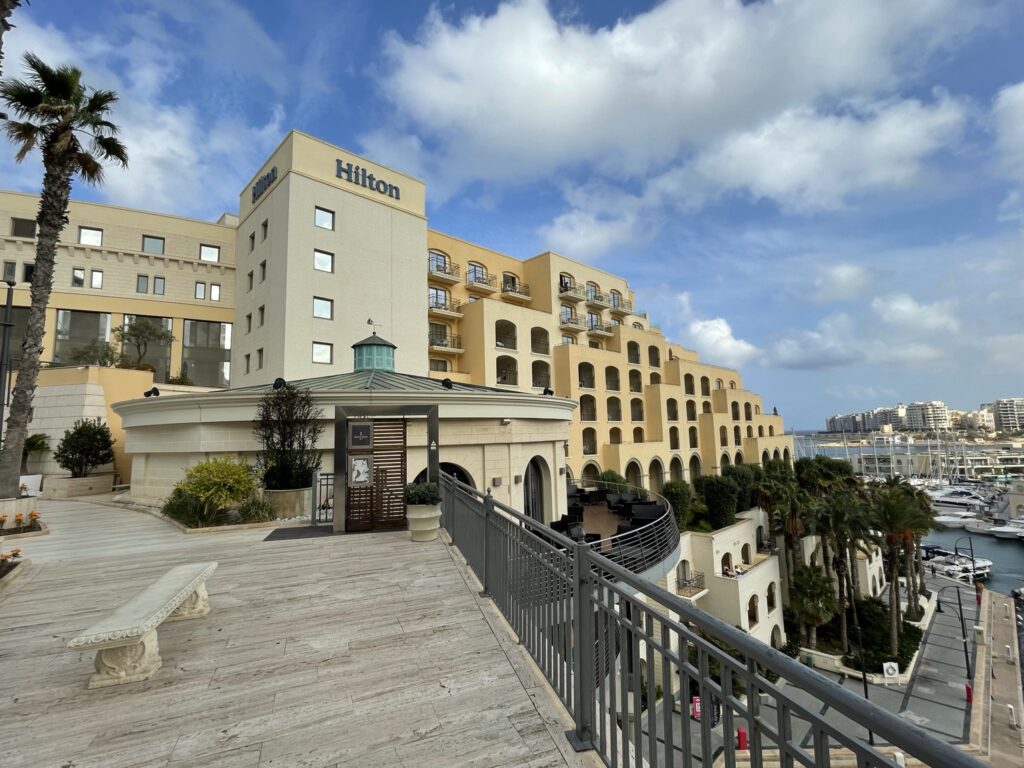
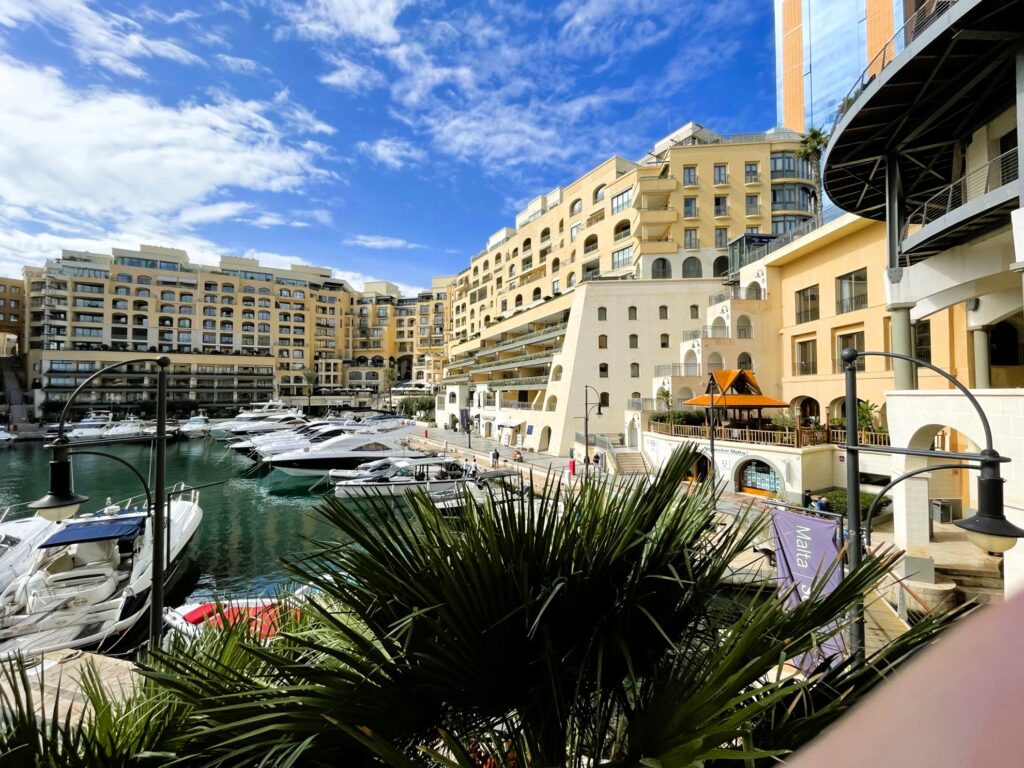
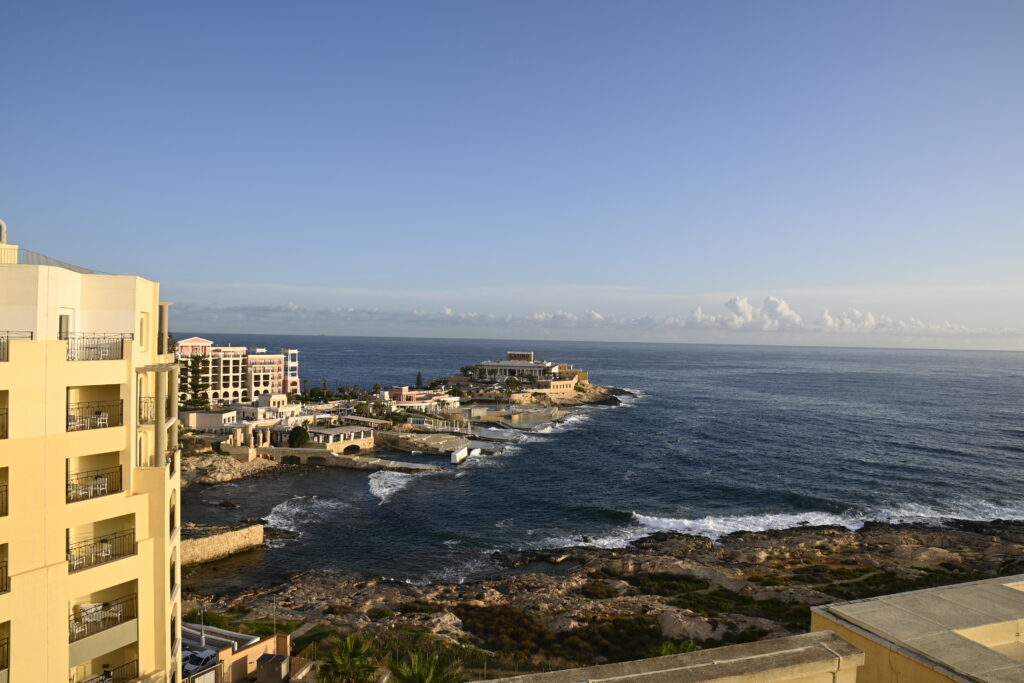
Our Favorite: Hilton Malta
The waterfront Hilton Malta is located in Portomaso, one of Malta’s most upscale waterfront districts, built around a marina filled with yachts and surrounded by restaurants, cafés, residences, and offices. Many visitors refer to the area as “St. Julian’s.”
Luxury: The Phoenicia Malta
This iconic five-star hotel just outside the city gates offers lush gardens, panoramic views, and impeccable service.
Boutique: The Saint John
Right in the heart of Valletta, this chic boutique hotel blends modern comforts with historical architecture.
Budget-Friendly: Valletta Lucente
Great value for travelers who want character, location, and local charm.
Like a Local: Airbnb in a Historic Palazzo
There’s something magical about waking up behind a set of green wooden shutters in your own corner of a centuries-old building.
Flights, Accommodations, and Everything You Need to Book in One Place
Are you planning a vacation this year? Start your research early to explore your options and find what fits your budget. By booking your own travel, you’ll uncover great deals and have complete control over your itinerary. The links below can be used for all elements of your trip, not just accommodations.
It is essential to price out accommodations on various sites. Expedia is a US-based company, whereas Booking.com is a European company. Not all properties appear on both, so it is best to check both. Our personal first choice is Booking.com. If the establishment has a website, check the price there as well. Click the link below to check out hotels and vacation homes in the area. It may be just the motivation you need to start planning that next grand adventure.
Parting Thoughts

Valletta may be small, but it’s unforgettable. We came expecting a quick detour. Instead, we found a city layered with stories, wrapped in golden stone, spiced with history and culture. Whether you’re sipping Maltese wine on a balcony, watching cannon fire from a garden, or getting lost in the city’s crisscrossing alleys, Valletta delivers something rare: authenticity, warmth, and wonder.
We’re already planning our next visit, and we know it won’t be the last.
© 2026 Wanderers Compass All Rights Reserved
Want to Learn the Story Behind Wanderers Compass?
Check out most recent posts
Our Top Recommended Travel Products
Travel Insurance
Squaremouth.com
Our Favorite Travel Insurance Site!
We strongly advocate comprehensive travel insurance, not only for minor inconveniences but also for major, unexpected events such as medical emergencies. We never leave home without it. Our go-to resource is Squaremouth.com. which offers a user-friendly platform that connects you with top-rated, reputable insurance carriers. Plus, they’ll mediate on your behalf if you run into any issues.
To empower you as a consumer, we recommend you read our blog post on why travel insurance is essential and how to secure the best coverage from leading companies at an affordable price.
MedjetAssist
Medical transport back home from anywhere in the world
Medjet is a leading provider of global air medical transport. Unlike traditional travel insurance, which typically covers medical evacuation to the nearest facility, Medjet goes further by ensuring you’re transported back to the U.S. to the hospital of your choice once you’re stable enough to fly. Medjet offers membership plans that focus on medical transport, while Medjet Horizon provides expanded coverage for broader protection. Individual trip policies start at just $99, and annual policies are available for around $300. Most policies have an age limit of 74.
To learn more about how Medical Evacuation membership with Medjet Assist works, check out our blog post for a more detailed review.
Accommodations and Airfare
Booking.com
Hotels, Home rentals, BNBs, Flights, and other Transportation & Tours
Booking.com connects millions of travelers to unforgettable experiences, a wide range of transportation options, and incredible places to stay—from homes to hotels and beyond. As one of the world’s largest travel marketplaces, it supports well-known brands and entrepreneurs of all sizes. For its convenience, variety, and reliability, it’s our preferred booking platform.
Expedia and VRBO
Hotels, home rentals, BNBs, flights, and other transportation & tours
Expedia is a U.S.-based company with a mission to make global travel accessible to everyone, everywhere. At Wanderers Compass, we embrace independent travel, and platforms like Expedia are essential to making that a reality. Expedia allows you to book every aspect of your trip—from flights and accommodations to rental cars, cruises, and activities—making it a one-stop shop for all your travel needs.
Transportation
Daytrip
Personalized city-to-city private car transfer service
Daytrip provides an affordable private car service for city-to-city transfers worldwide, and we absolutely love their service. It’s a cost-effective alternative to renting a car, offering comfortable, stress-free travel with scenic stops along the way. For example, we used Daytrip for travel between Budapest and Vienna, enjoying some fantastic detours to local attractions. With professional drivers and customizable routes, Daytrip ensures a smooth ride while allowing you to explore hidden gems and unique sights along your journey.
To learn more about Daytrip, check out our blog post for a more detailed review.
Travel Experiences
Viator
The leading marketplace for travel experiences
Viator believes that travel is all about creating unforgettable memories. With over 300,000 experiences to choose from—ranging from simple tours to extreme adventures, plus a wide array of unique, niche activities—it’s never been easier to make lasting memories. We frequently use Viator during our travels and especially appreciate its flexible cancellation policy, which provides peace of mind with every booking.
Shopping
Wanderers Compass Amazon Storefront
An excellent source for all travel essentials and guides that we have vetted ourselves
Amazon is one of the world’s most comprehensive online shopping platforms, offering lower prices, a wide selection, and fast delivery through its global fulfillment network.
This page contains affiliate links. When you purchase through these links, we may earn a small commission at no extra cost to you. Thank you for your ongoing support!

