

Castles, History and the Bavarian Alps
“Bavaria is where Germany steps out of history and directly into a storybook.”
Wanderers Compass
- Neuschwanstein: The Castle That Brings Everyone Here
- What It's Like to Visit Neuschwanstein
- Visit Hohenschwangau, Too.
- Füssen Has a Story of Its Own
- Hopfensee Became One of Our Favorite Places
- Füssen Makes You Want to Get Outside
- Don't Miss Lechfall
- Crossing Into Austria for Burgenwelt Ehrenberg
- Why We Would Give Füssen a Week Next Time
- Come for Neuschwanstein. Stay for Füssen
- FAQS
- Our Top Recommended Travel Products

There are some destinations where one famous attraction gets so much attention that almost everything around it becomes an afterthought. Füssen, Germany, should not be one of them.
Most international travelers arrive in this corner of Bavaria with one place in mind: Neuschwanstein Castle. We certainly did. As longtime castle hunters, we saw one of the world’s most recognizable castles as an easy decision.
But we also made another choice that changed our experience. Rather than visit Neuschwanstein on a day trip and leave, we stayed in the Füssen area for several days.
That gave us time to wander through Füssen’s old town, explore its churches and castle, walk along the Lech River, and spend our evenings beside Hopfensee. We also crossed into Austria to explore the fortresses of Burgenwelt Ehrenberg.
Somewhere along the way, Neuschwanstein stopped being the entire story. We came for the famous castle, and we left wishing we had another week to explore everything around it.
Neuschwanstein: The Castle That Brings Everyone Here
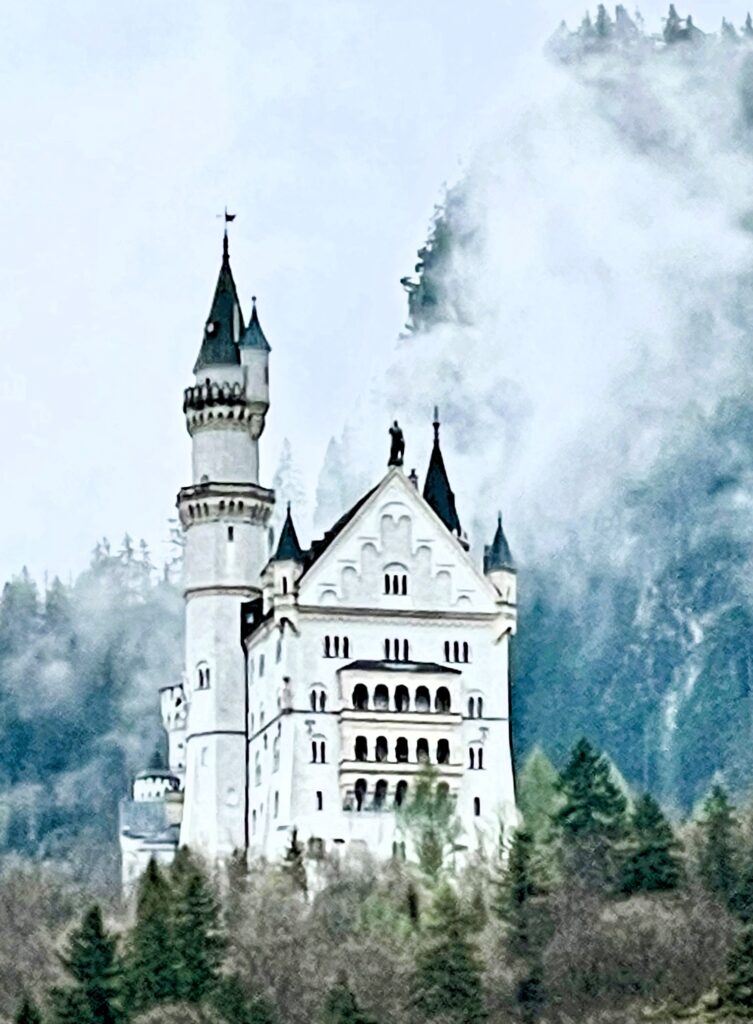
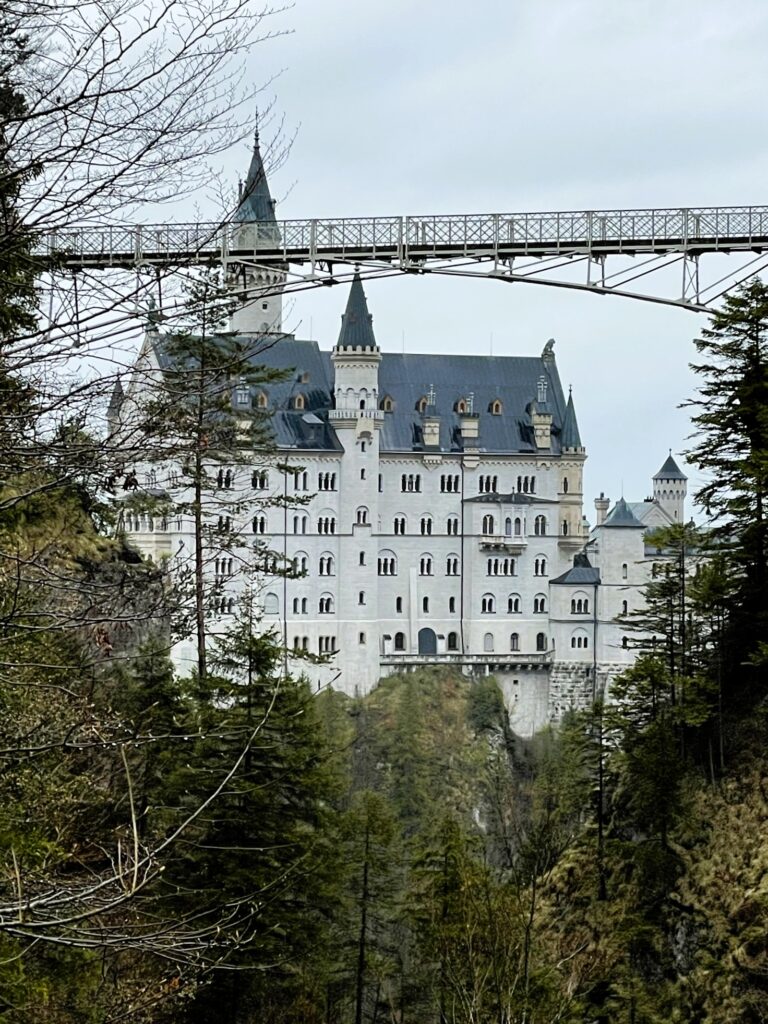
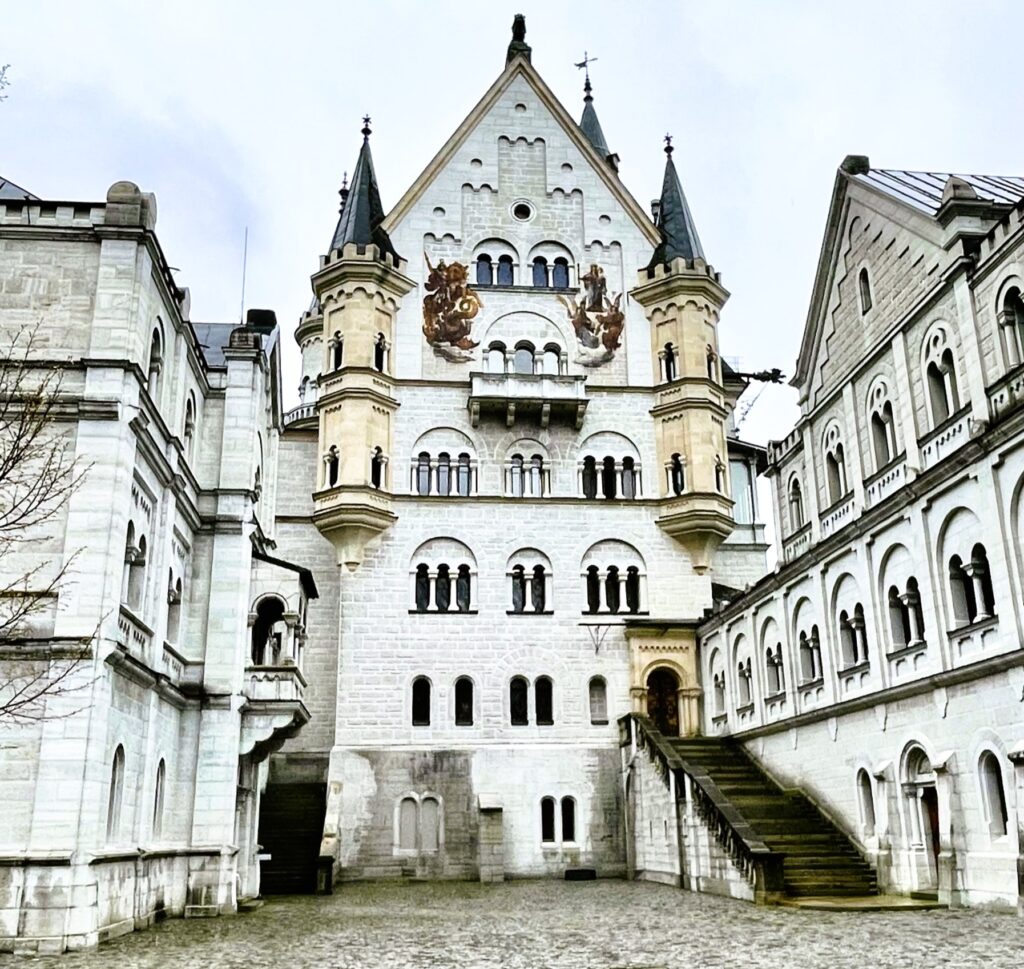
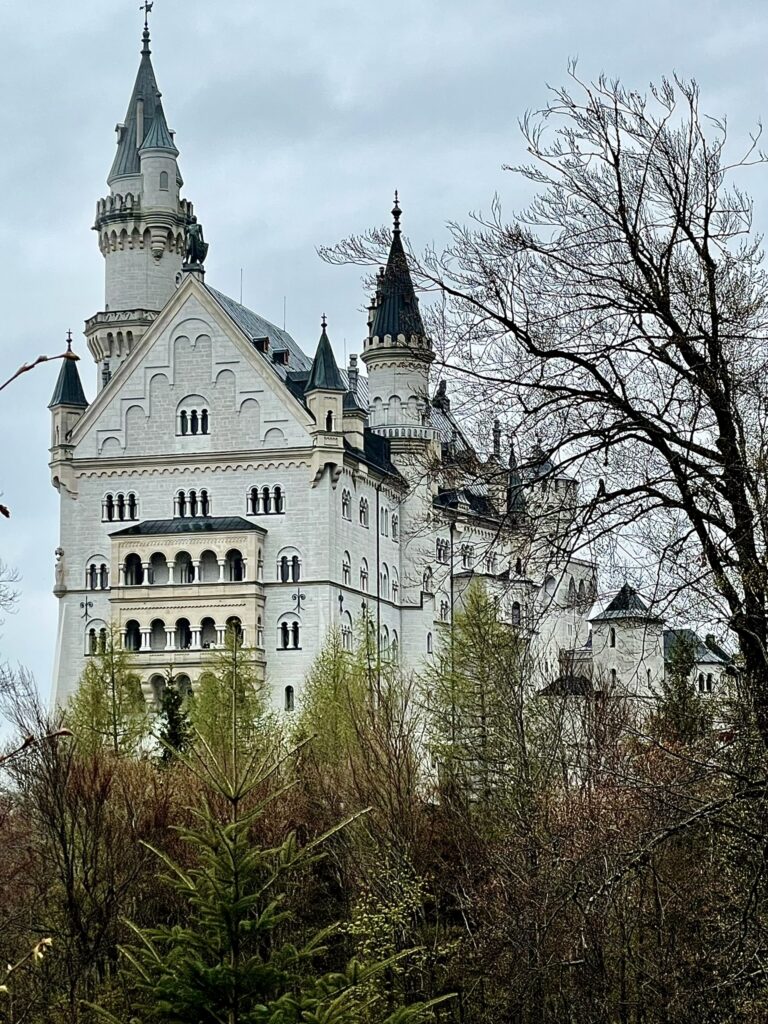
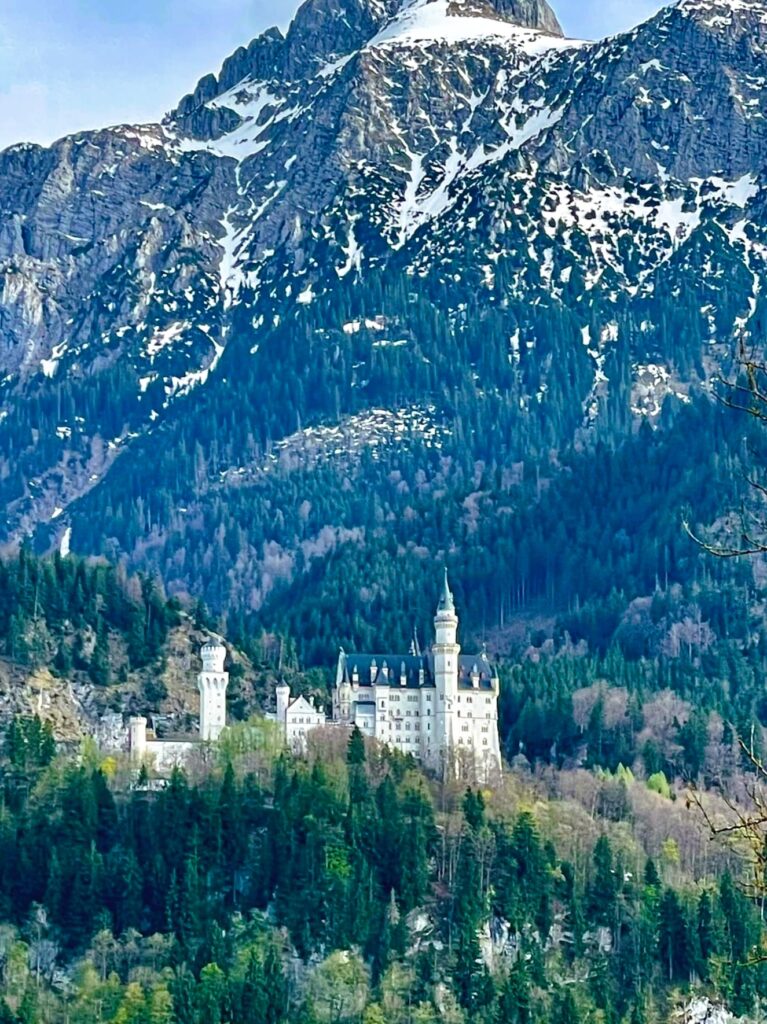
Before explaining why Füssen deserves more time, we have to give Neuschwanstein Castle its due. It is extraordinary.
Towering high above the village of Hohenschwangau with the Bavarian Alps rising behind it, Neuschwanstein looks almost too theatrical to be real. Its white limestone walls, towers and dramatic mountain setting have made it one of the most recognizable castles in the world.
Its recognizable features obviously made it a castle we wanted to see. What we hadn’t expected was to become just as interested in the story behind the iconic structure.
Neuschwanstein wasn’t a medieval castle at all. King Ludwig II of Bavaria began building it in 1869, creating his romantic interpretation of an idealized medieval world centuries after the Middle Ages had ended.
Ludwig’s story brings a darker side to all that beauty. Known as Bavaria’s “Fairy Tale King,” he increasingly withdrew from public life and devoted enormous attention and resources to his elaborate building projects. In 1886, a medical commission appointed by the Bavarian government declared Ludwig mentally unfit to rule, and he was deposed. The decision remains controversial, particularly because the doctors responsible for the assessment had not personally examined him.
Only days later, Ludwig and psychiatrist Dr. Bernhard von Gudden were found dead in Lake Starnberg. Ludwig was 40 years old, and the circumstances surrounding their deaths have been debated ever since.
Neuschwanstein was still unfinished. Ludwig spent only a limited amount of time living there, and many of his plans were never completed. Just weeks after his death, the private retreat he had created to escape public life was opened to paying visitors.
Today, millions come to see it.
What It’s Like to Visit Neuschwanstein
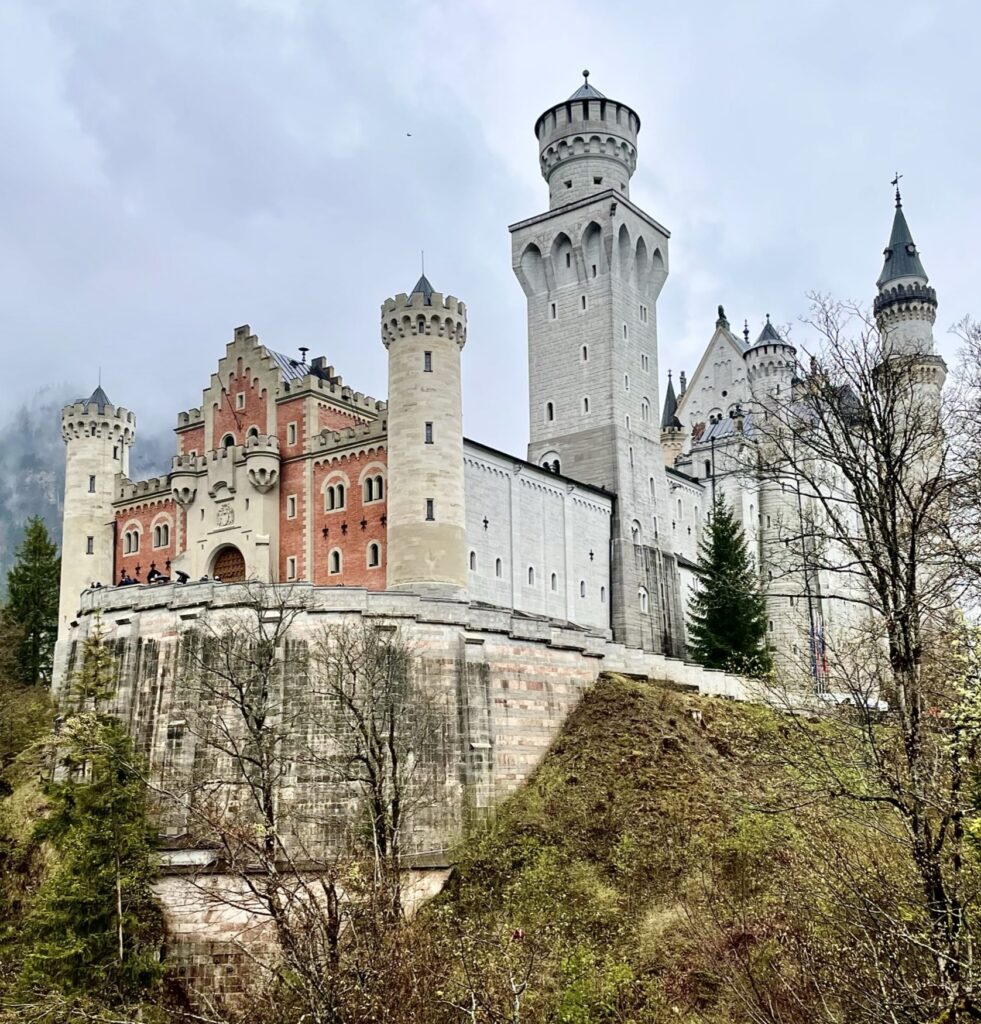
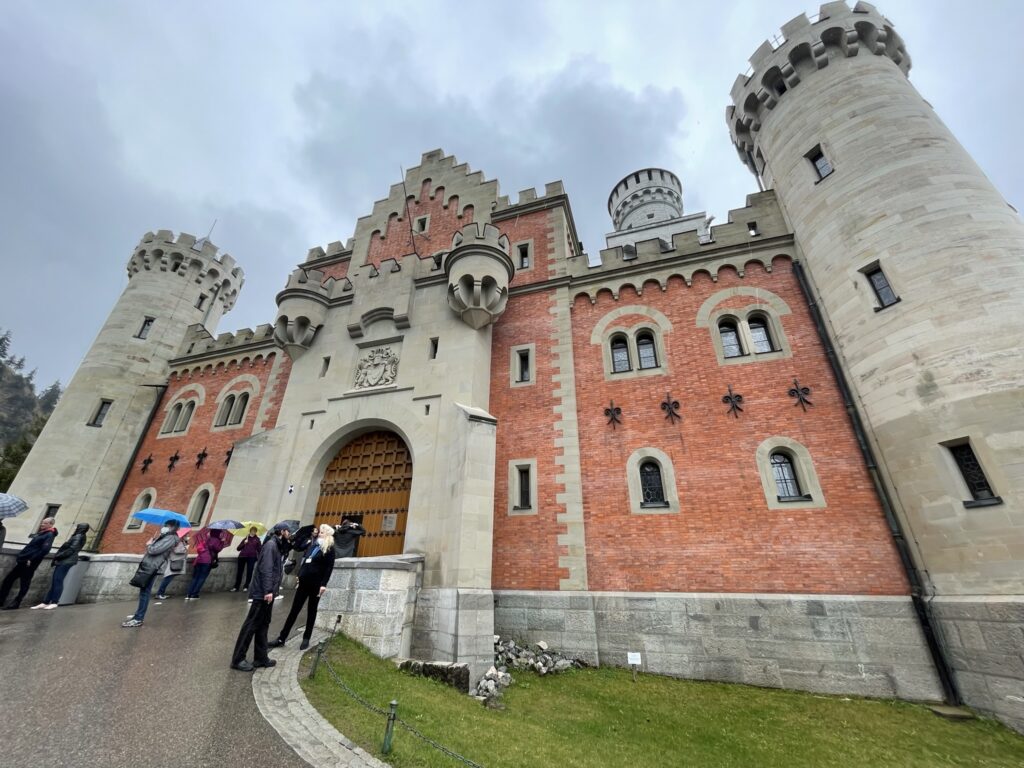
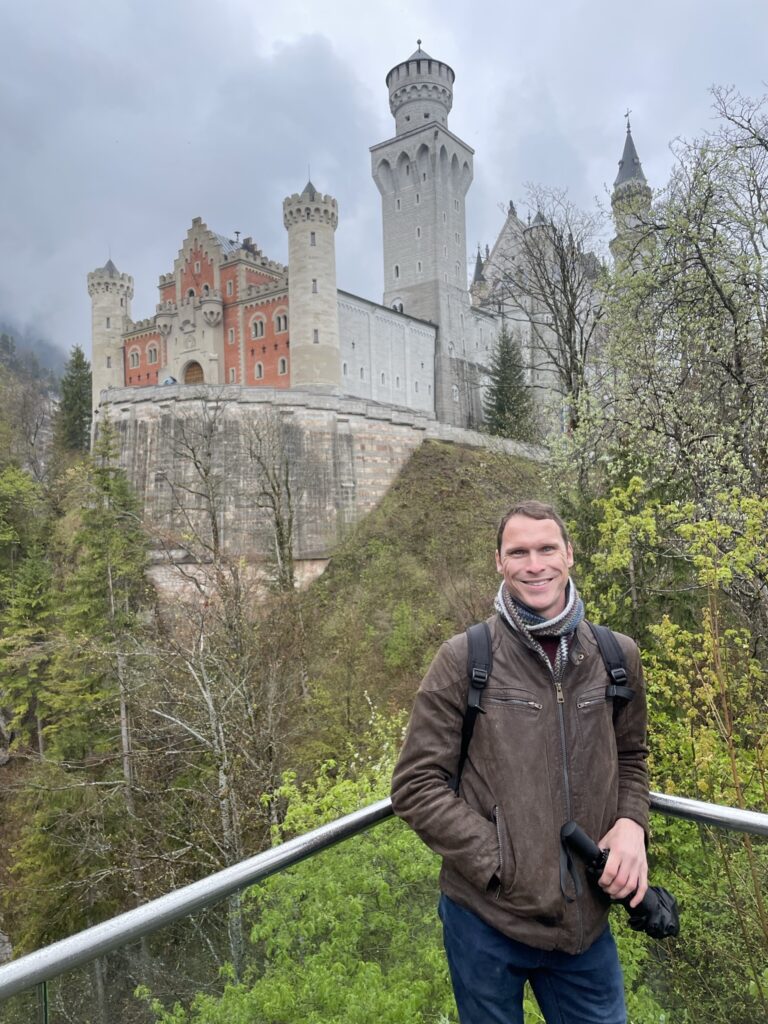
Visiting Neuschwanstein Castle takes some planning. Entrance to the castle interior is by timed tour, so this is one attraction where we strongly recommend purchasing tickets in advance rather than arriving and hoping for availability. Our Neuschwanstein tour was scheduled for 12:50 p.m., after visiting nearby Hohenschwangau Castle that morning.
Getting to the castle itself also takes time. Neuschwanstein sits high above the ticket and village areas, and the uphill walk is steep. It is manageable for many visitors, but it shouldn’t be mistaken for a short, level stroll. Give yourself plenty of time, particularly if you don’t want to arrive for your timed entrance already exhausted. On a hot day, make sure to bring a water bottle.
Horse-drawn carriages are available for part of the journey for visitors who don’t want to make the entire climb on foot. Even with the carriage, there is still some walking involved before reaching the castle entrance.
Going Inside Neuschwanstein
Once inside, visits are structured rather than self-guided. Visitors enter at their scheduled admission time and see the interior as part of a tour. Photography is not permitted inside the castle, something worth knowing about before you arrive.
For us, that wasn’t necessarily a negative. Without everyone stopping to photograph each room, we could pay attention to the interiors and the story being told. That said, we are always disappointed when photos are not allowed.
The rooms reveal a very different side of Neuschwanstein. Ludwig created an intensely romantic world filled with elaborate murals, carved wood, medieval legends, and references to Richard Wagner’s operas. The Throne Hall is particularly grand, even though the throne Ludwig intended for it was never installed.
From a distance, Neuschwanstein looks like the complete fairy-tale castle everyone recognizes. Inside, the story is quite different. Ludwig never saw his enormous project through to completion, and many of the rooms and plans he envisioned were never realized.
Visit Hohenschwangau, Too.
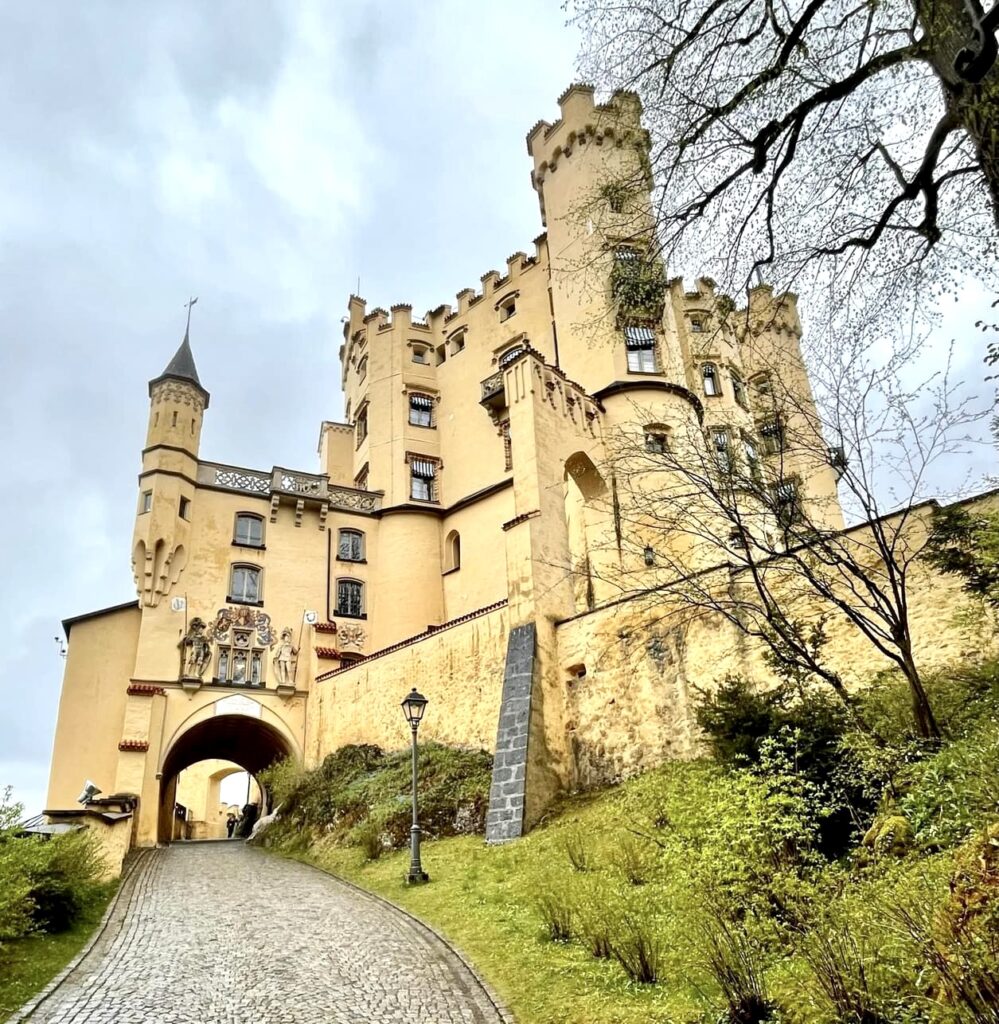
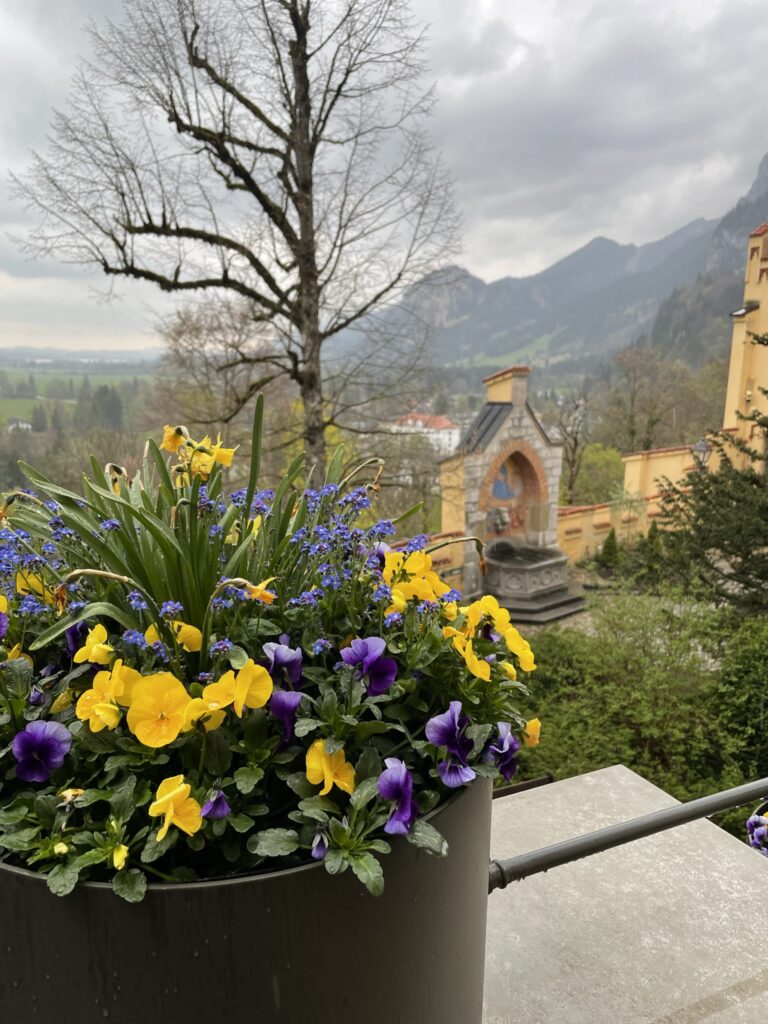
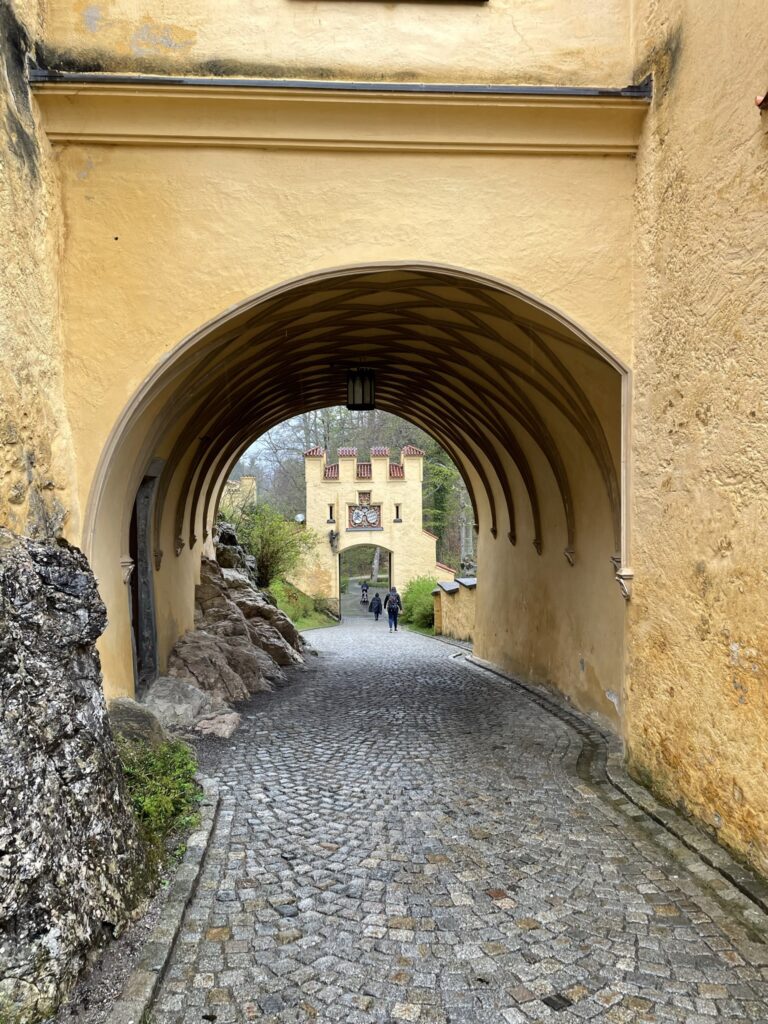
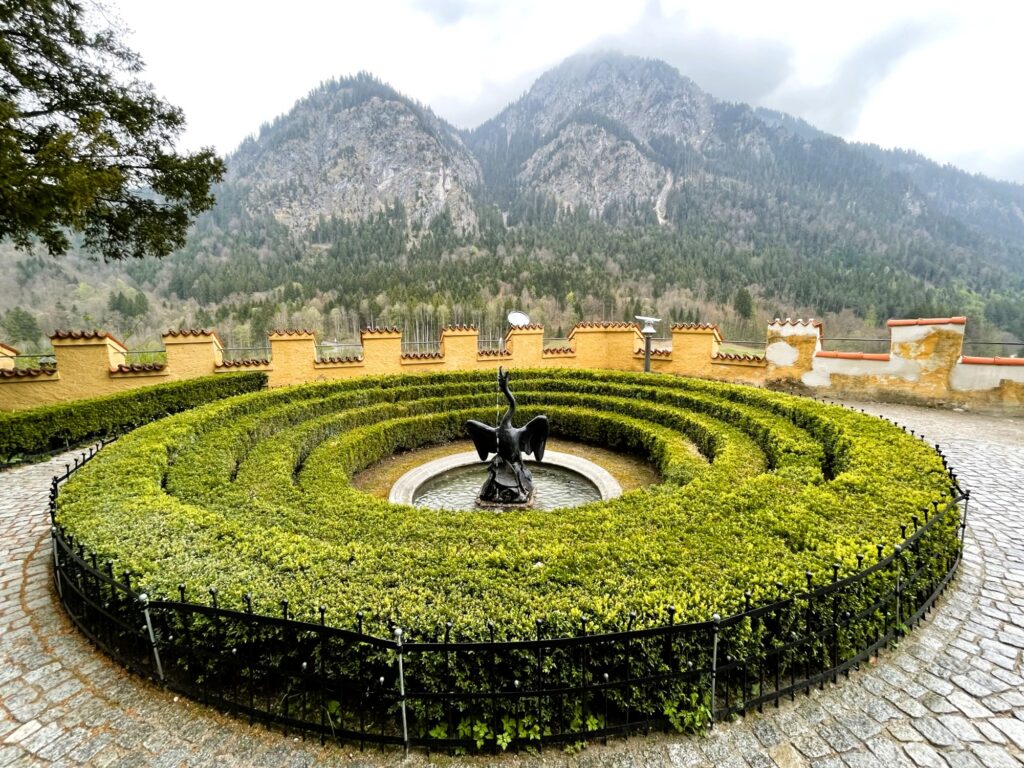
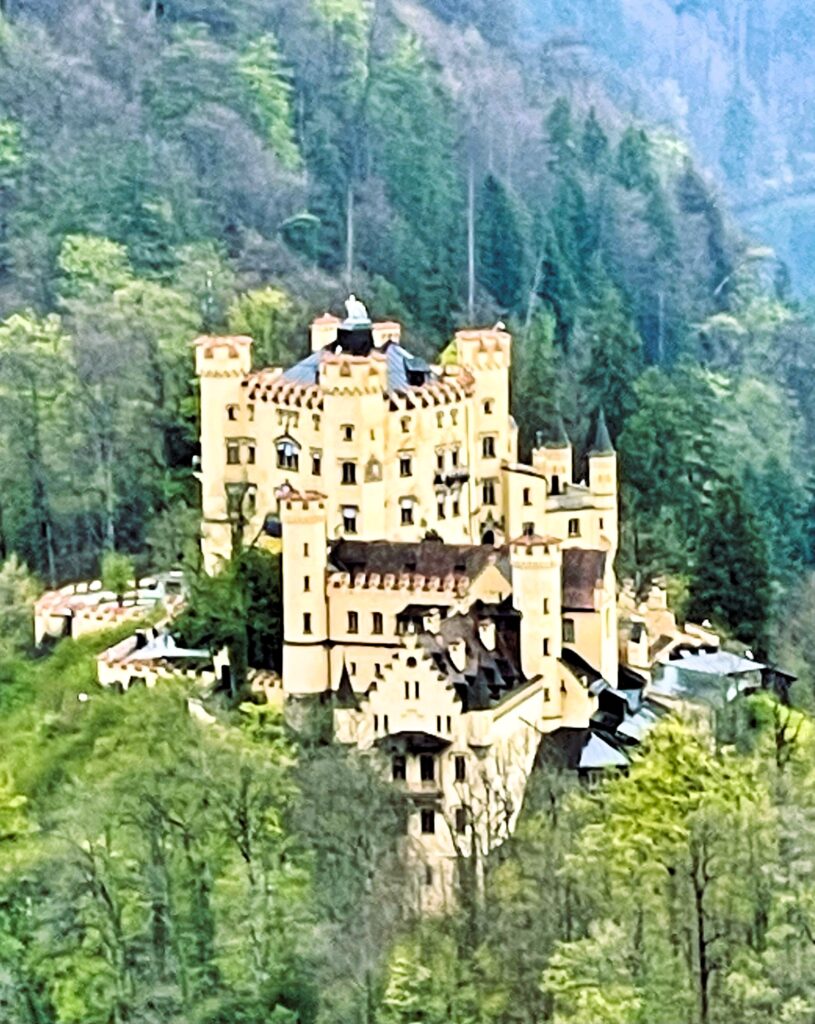
If your schedule allows, we strongly recommend pairing Neuschwanstein with Hohenschwangau Castle. We had 9:50 a.m. tickets for Hohenschwangau and 12:50 p.m. tickets for Neuschwanstein, which worked well for us.
The two castles are closely connected, but they tell very different parts of Ludwig’s story.
Hohenschwangau was the childhood home where Ludwig spent considerable time with his family. His father, King Maximilian II, rebuilt the castle in the 19th century, and Ludwig knew its rooms and surrounding landscape long before he began creating Neuschwanstein on the mountain above.
Seeing Hohenschwangau first gave us useful context for what came next. At Hohenschwangau, you see part of the world that shaped Ludwig. At Neuschwanstein, you step into the world he later tried to create for himself.
Together, the two castles tell a much more interesting story than Neuschwanstein alone. They also gave us a starting point for understanding just how much castle history exists in this part of Bavaria.
Füssen Has a Story of Its Own
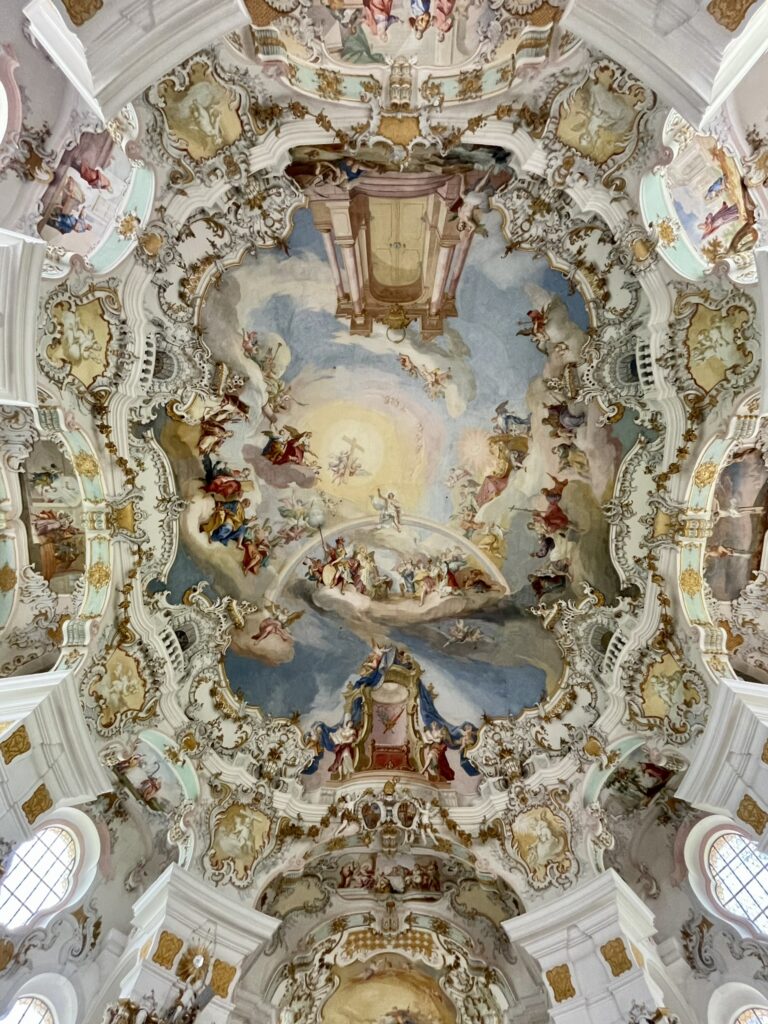
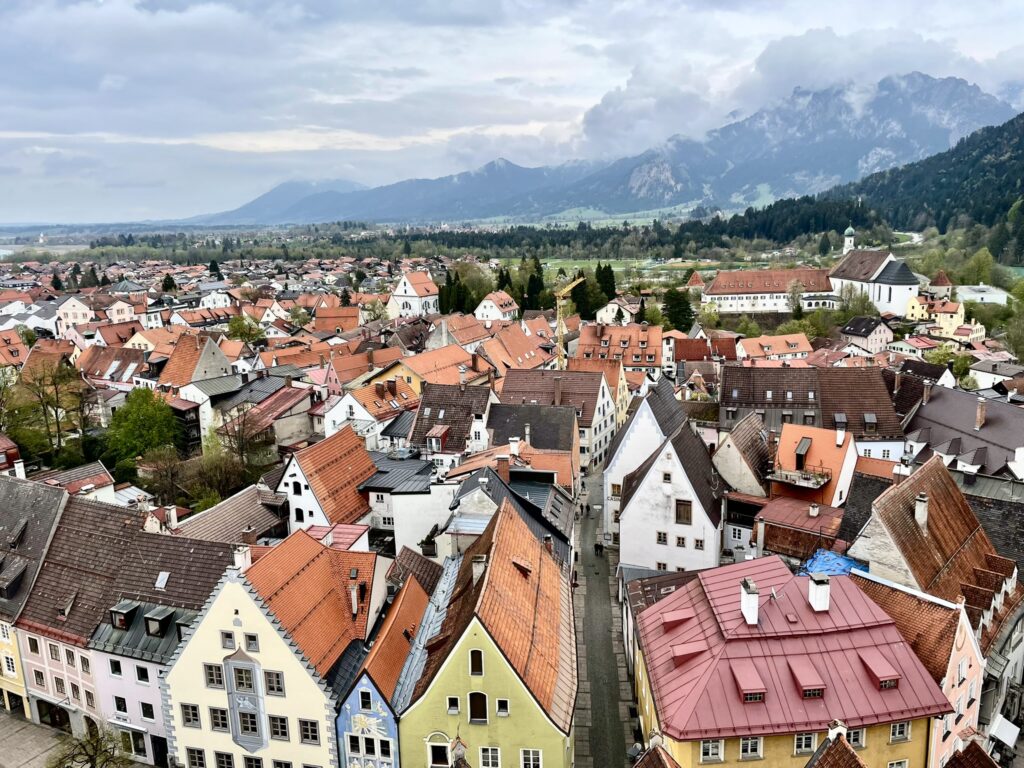
Füssen is often described as the gateway to Neuschwanstein. After spending time there, that description feels inadequate.
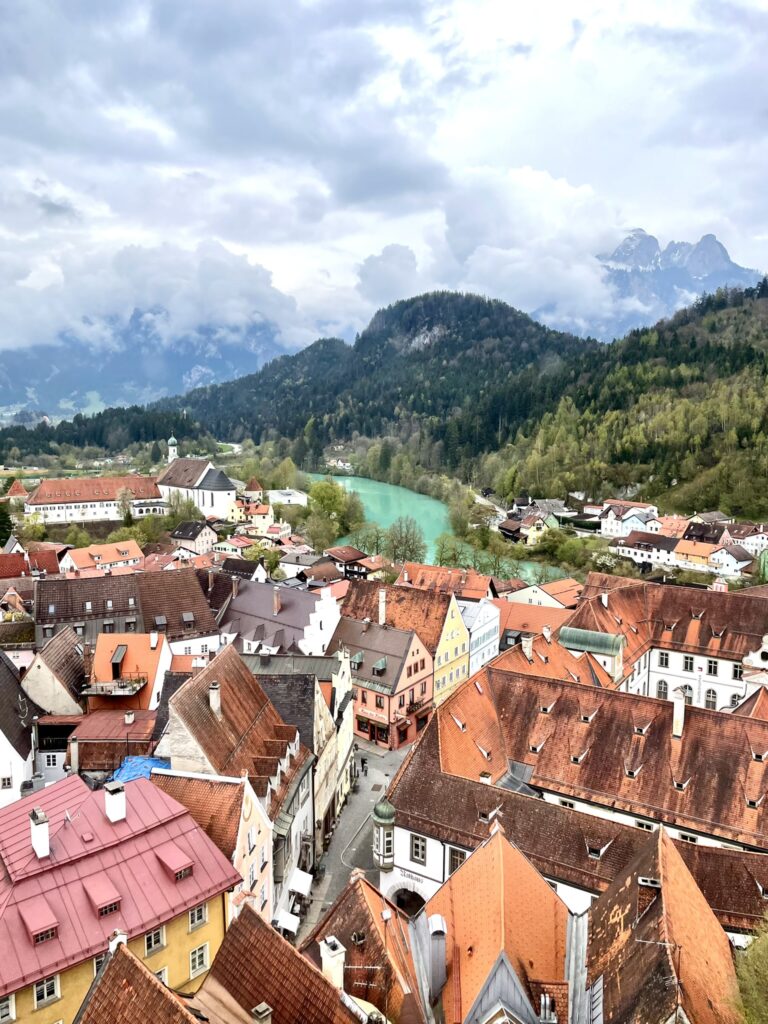
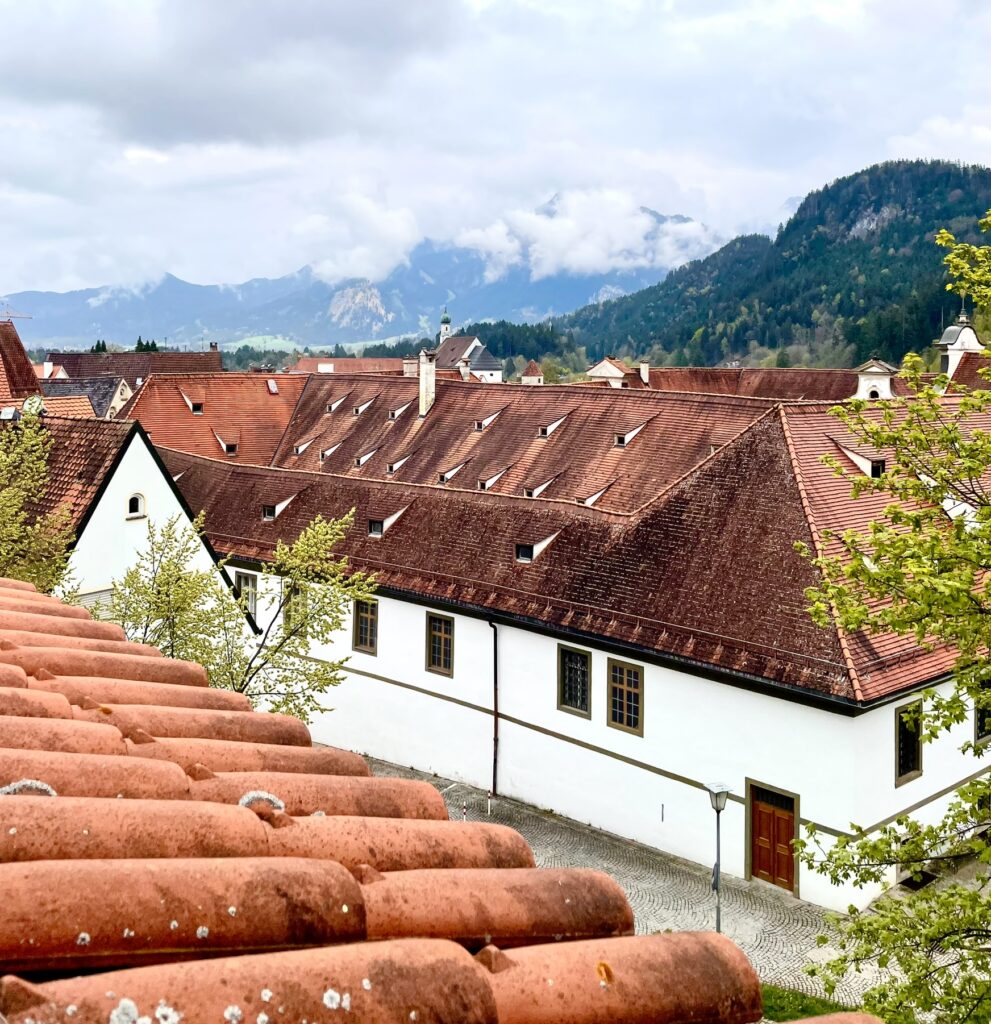
The town has more than 2,000 years of history and developed along the Via Claudia Augusta, the ancient Roman route that crossed the Alps. Long before visitors began arriving to see Ludwig II’s castle, people were passing through this strategic corner of Europe.
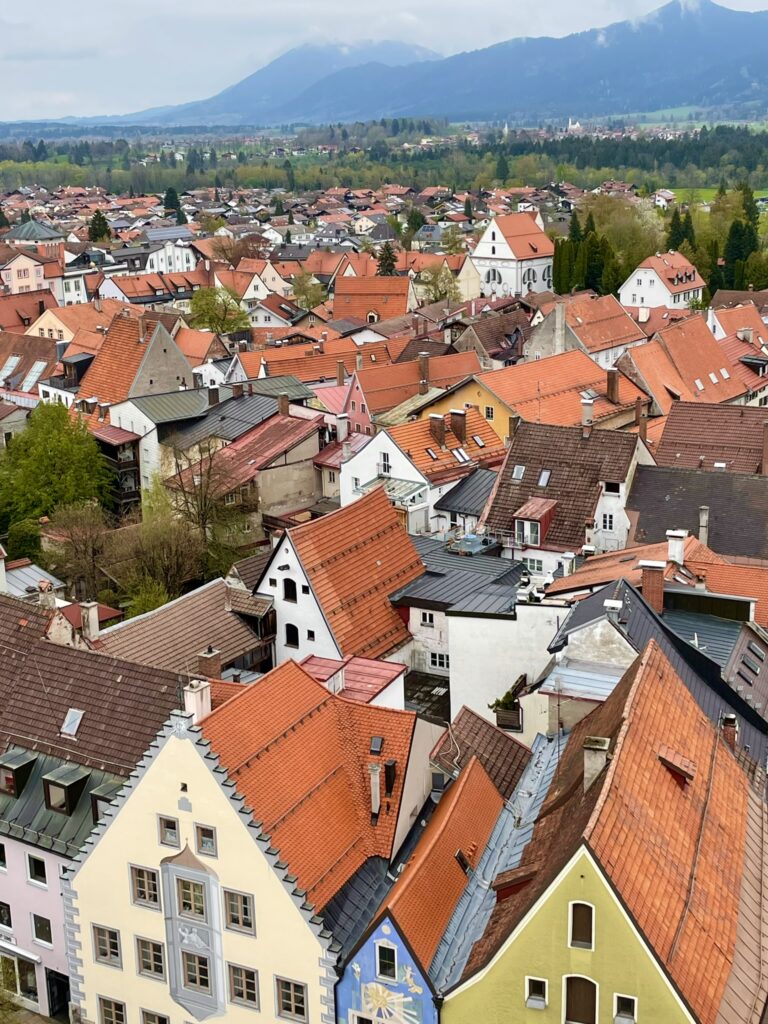
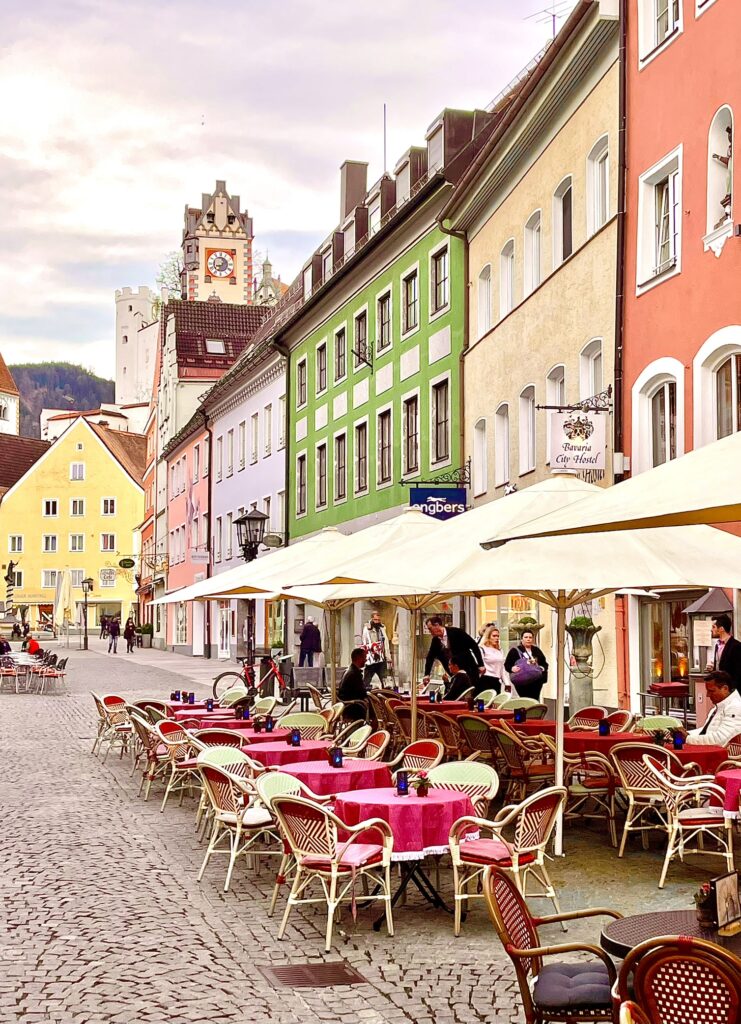
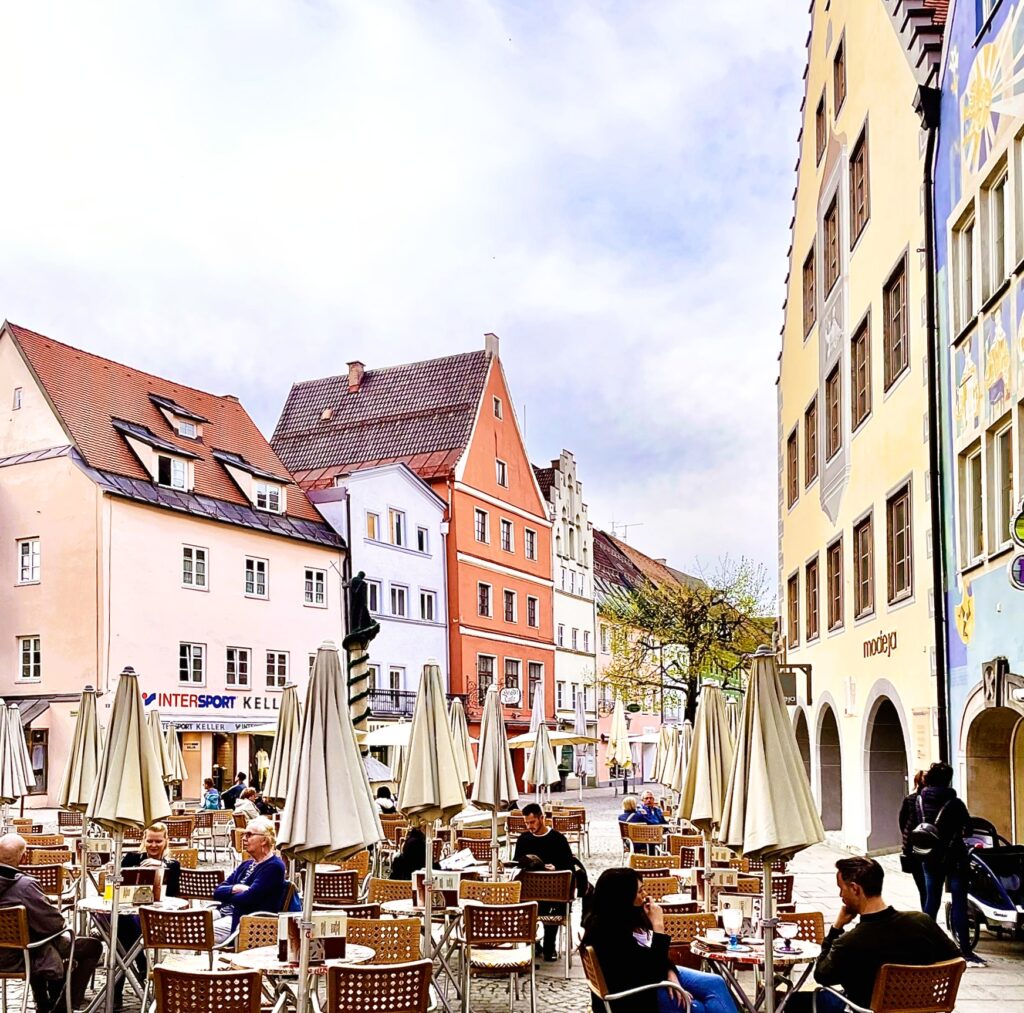
Today, Füssen’s historic center is easy to explore on foot, and we found that we didn’t need much of an itinerary. We enjoyed wandering the streets and seeing what we came across.
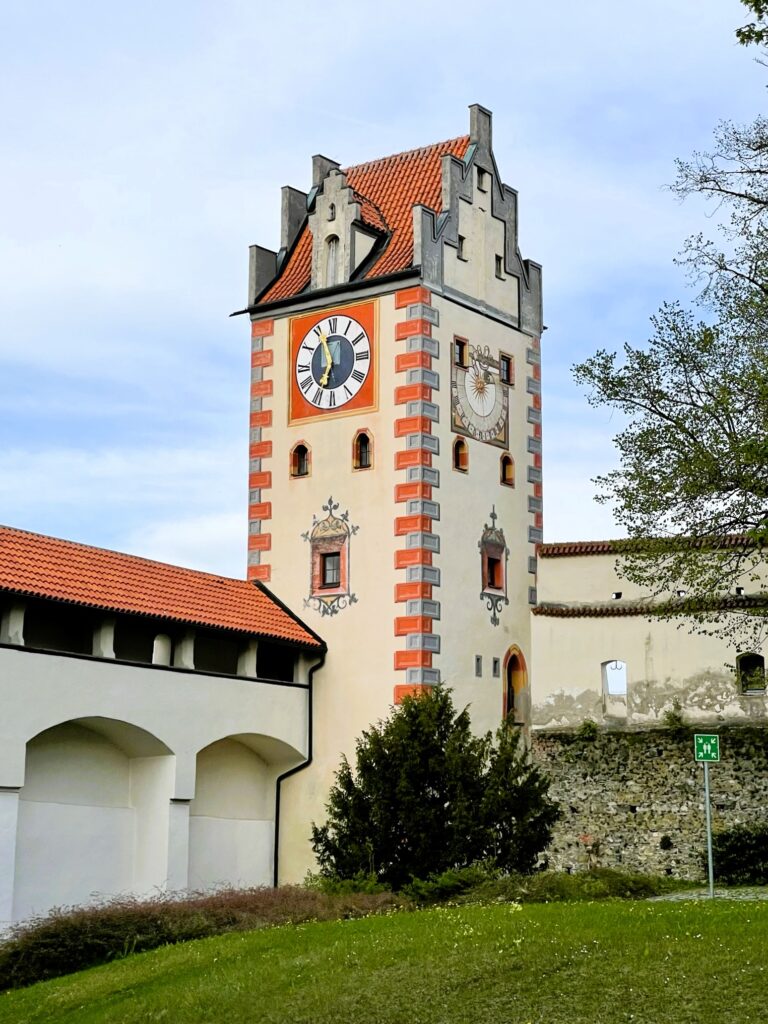
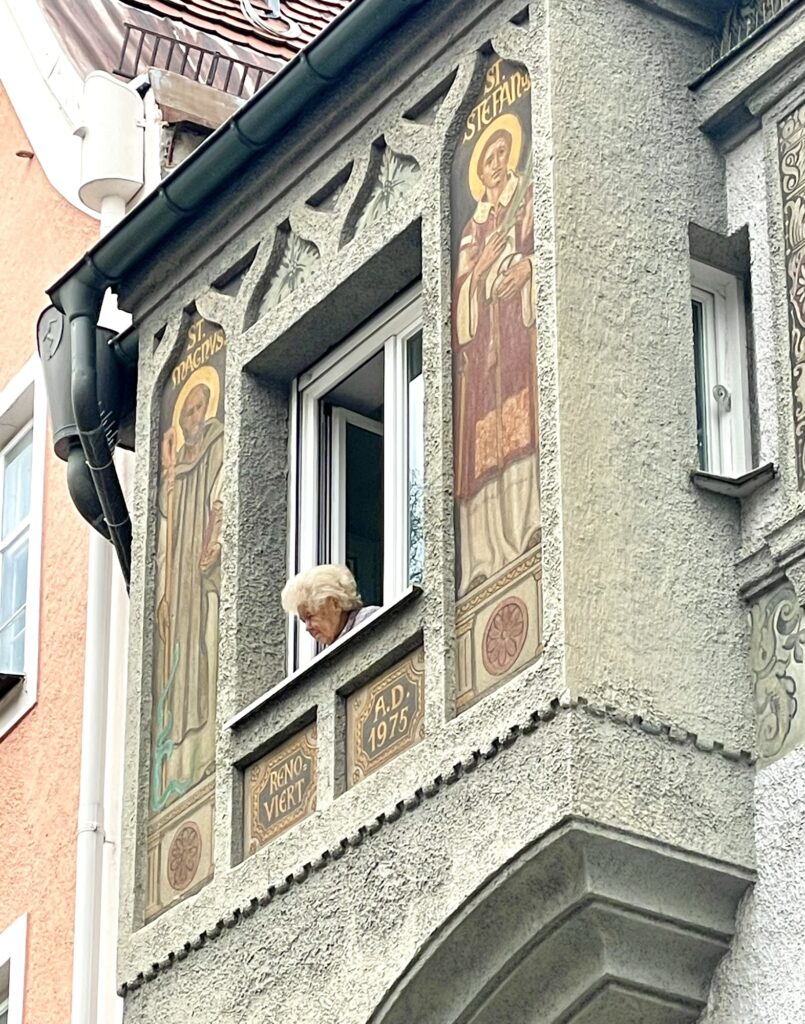
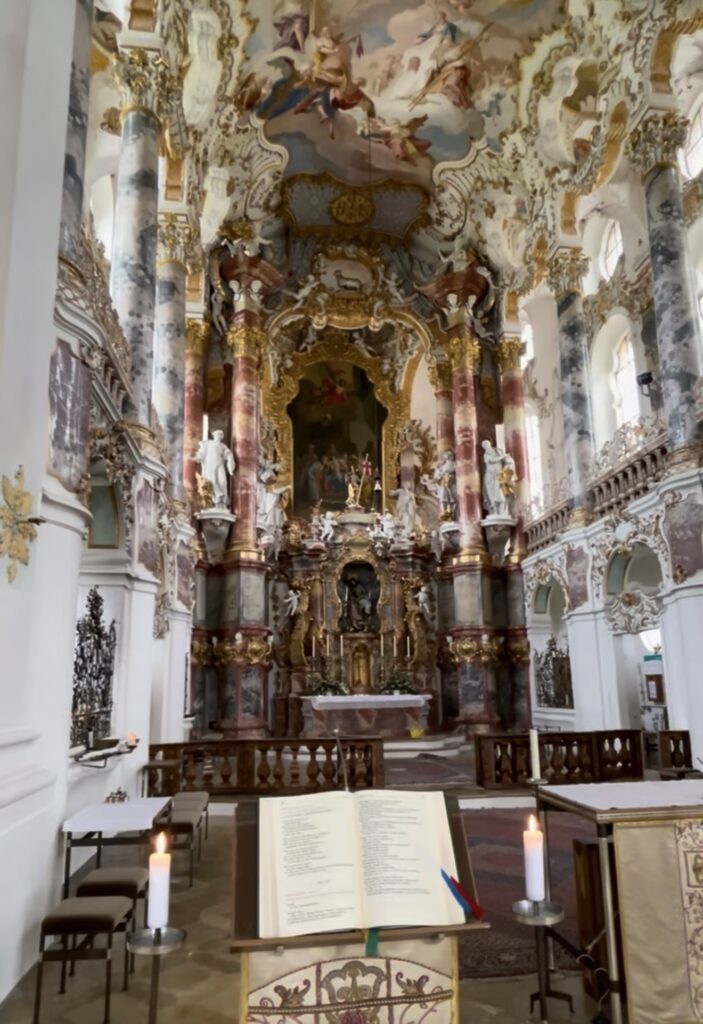
That led us to the Church of the Holy Spirit, or Heilig-Geist-Spitalkirche, with its distinctively painted façade. We also discovered the Franciscan Monastery of St. Stephen and the Lautenmacherbrunnen, a fountain that reflects Füssen’s long association with lute-making.
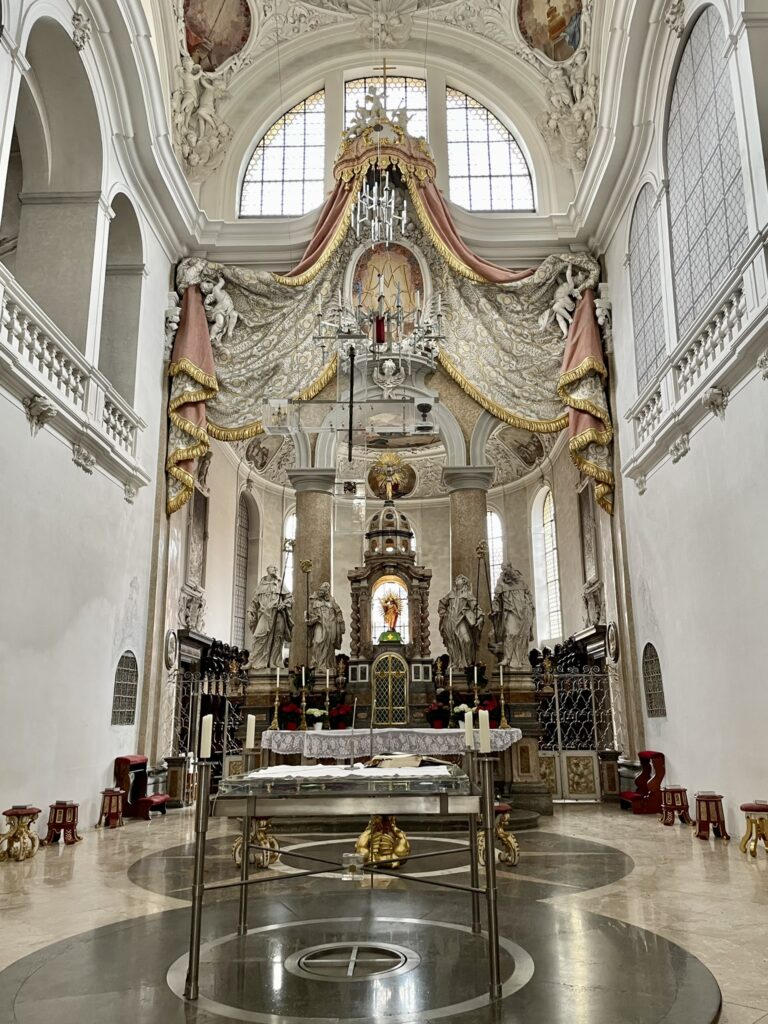
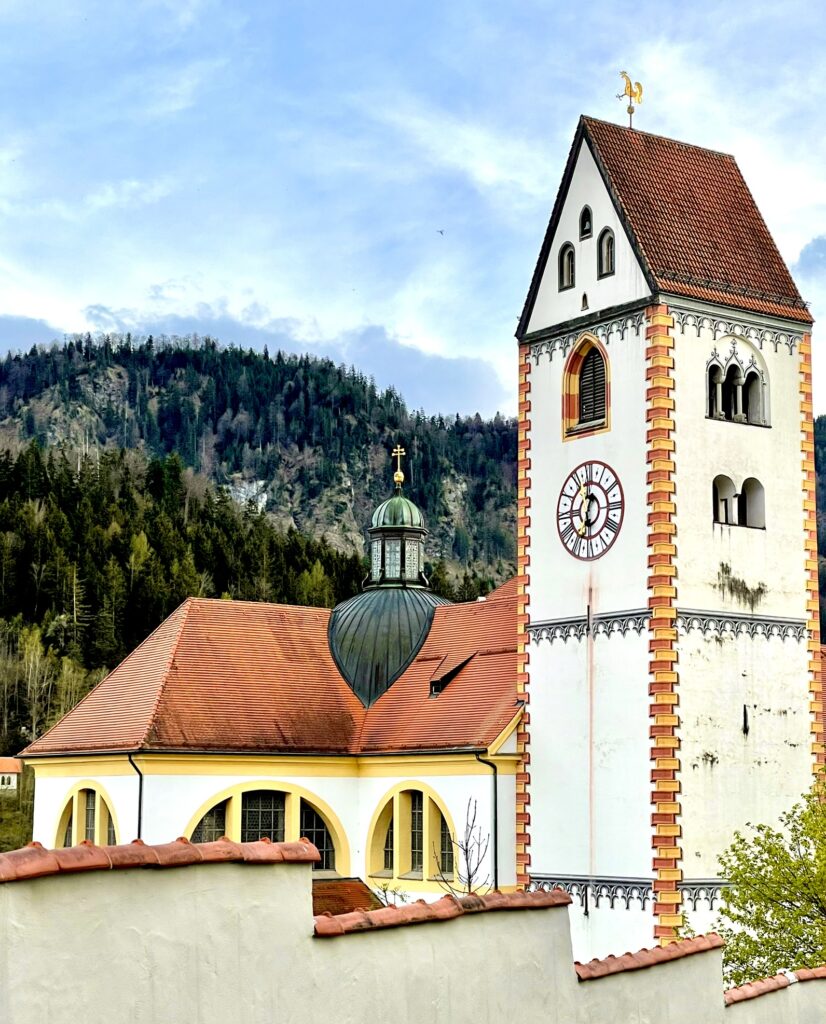
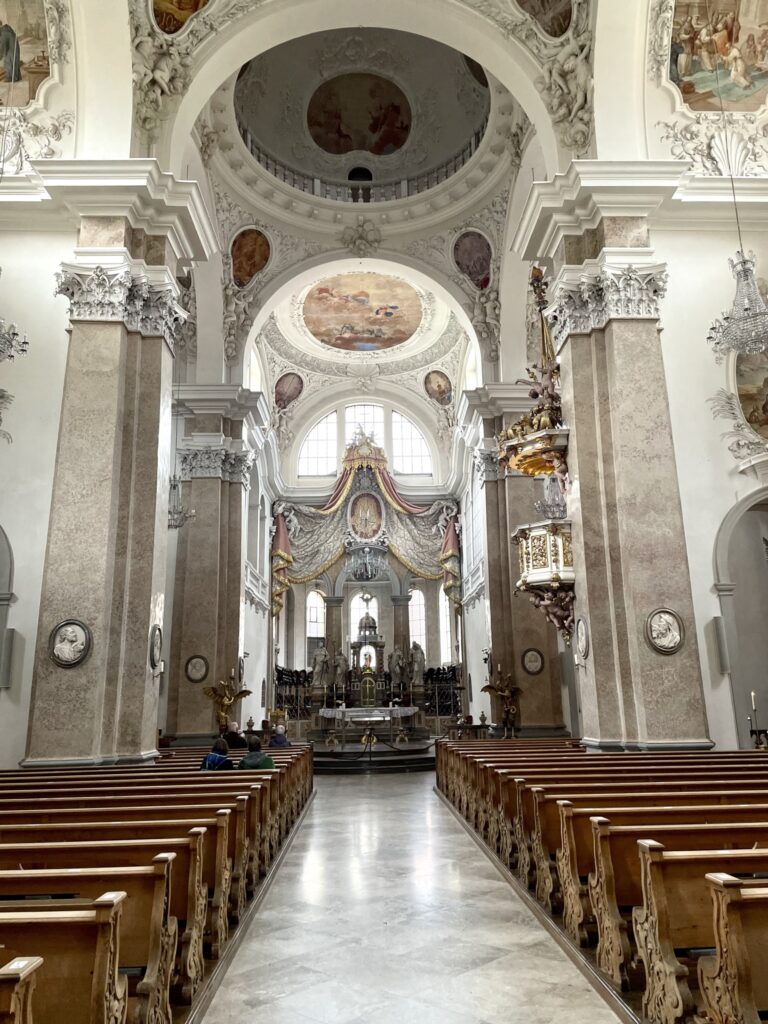
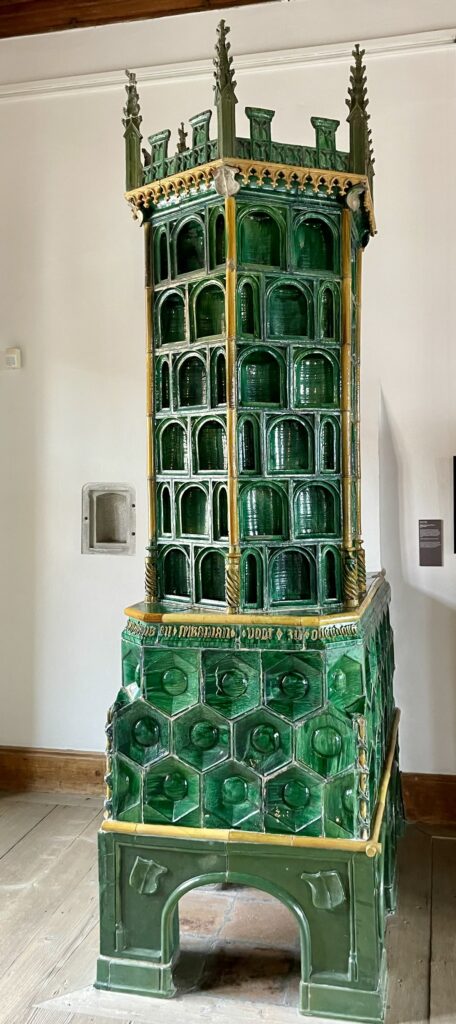
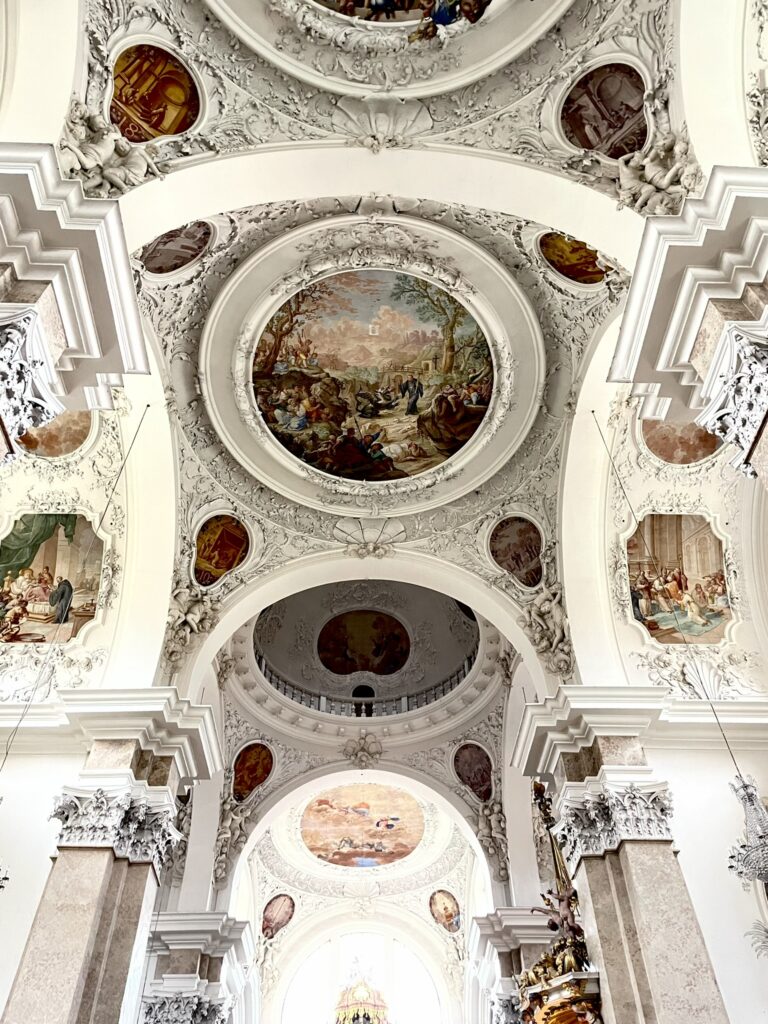
There is considerable religious history here as well, including the former Benedictine monastery of St. Mang and several historic churches.
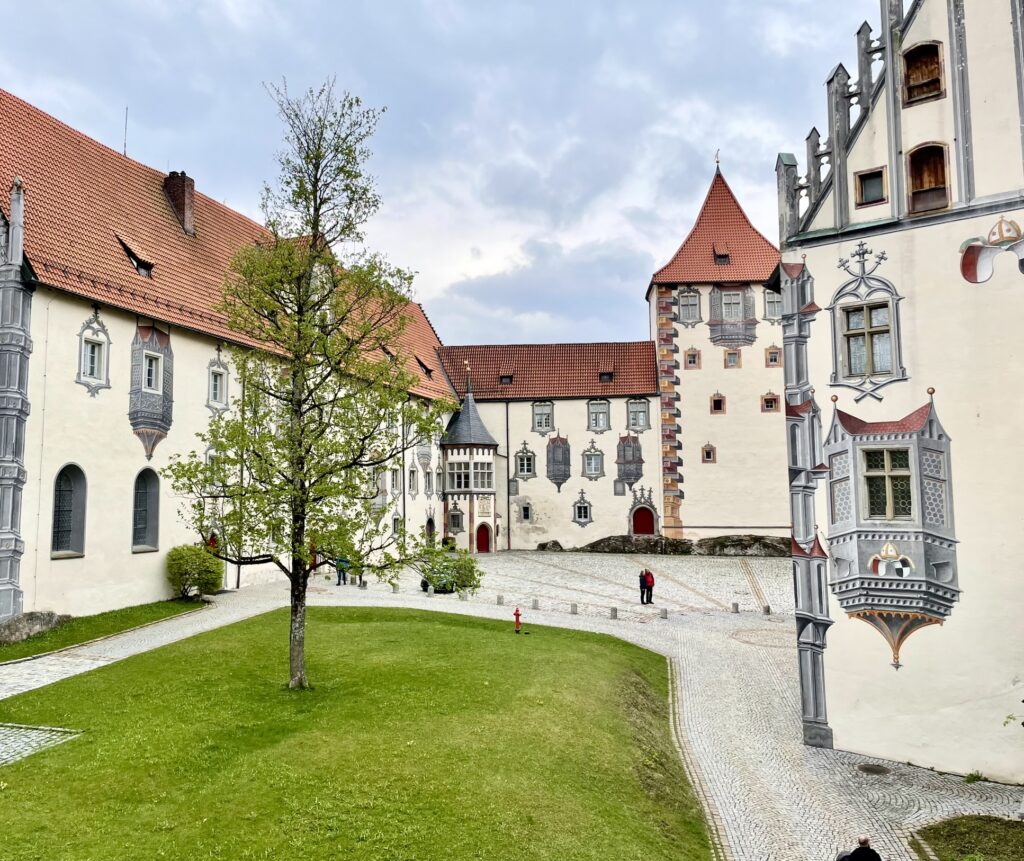
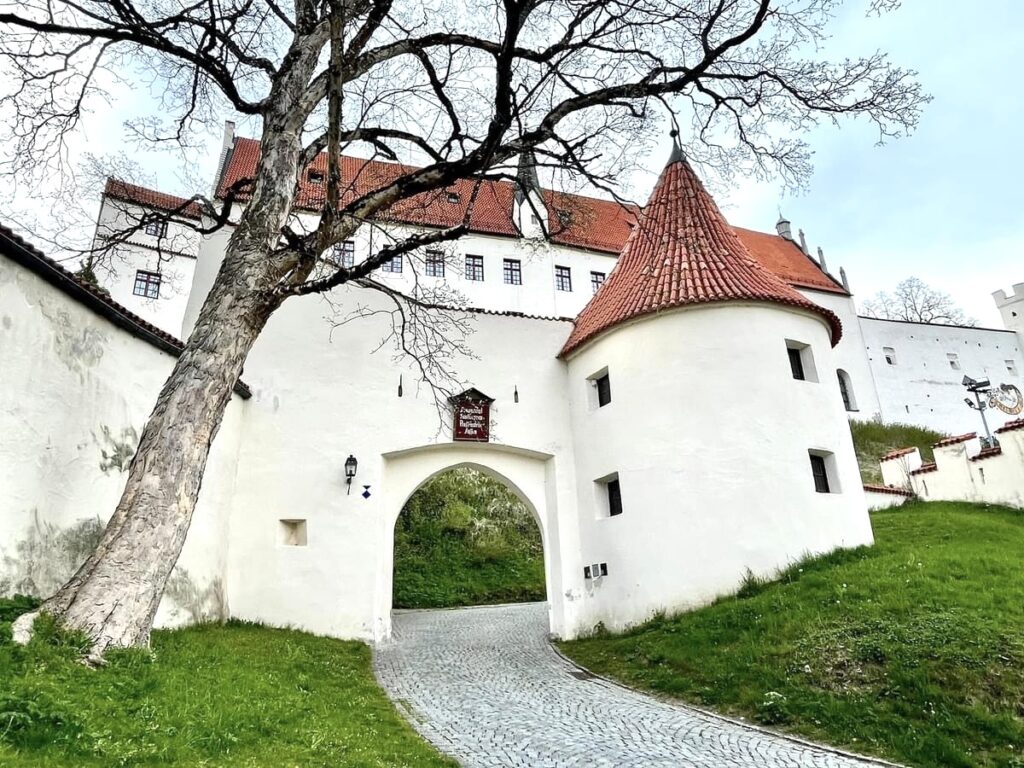
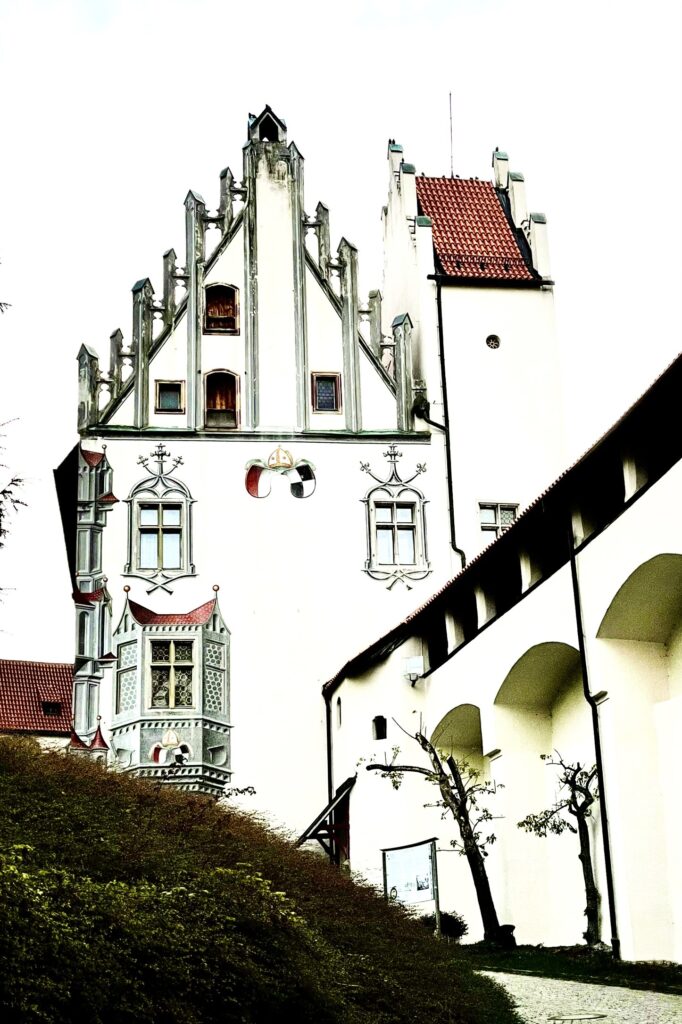
Above it all stands the Hohes Schloss, or High Castle. Once the summer residence of the prince-bishops of Augsburg, the castle is particularly memorable for the illusion paintings across portions of its courtyard façades. Architectural details that initially appear three-dimensional are actually painted onto the walls.
It was another castle, but completely different from the royal residences we had visited earlier.
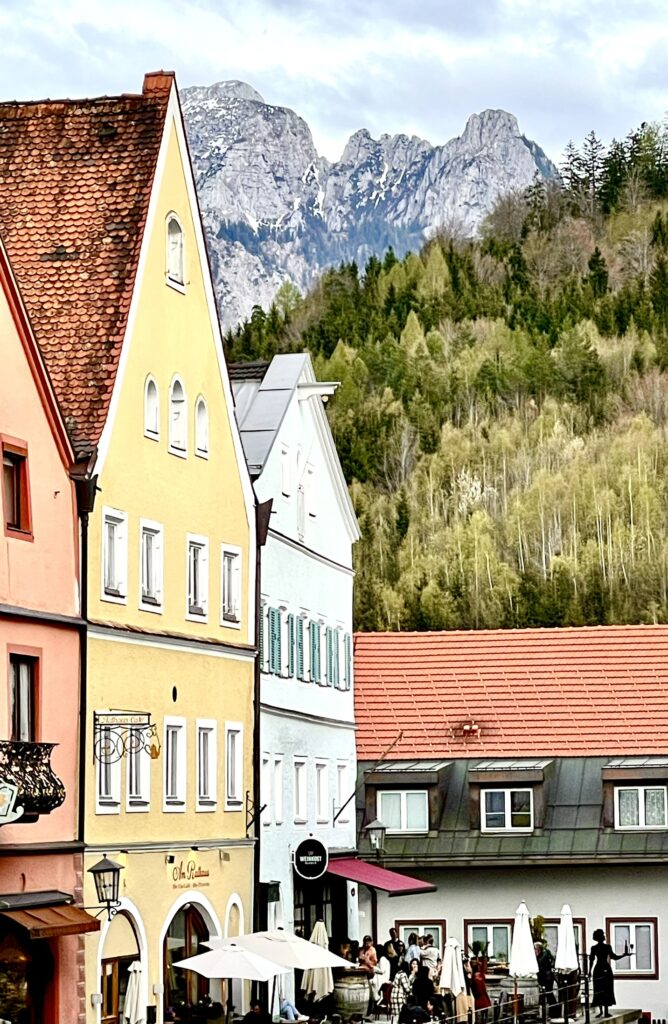
What we enjoyed most about Füssen, though, was having time to walk without rushing. Colorful buildings, small squares, churches and cafés kept tempting us down another street. This was the Bavaria we had hoped to experience.
Hopfensee Became One of Our Favorite Places
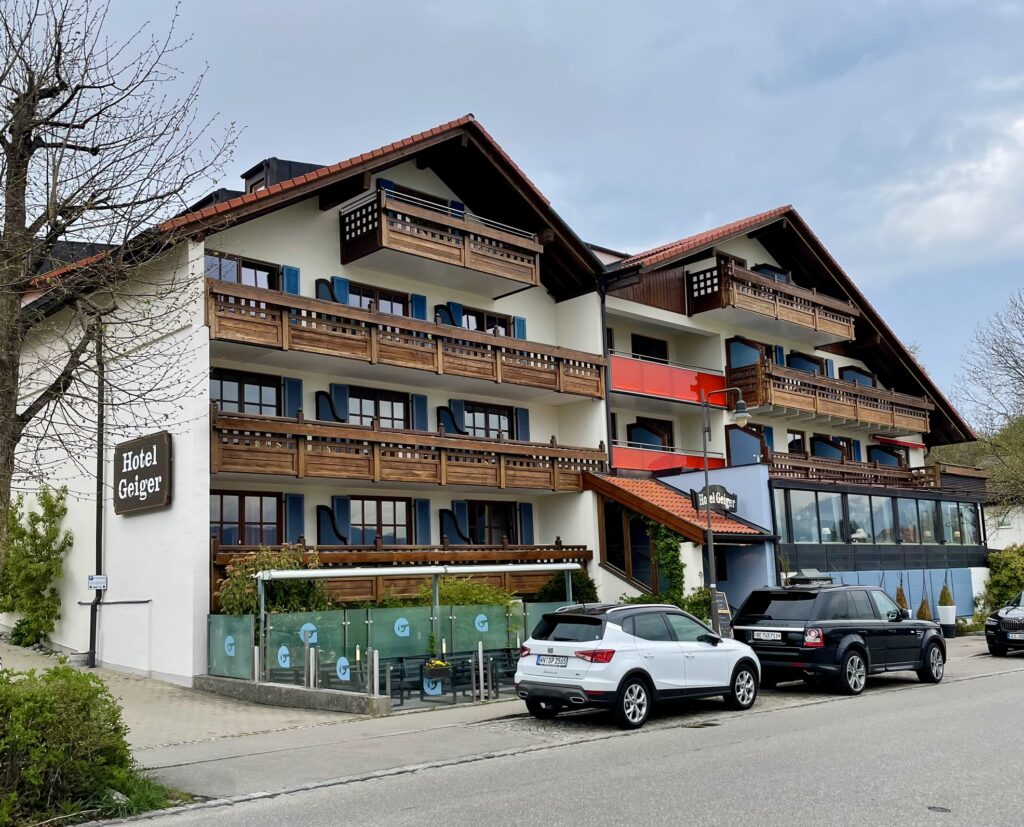
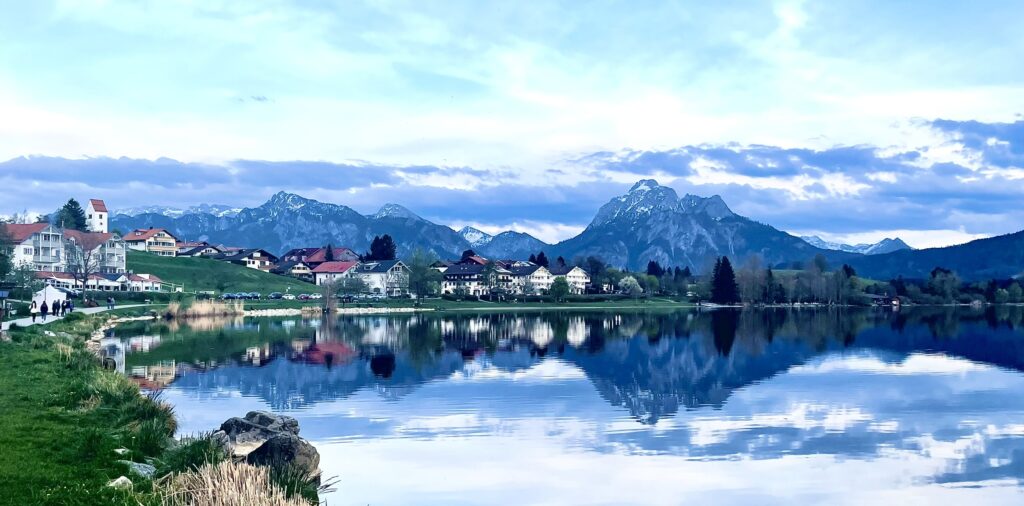
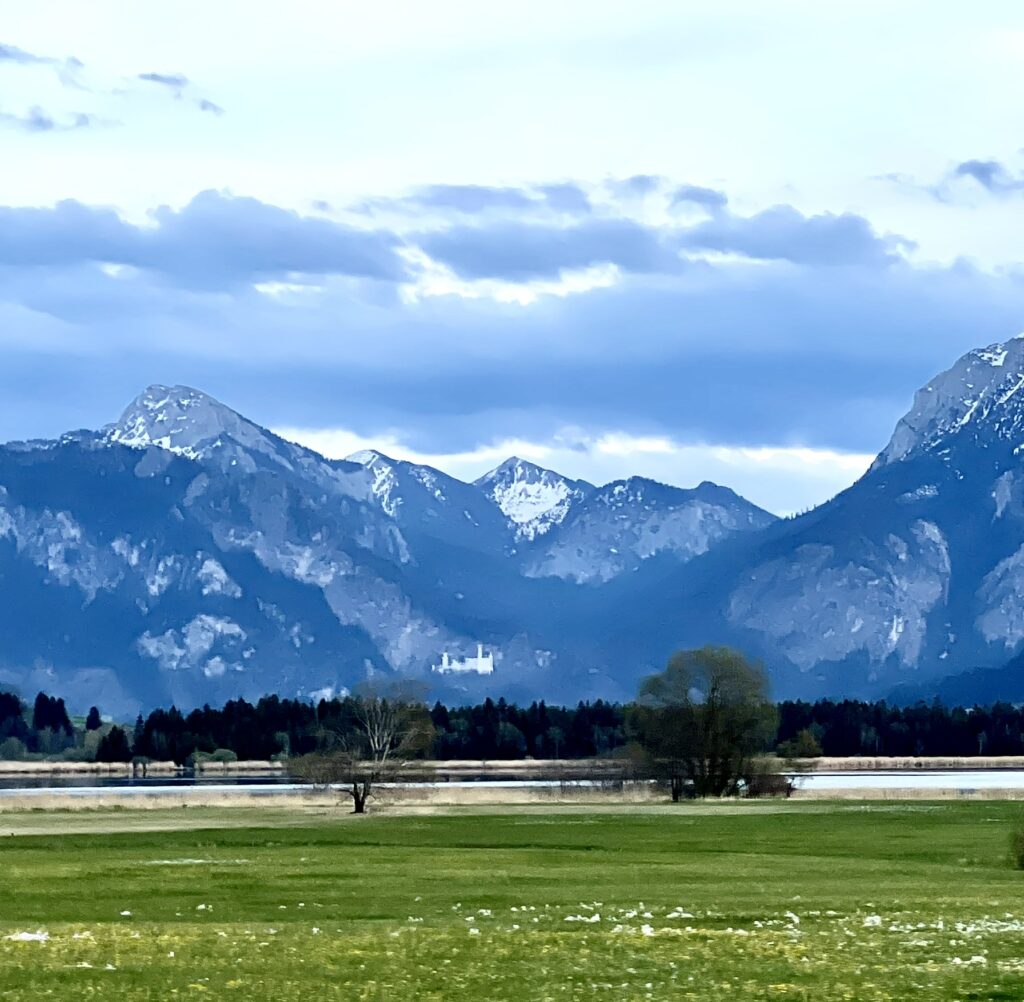
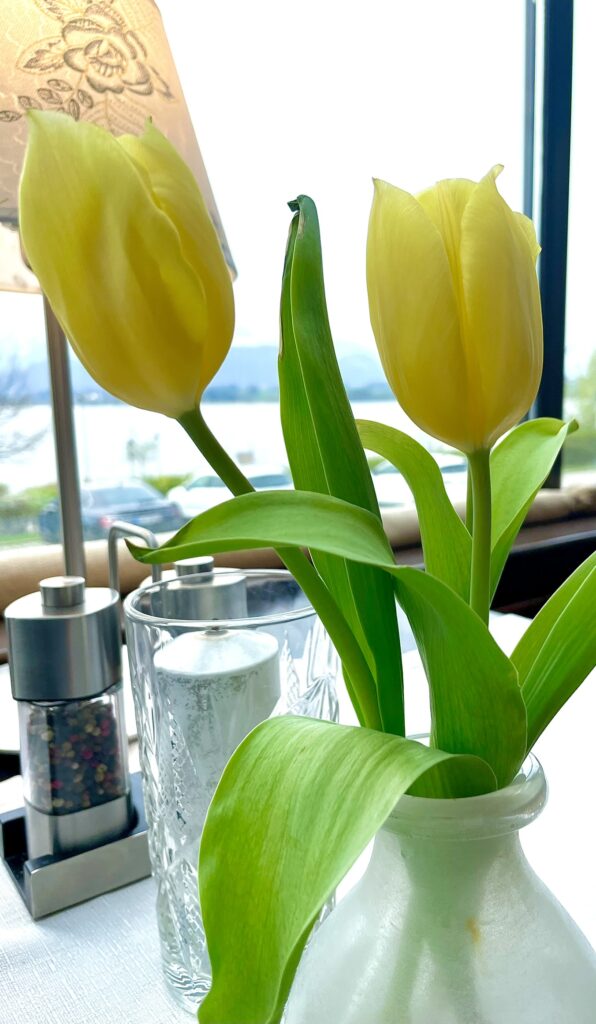
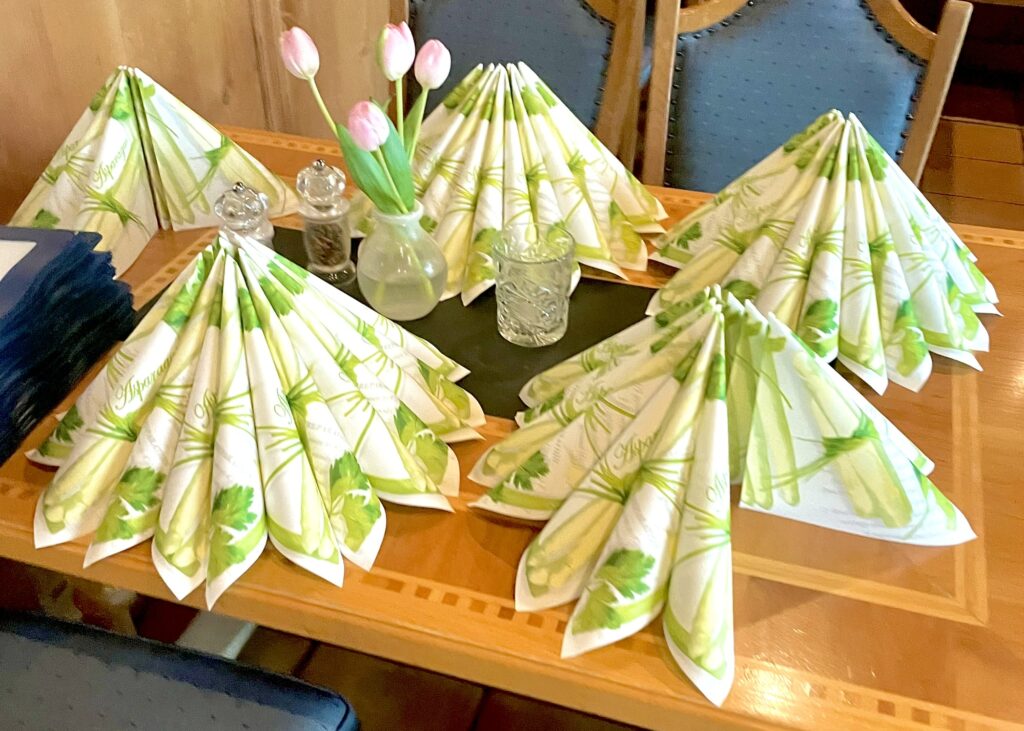
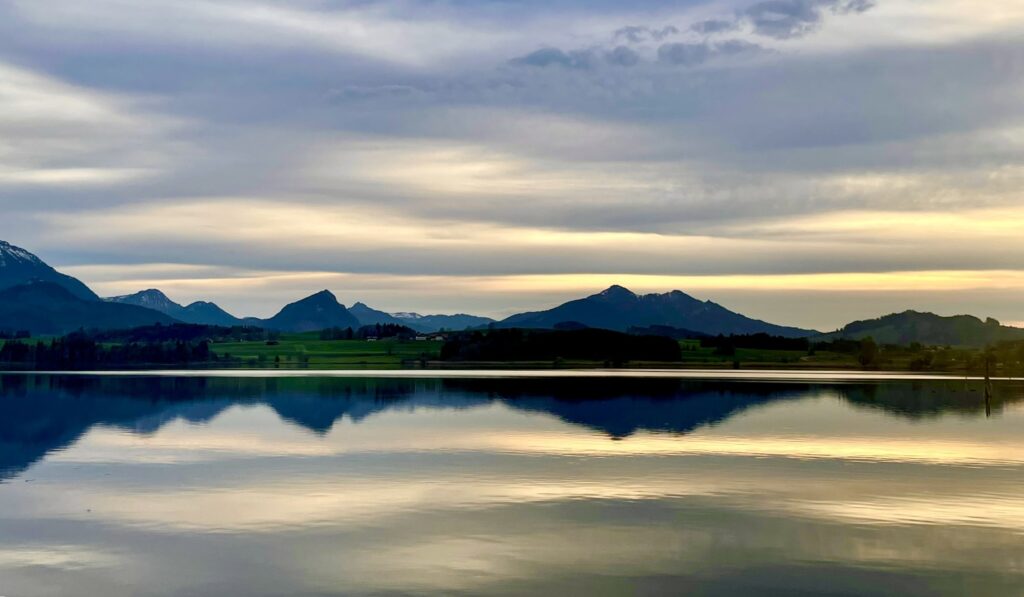
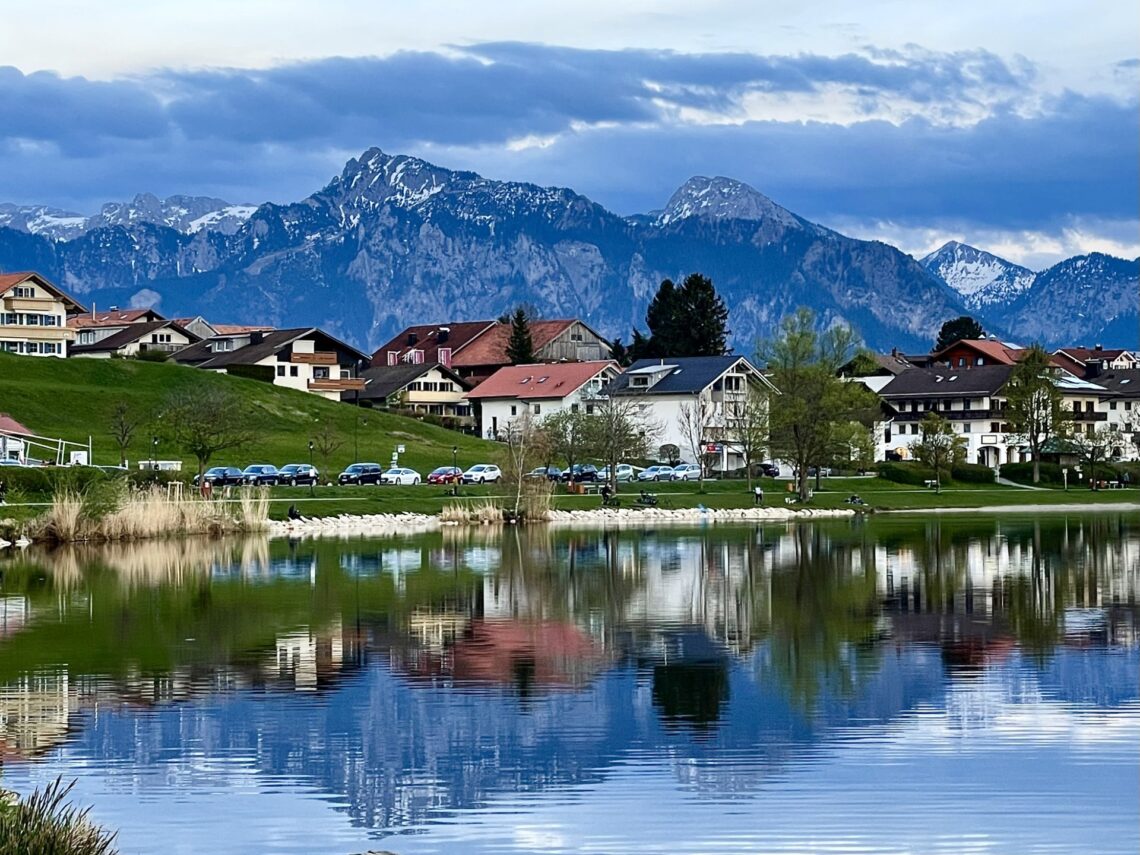
For all the castles and history surrounding Füssen, one place we remember most clearly is Hopfensee.
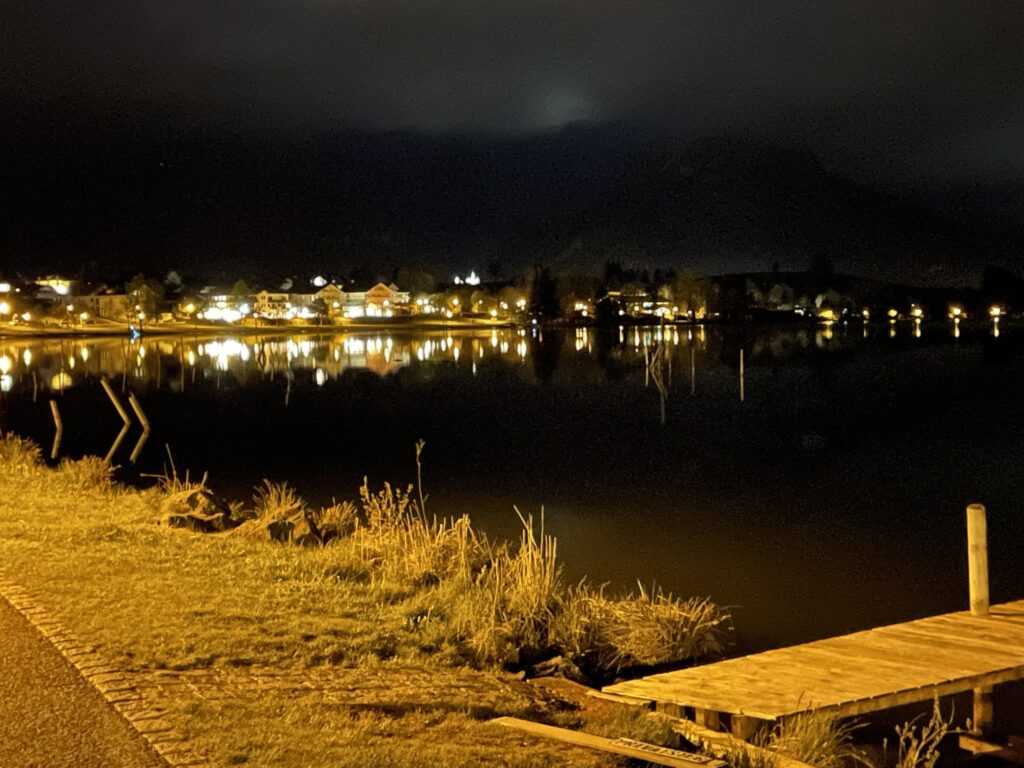
We stayed at Hotel Geiger in Hopfen am See, directly across from the lake. The location gave us a completely different perspective on the area and became an important part of why we enjoyed our stay so much.
The Alps rose beyond the water, and the view changed throughout the day as the light shifted across the mountains. Instead of finishing our sightseeing and driving away, we could return to the lake, walk along the shoreline, and slow down after a day spent exploring castles and historic sites.
It was easy to look across the water and begin imagining what we would do if we had several more days.
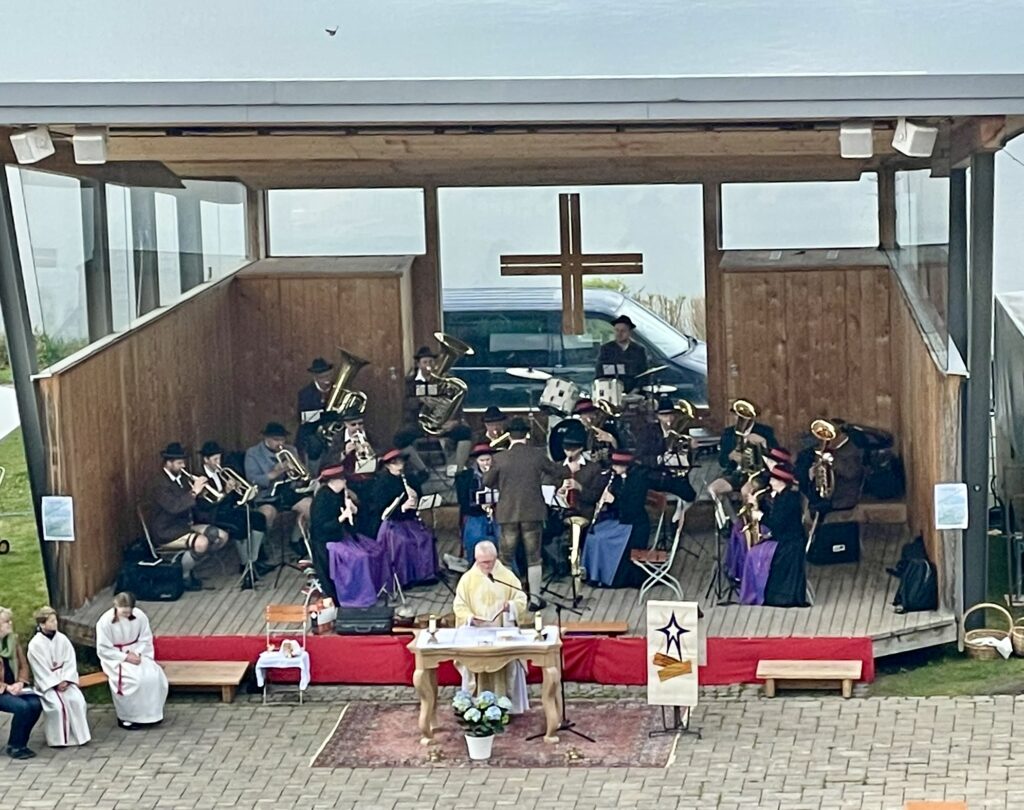
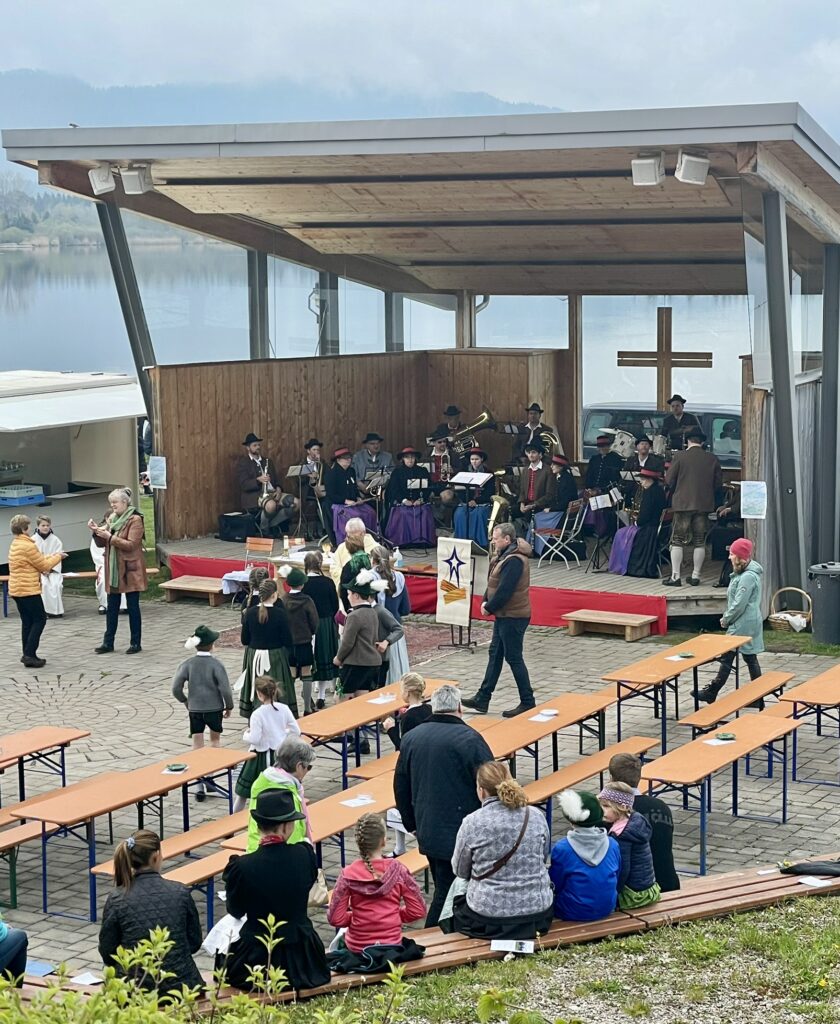
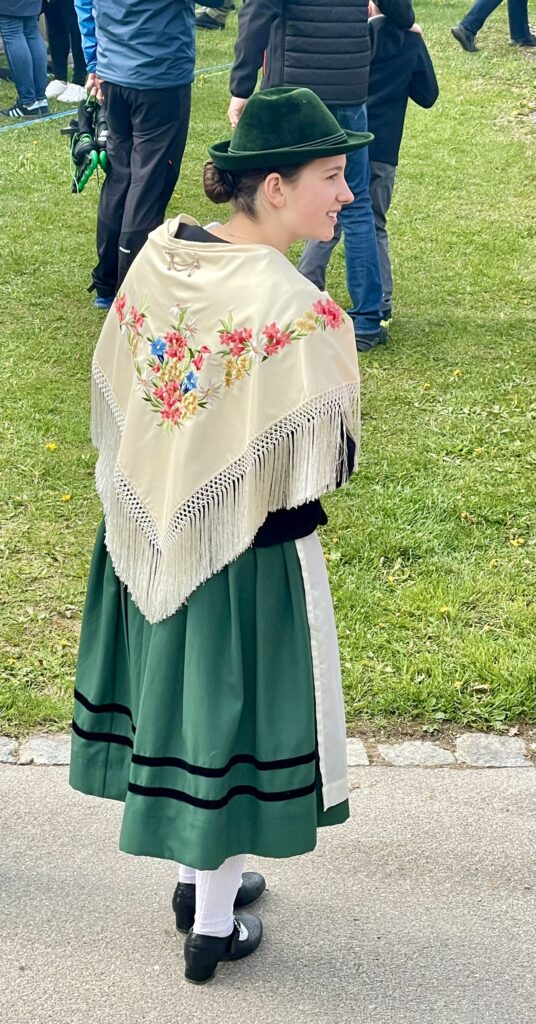
One morning, we heard music coming from outside and went to the hotel window to see what was happening. Below us, people were gathering along the lake for what appeared to be a Bavarian Sunday morning Mass and community celebration. Many were dressed in traditional clothing, and there was music, singing, food, and beer.
We hadn’t planned it or even known it was going to happen. We stood at the window and watched the community gather along the shore of Hopfensee. There was something very personal about witnessing a local tradition we hadn’t come looking for, and we felt privileged to be there.
Those unplanned moments often become some of our strongest travel memories. We had come to the region thinking about castles, yet one of the scenes we still remember most vividly began with music drifting up to our hotel room and drawing us to the window. It was something we could never have scheduled.
Füssen Makes You Want to Get Outside
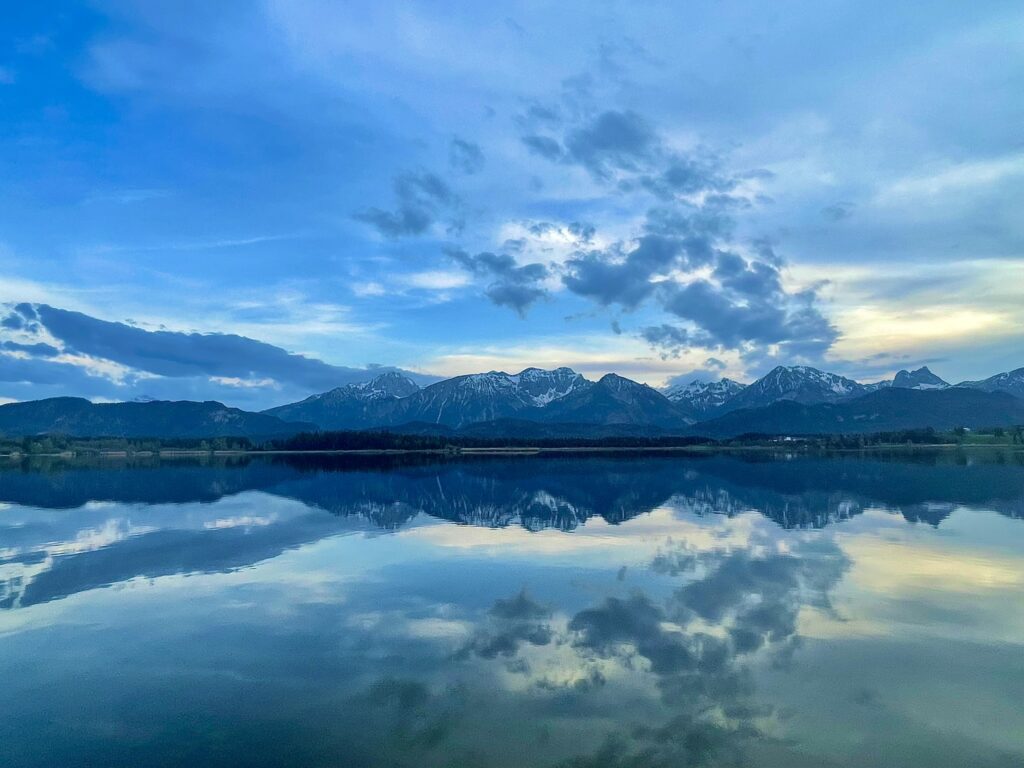
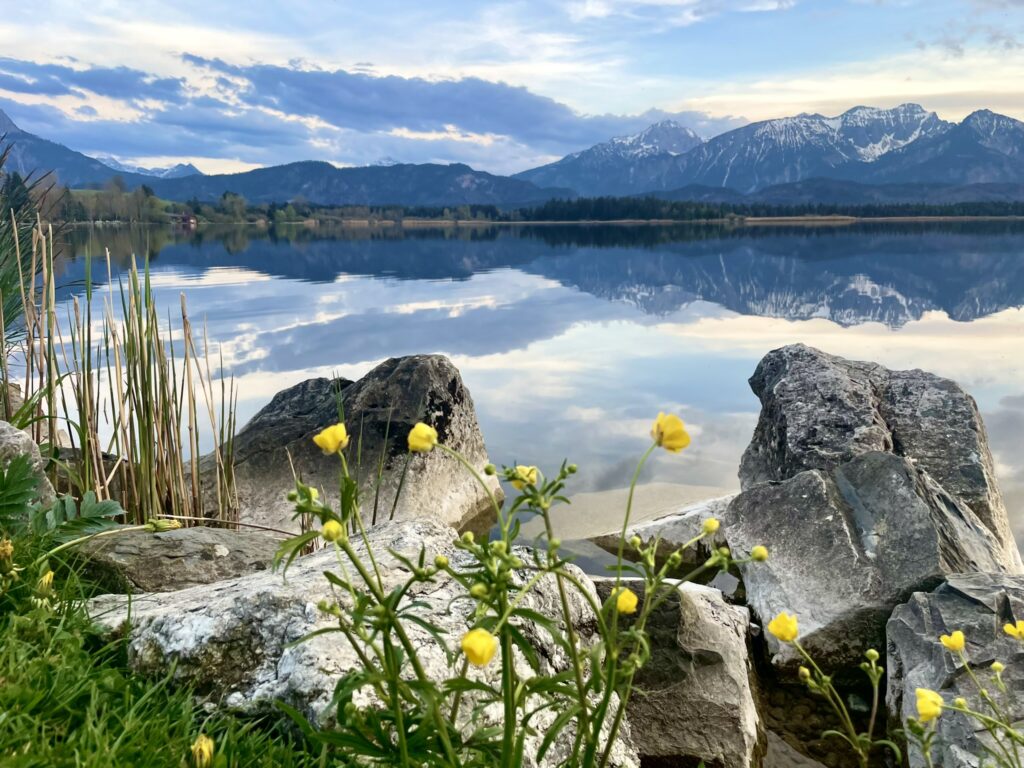
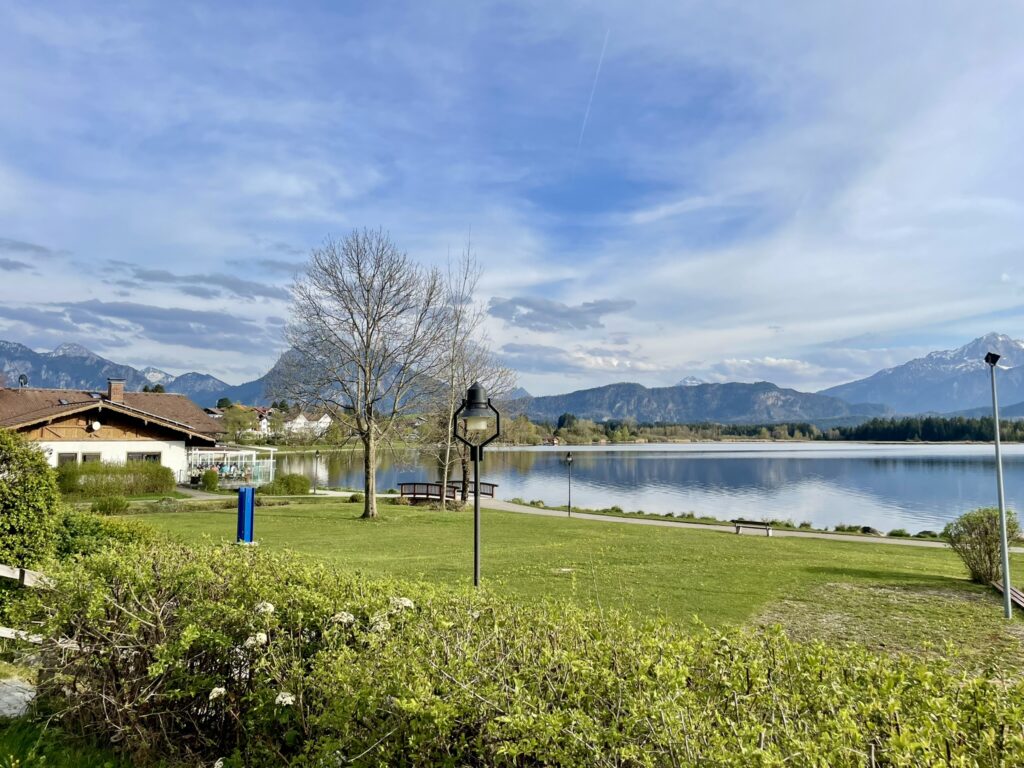
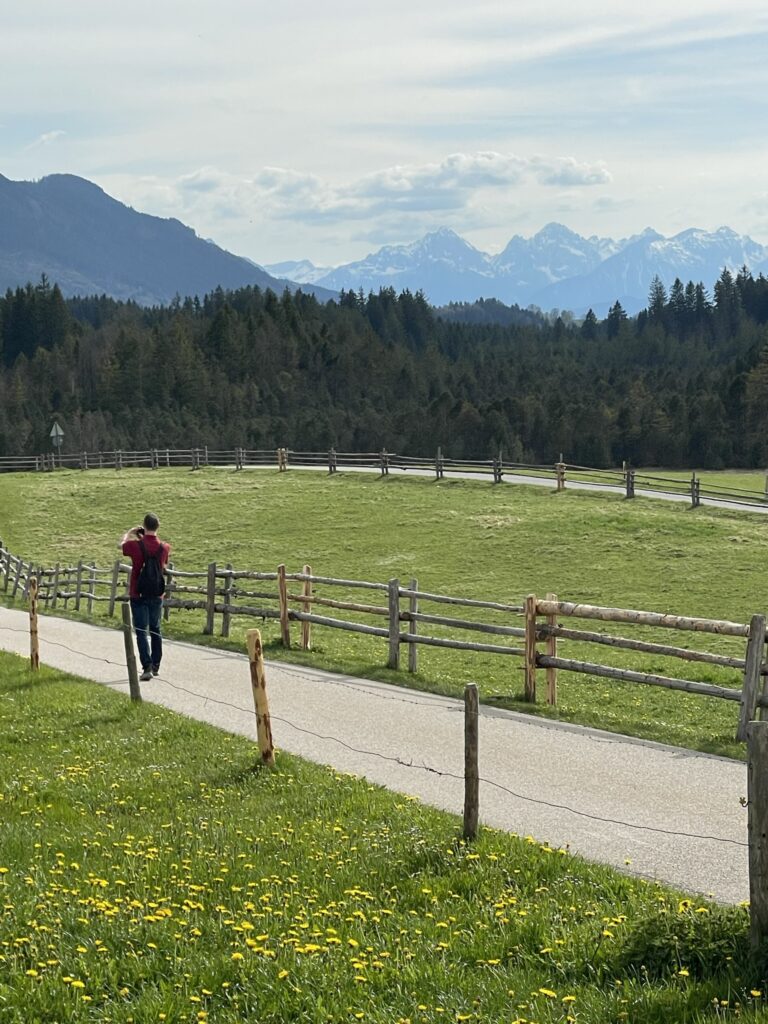
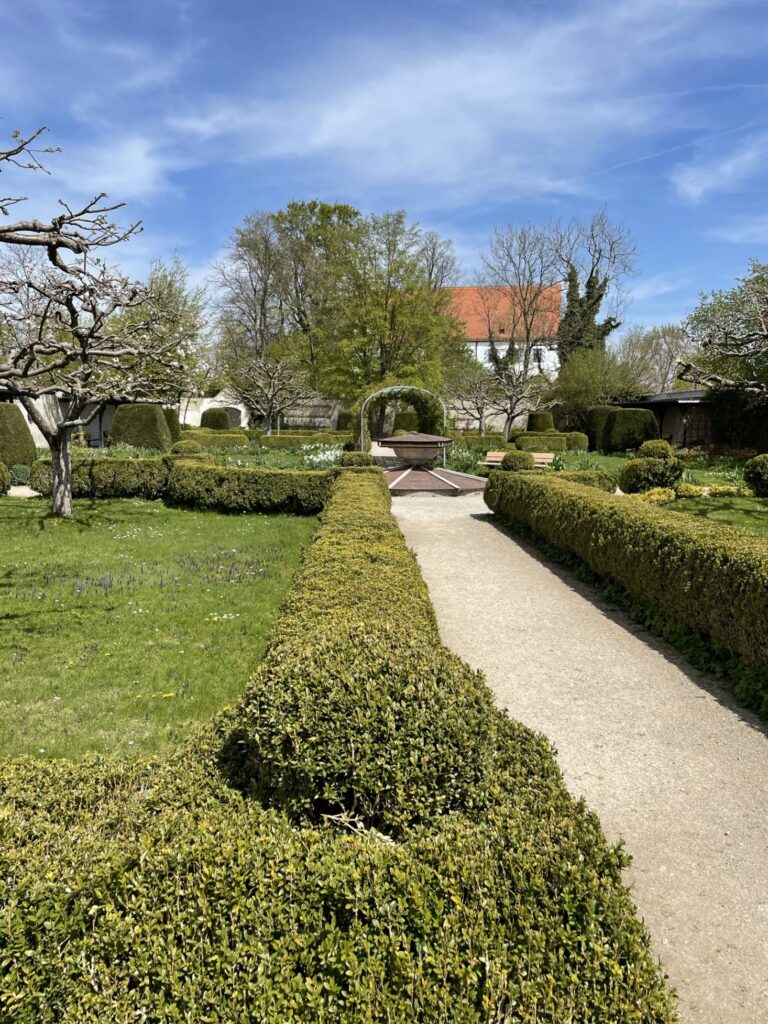
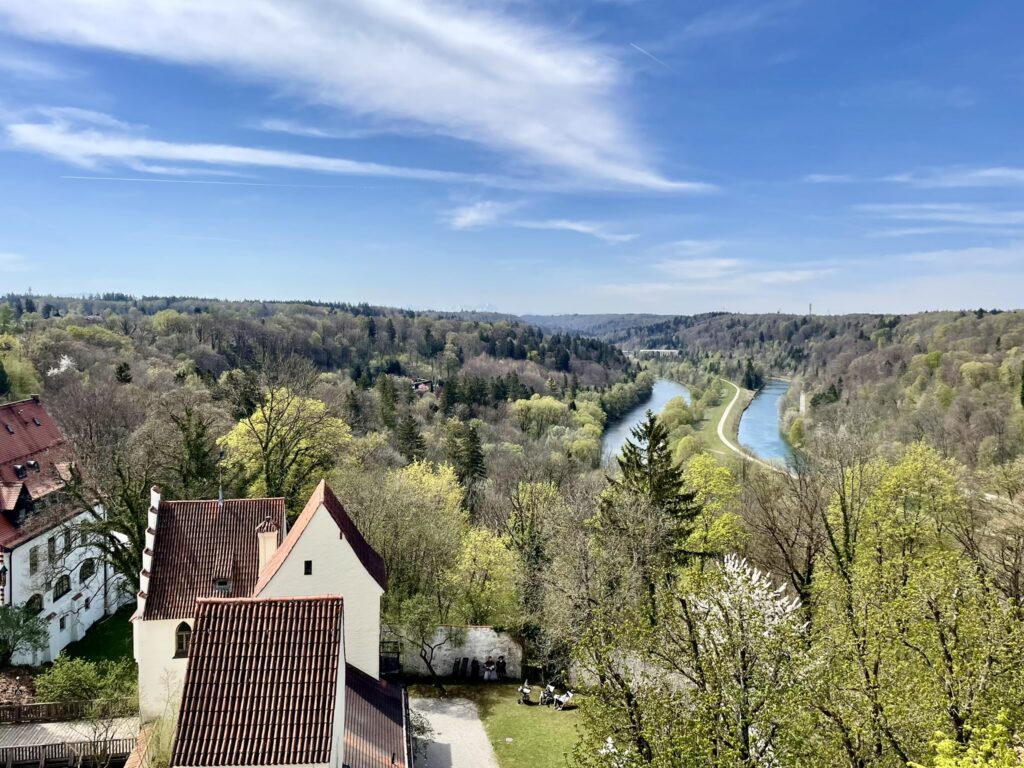
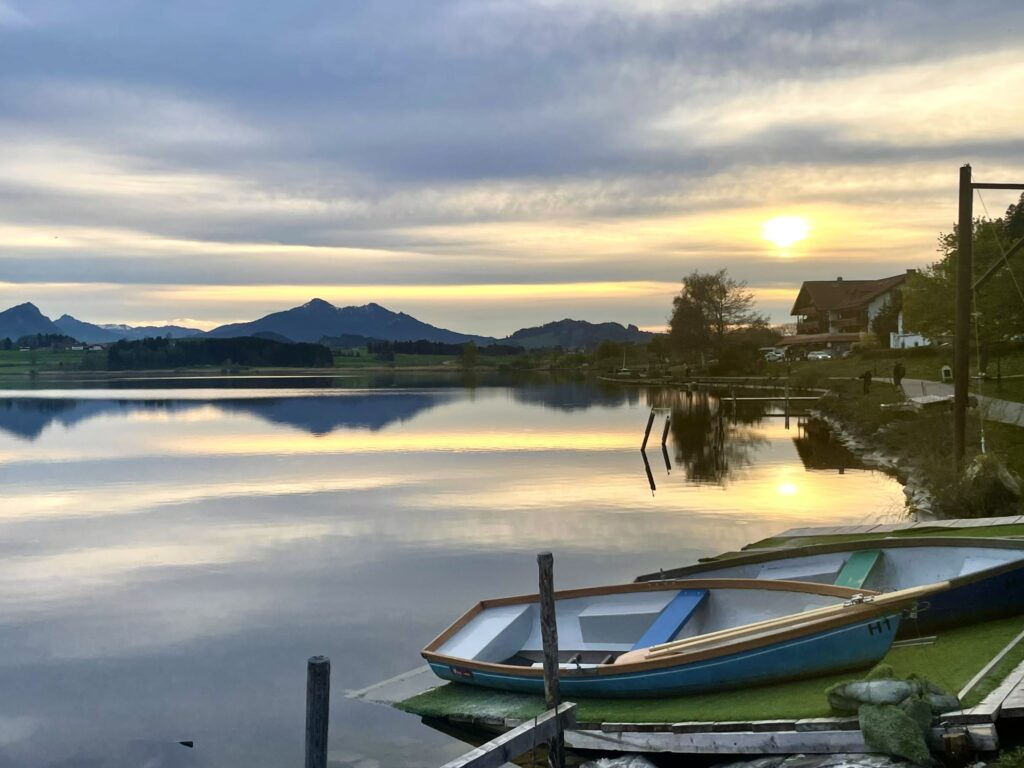
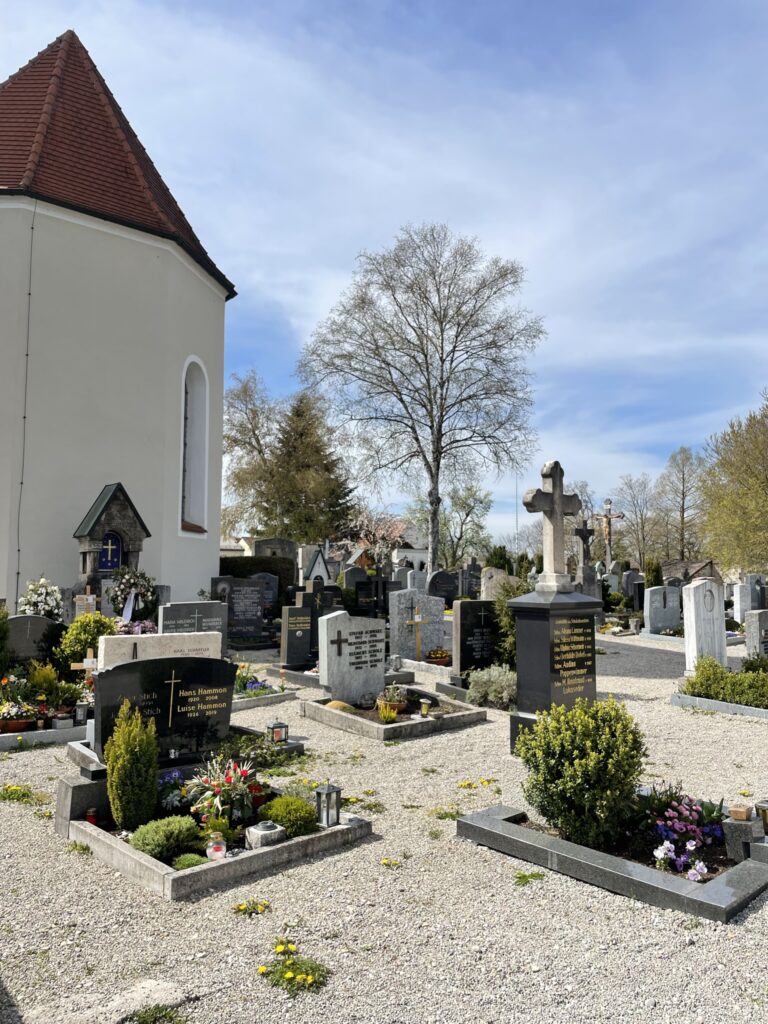
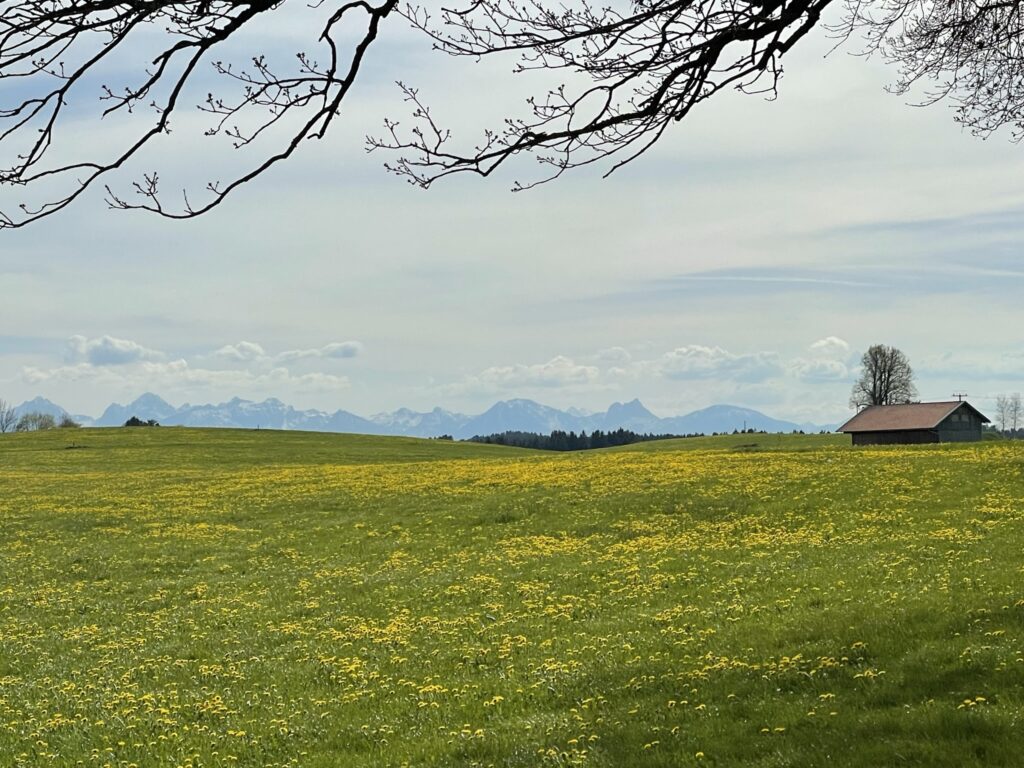
Our time beside Hopfensee also showed us how much there was to experience outdoors.
This is the northern edge of the Alps, and the scenery is almost constantly present. Lakes, mountains, forests and meadows surround the town, opening up opportunities for hiking, cycling and boating.
You don’t have to be a serious hiker to enjoy this side of Füssen. There are routes for different ability levels, along with paths around the lakes and cycling routes connecting communities throughout the area. With more time, we could easily have spent a day on bicycles or exploring trails before returning to Hopfensee in the evening.
The more we explored, the more we realized that our problem wasn’t finding things to do. It was accepting how much we weren’t going to have time to experience on this trip.
Don’t Miss Lechfall

One of the natural sites we did make time for was Lechfall, where the Lech River rushes through a narrow gorge just outside Füssen.
The water has the striking blue-green color we saw repeatedly throughout this Alpine region. A walkway and viewing area make Lechfall relatively easy to incorporate into a day of exploration without turning the stop into a major excursion.
Lechfall was an easy stop to work into the day. We could spend the morning inside castles and centuries-old churches and, not long afterward, find ourselves standing above rushing Alpine water.
That mix of history and landscape was becoming one of our favorite parts of the area.
Crossing Into Austria for Burgenwelt Ehrenberg
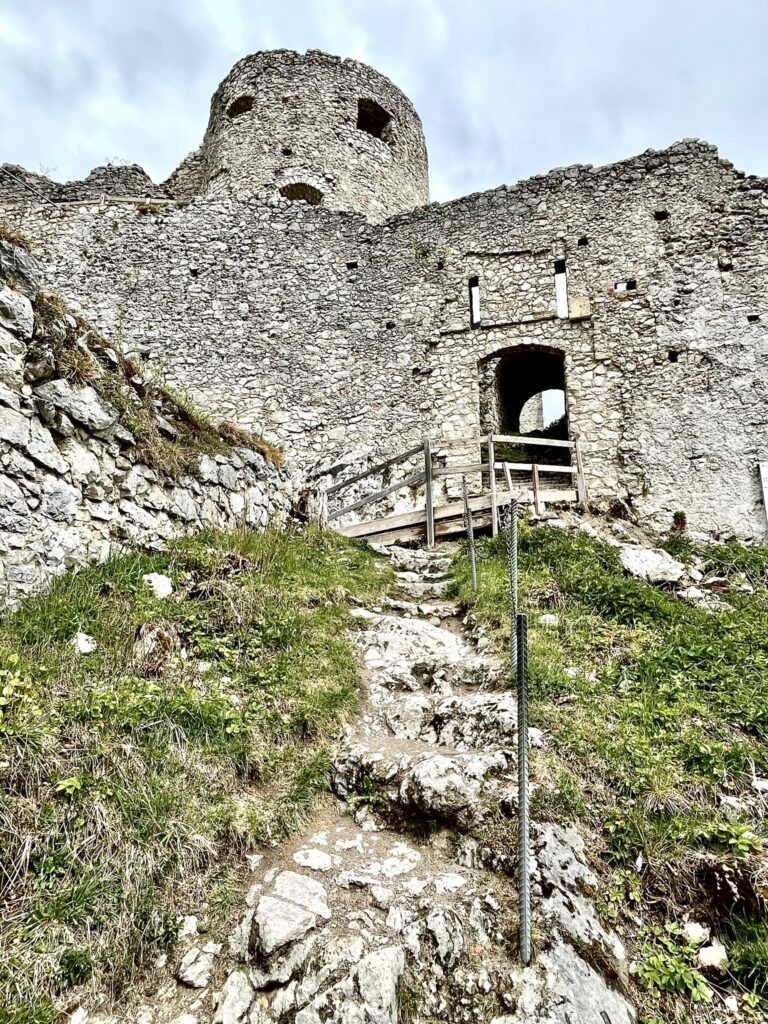
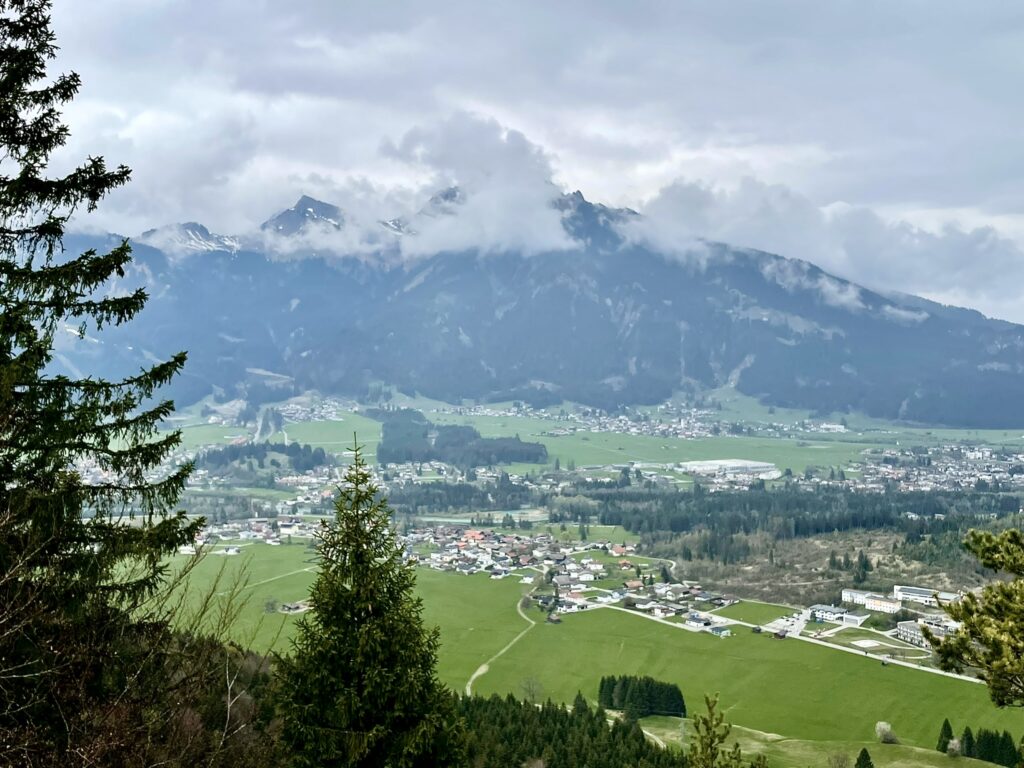
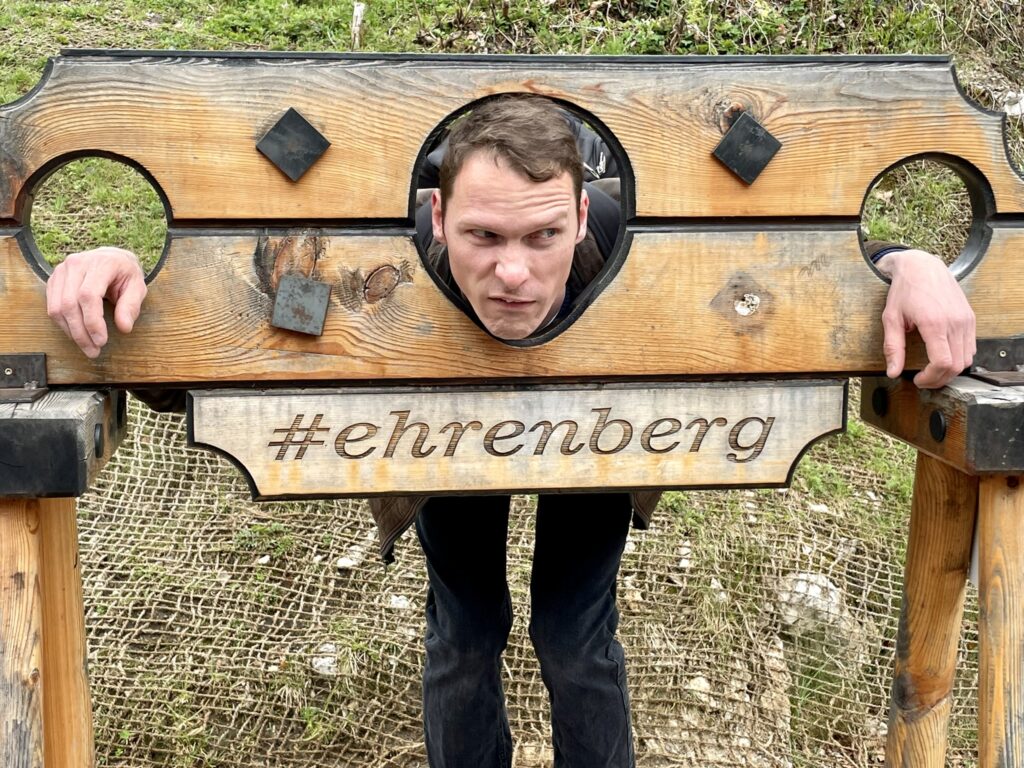
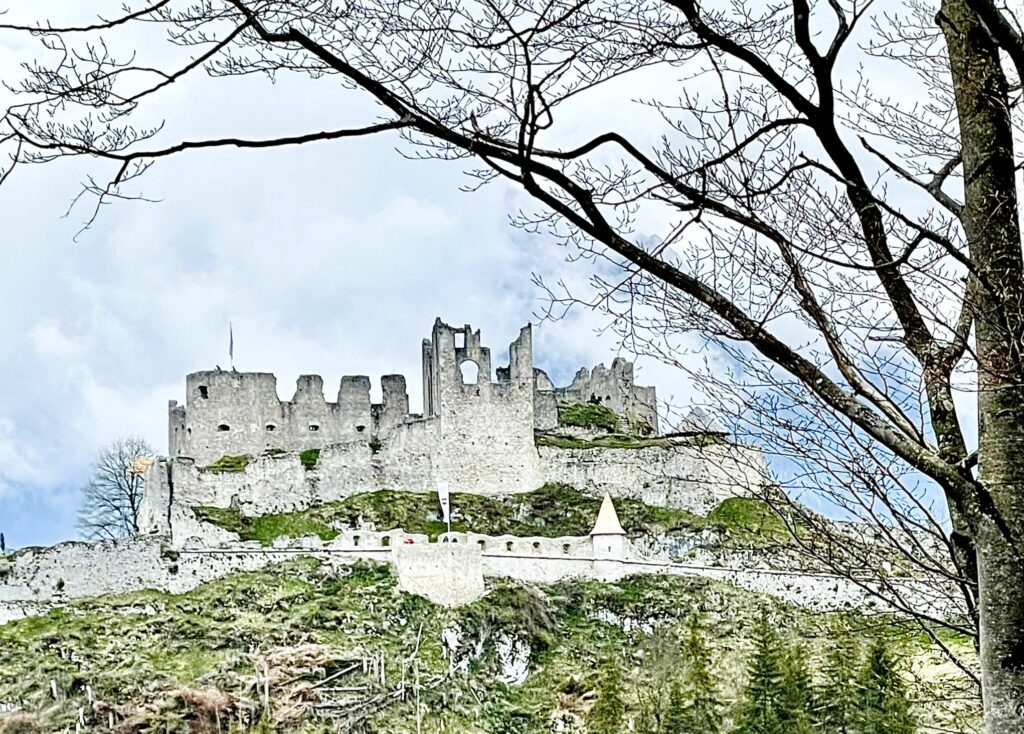
Another advantage of staying in the Füssen area is just how close you are to Austria. We drove across the border toward Reutte and Burgenwelt Ehrenberg, roughly half an hour away, and suddenly found ourselves exploring an entirely different type of castle landscape.
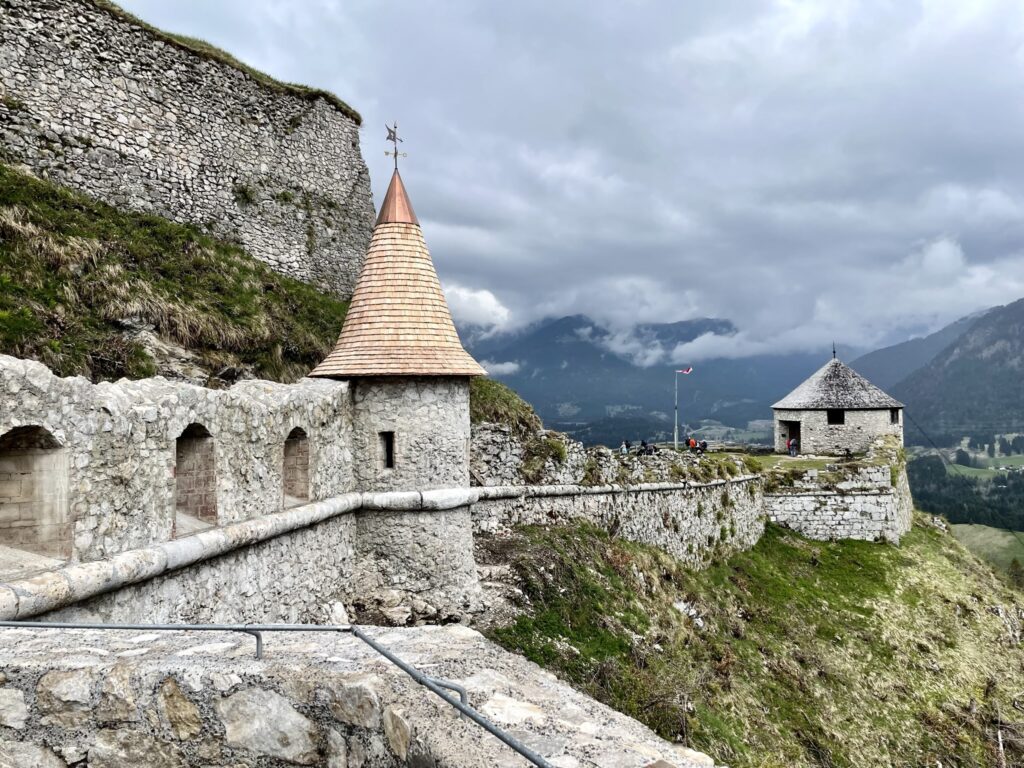
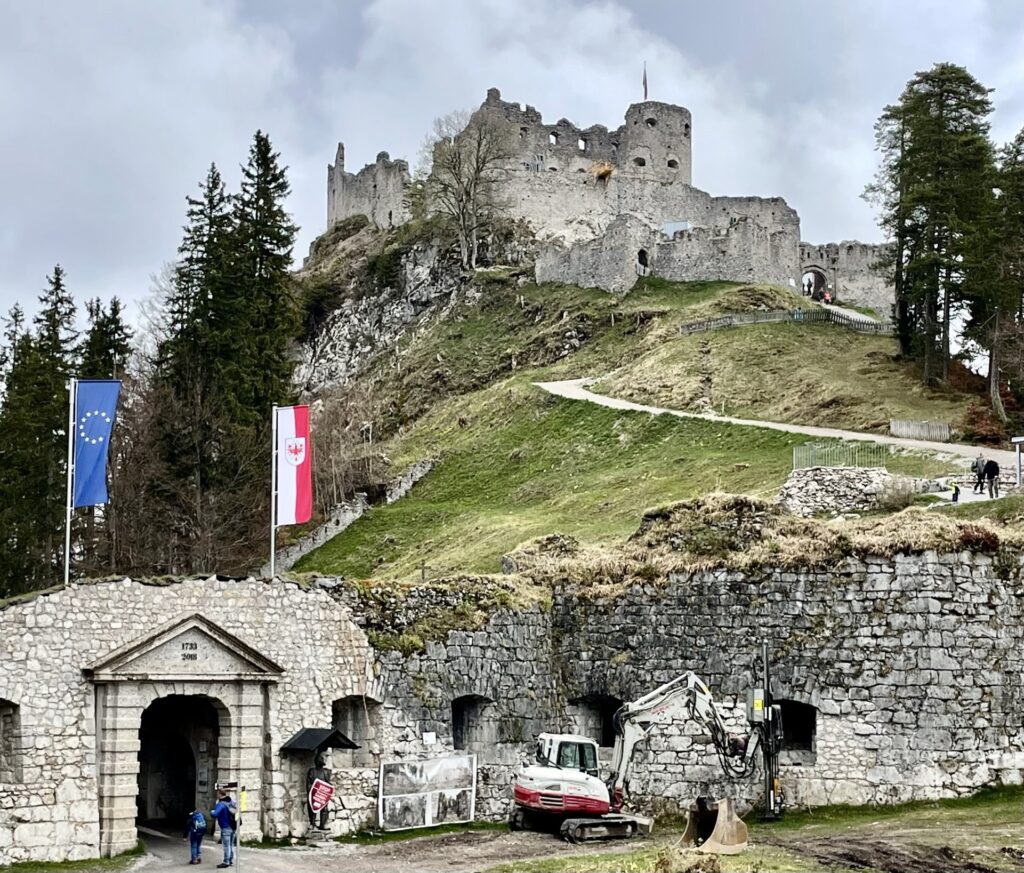
Instead of Ludwig II’s romantic palace, Burgenwelt Ehrenberg is a sprawling defensive complex built around control of an important Alpine route. It includes Ehrenberg Castle, Fort Claudia, the Klause, and Fortress Schlosskopf high above the valley.
For castle hunters like us, this was the kind of place where it was difficult to decide where to look first.
Ehrenberg Castle occupies the mountainside while Fort Claudia faces it from the opposite ridge. Higher still is Schlosskopf, positioned above the valley. These fortifications weren’t created as romantic interpretations of the Middle Ages. They were part of a defensive system intended to control movement through a strategically important Alpine corridor.
Combatting Fear of Heights
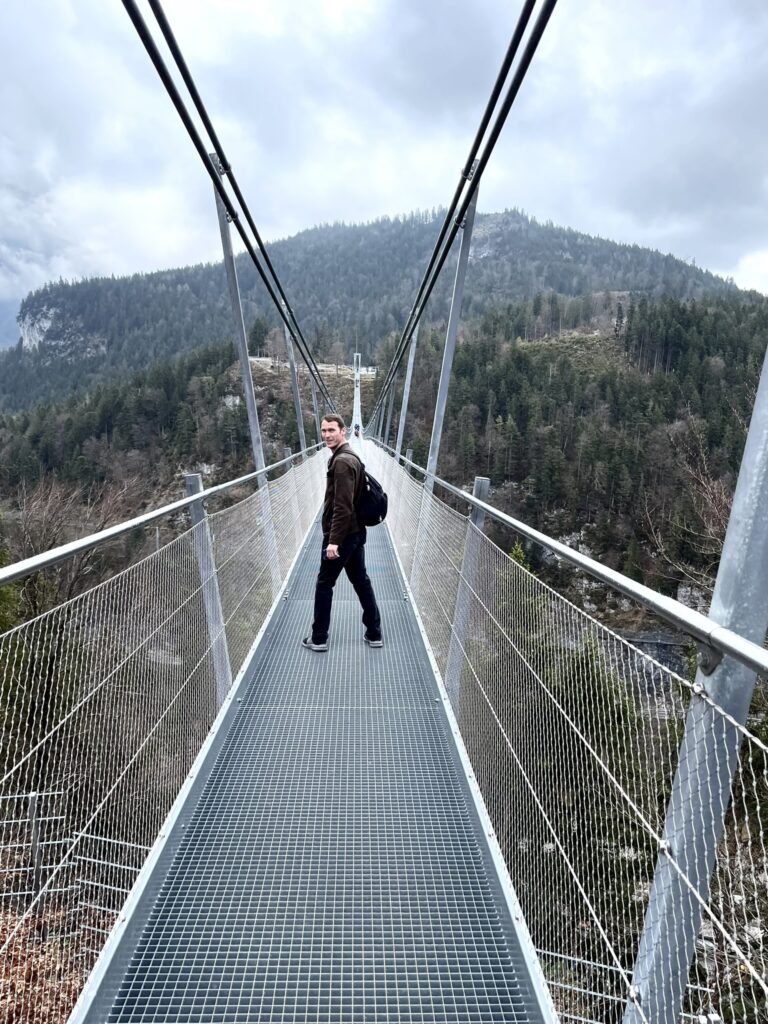
Stretching high above the valley is highline179, the pedestrian suspension bridge connecting the Ehrenberg side of the valley with the area near Fort Claudia.
For Joelle, crossing it was another matter entirely.
Joelle is terrified of heights, and looking at a suspension bridge hanging that high above the valley did little to make the idea appealing. With some encouragement from Ryan, though, she decided to do it.
Once we were out on the bridge, the views across the mountains, the valley, and the fortifications were incredible. From that height, we could see how the individual defensive positions related to one another and understand why controlling this route had been so important.
But for Joelle, reaching the other side meant something more. She had faced something that genuinely frightened her and done it anyway. By the end, she was pretty proud of herself.
We explored Ehrenberg Castle, Fort Claudia and the surrounding area and could easily have devoted more time to these mountains. Being able to add an entirely different country’s castles and history to the trip without changing our base was an incredible bonus.
Why We Would Give Füssen a Week Next Time
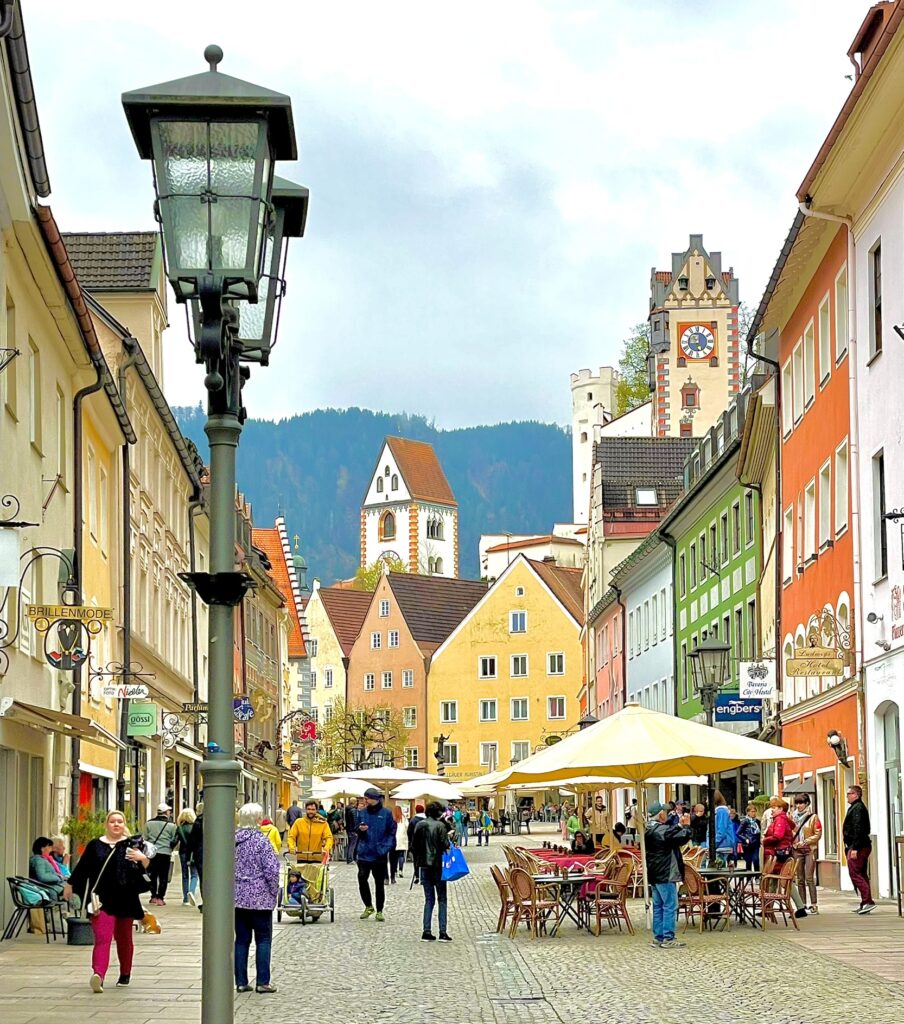
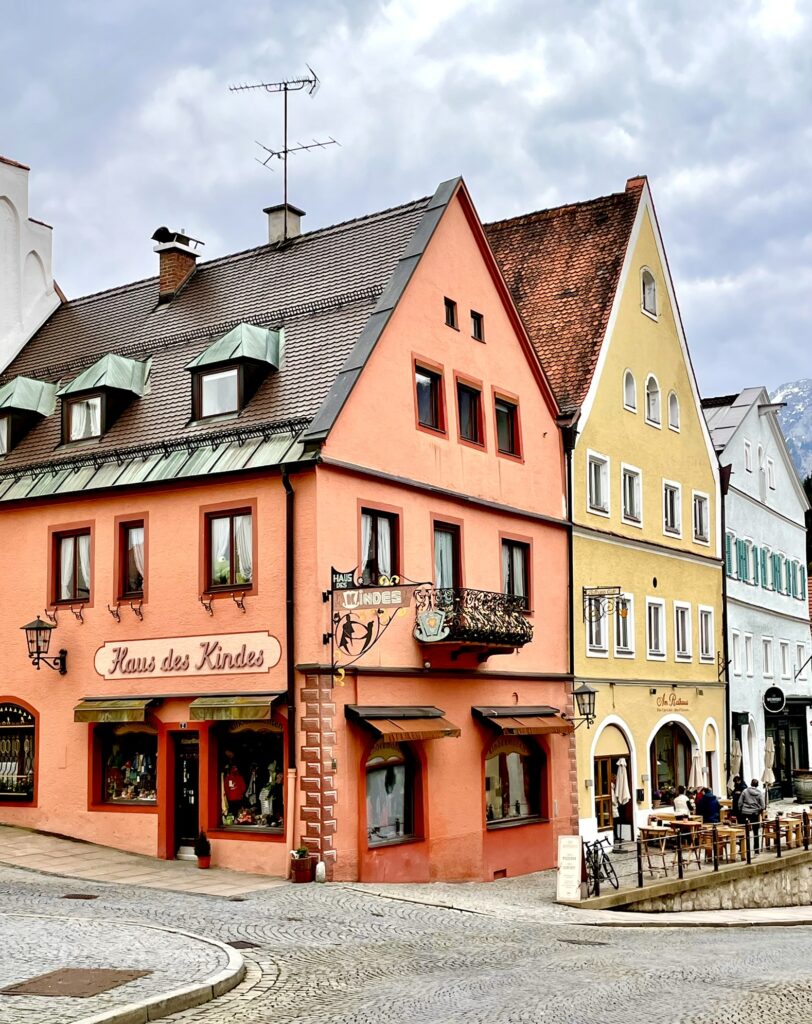
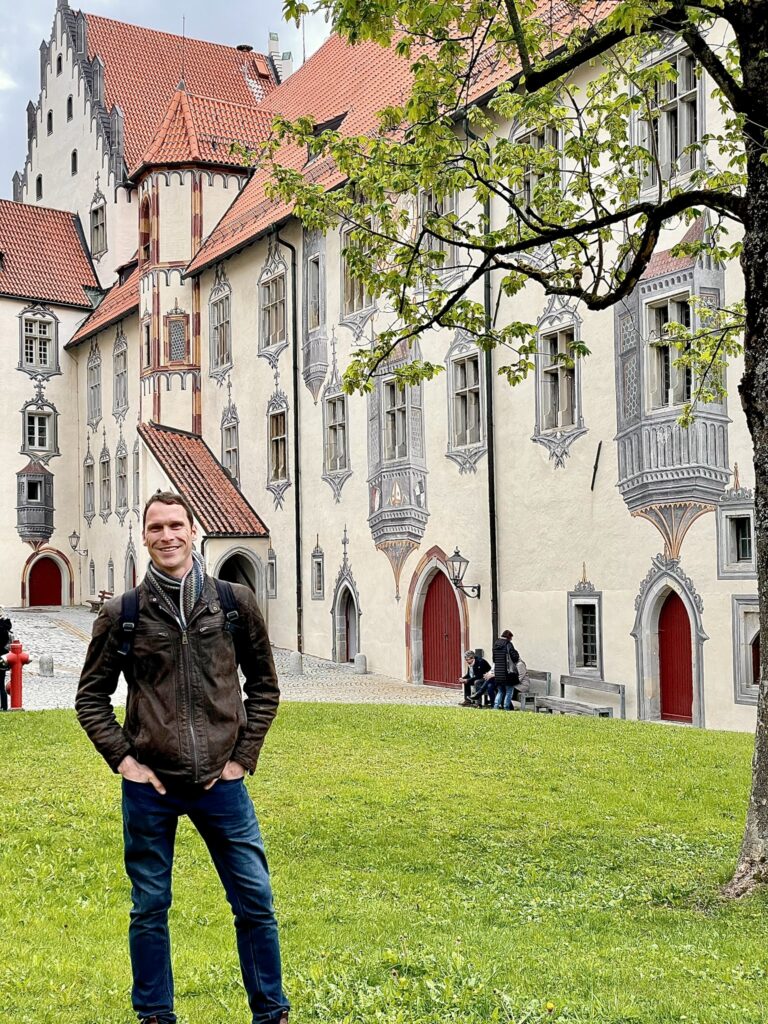


We originally gave ourselves several days in the Füssen area, which seemed reasonable when we planned the trip. By the time we left, we were thinking very differently.
We would still visit Neuschwanstein and Hohenschwangau. They are important parts of the story, and Neuschwanstein is every bit as photogenic as its reputation suggests.
But next time, we would give Füssen more time.
We would wander more of the historic center, explore more of the area’s churches and cultural history, and linger longer beside Hopfensee. We never made it out onto the water or onto bicycles, and several of the hiking trails will have to wait for another visit.
Beyond Füssen, there is still more of the castle landscape we want to explore on both sides of the German-Austrian border.
That’s what surprised us most about this trip. We didn’t leave thinking we needed another day at Neuschwanstein. We left thinking we needed more days in Füssen.
LEARN MORE ABOUT FÜSSEN ON THEIR OFFICIAL TOURISM SITE
Come for Neuschwanstein. Stay for Füssen
Neuschwanstein deserves the attention it receives. Its setting is spectacular, its interiors are fascinating, and Ludwig II’s unfinished dream has a history far more complicated than its fairy-tale appearance suggests.
But when we think back on this part of Bavaria, Neuschwanstein isn’t our only memory. We think about wandering Füssen without much of a plan, evenings beside Hopfensee, castles scattered through the mountains, Joelle facing her fear high above an Austrian valley, and that Sunday morning when music drew us to the window to find a Bavarian community gathering along the lake.
That was the Füssen we didn’t know we were coming to see.
Neuschwanstein gave us the reason to go, but Füssen gave us the reason to wish we had stayed longer.
© 2026 Wanderers Compass All Rights Reserved
FAQS
You might also enjoy reading
Rothenburg ob der Tauber: A Detour Worth Taking
Explore our most recent posts
Returning to Venice: Why We Keep Coming Back
September 28, 2026
Savoia Excelsior Palace: Where Trieste’s History Meets the Adriatic
September 6, 2026
Global Entry for Kids: What Parents Need to Know Before Traveling
September 5, 2026
Rovinj Beyond the Postcard: Exploring Croatia’s Istrian Coast
August 29, 2026
When the Hotel Becomes Part of the Journey: Ettington Park Hotel
August 27, 2026
How We Balance Luxury Travel With Authentic Experiences
August 25, 2026
Want to Learn the Story Behind Wanderers Compass?
Our Top Recommended Travel Products
Travel Insurance
Squaremouth.com
Our Favorite Travel Insurance Site!
We strongly advocate comprehensive travel insurance, not only for minor inconveniences but also for major, unexpected events such as medical emergencies. We never leave home without it. Our go-to resource is Squaremouth.com. which offers a user-friendly platform that connects you with top-rated, reputable insurance carriers. Plus, they’ll mediate on your behalf if you run into any issues.
To empower you as a consumer, we recommend you read our blog post on why travel insurance is essential and how to secure the best coverage from leading companies at an affordable price.
MedjetAssist
Medical transport back home from anywhere in the world
Medjet is a leading provider of global air medical transport. Unlike traditional travel insurance, which typically covers medical evacuation to the nearest facility, Medjet goes further by ensuring you’re transported back to the U.S. to the hospital of your choice once you’re stable enough to fly. Medjet offers membership plans that focus on medical transport, while Medjet Horizon provides expanded coverage for broader protection. Individual trip policies start at just $99, and annual policies are available for around $300. Most policies have an age limit of 74.
To learn more about how Medical Evacuation membership with Medjet Assist works, check out our blog post for a more detailed review.
Accommodations and Airfare
Booking.com
Hotels, Home rentals, BNBs, Flights, and other Transportation & Tours
Booking.com connects millions of travelers to unforgettable experiences, a wide range of transportation options, and incredible places to stay—from homes to hotels and beyond. As one of the world’s largest travel marketplaces, it supports well-known brands and entrepreneurs of all sizes. For its convenience, variety, and reliability, it’s our preferred booking platform.
Expedia and VRBO
Hotels, home rentals, BNBs, flights, and other transportation & tours
Expedia is a U.S.-based company with a mission to make global travel accessible to everyone, everywhere. At Wanderers Compass, we embrace independent travel, and platforms like Expedia are essential to making that a reality. Expedia allows you to book every aspect of your trip—from flights and accommodations to rental cars, cruises, and activities—making it a one-stop shop for all your travel needs.
Transportation
Daytrip
Personalized city-to-city private car transfer service
Daytrip provides an affordable private car service for city-to-city transfers worldwide, and we absolutely love their service. It’s a cost-effective alternative to renting a car, offering comfortable, stress-free travel with scenic stops along the way. For example, we used Daytrip for travel between Budapest and Vienna, enjoying some fantastic detours to local attractions. With professional drivers and customizable routes, Daytrip ensures a smooth ride while allowing you to explore hidden gems and unique sights along your journey.
To learn more about Daytrip, check out our blog post for a more detailed review.
Travel Experiences
Viator
The leading marketplace for travel experiences
Viator believes that travel is all about creating unforgettable memories. With over 300,000 experiences to choose from—ranging from simple tours to extreme adventures, plus a wide array of unique, niche activities—it’s never been easier to make lasting memories. We frequently use Viator during our travels and especially appreciate its flexible cancellation policy, which provides peace of mind with every booking.
Shopping
Wanderers Compass Amazon Storefront
An excellent source for all travel essentials and guides that we have vetted ourselves
Amazon is one of the world’s most comprehensive online shopping platforms, offering lower prices, a wide selection, and fast delivery through its global fulfillment network.
This page contains affiliate links. When you purchase through these links, we may earn a small commission at no extra cost to you. Thank you for your ongoing support!


No Comments