

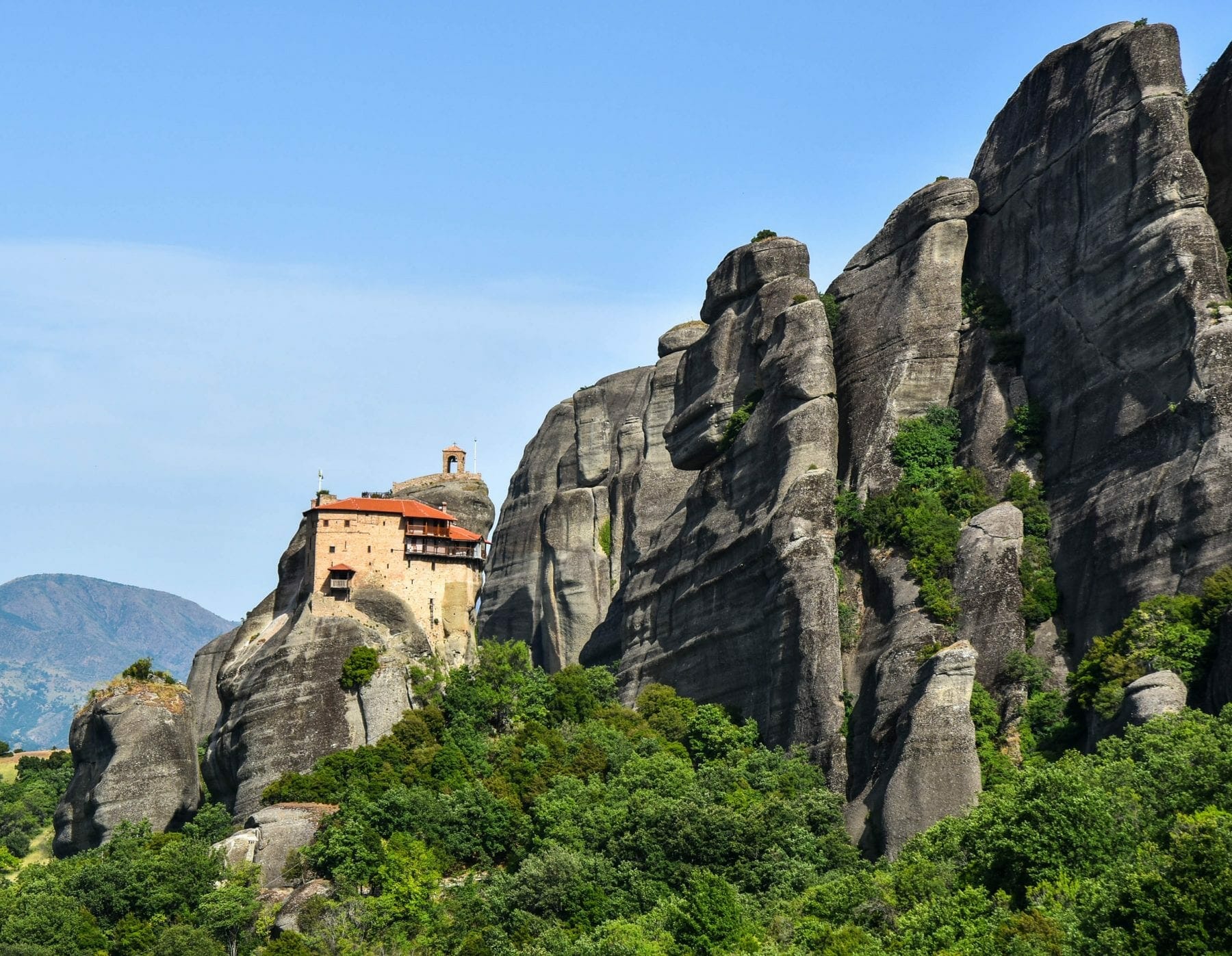
“Humble men lived suspended for centuries between the heavens and earth, perched on the edge of sharp cliffs, glorifying God for He made the earth and heavens by His power. They achieved the impossible of building Meteora monasteries.”
From “Visit Meteora” website
The Monasteries in The Clouds
The breathtaking images of the Meteora monasteries in Greece captivated us and inspired our visit. Having seen numerous photos of these stunning structures over the years, we initially wondered if they had been heavily edited or strategically photographed to appear more impressive than they really were. However, during our visit, we were taken aback by the sheer magnificence of the monasteries. One of our photos from the trip received a comment implying that it was fake, but we can assure you that the beauty of Meteora is anything but fake. In fact, the photos we took do not fully capture the place’s grandeur.
Fairytale Come True
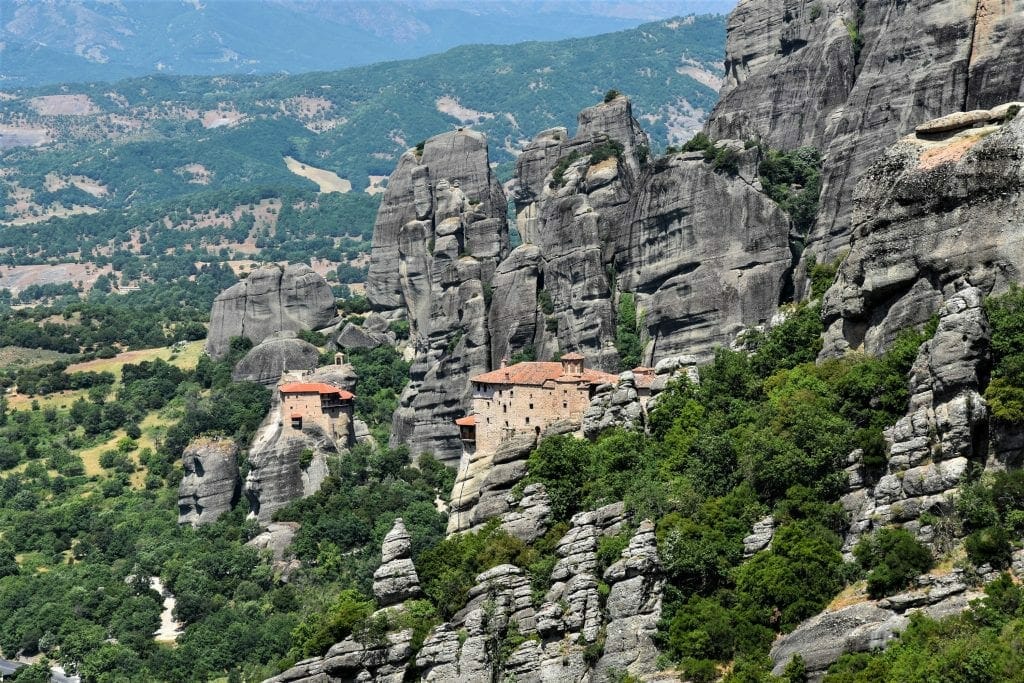
The search for a good fairytale is always an exciting and enjoyable pursuit. In the heart of mainland Greece lies the enchanting and mystical place called Meteora. It truly feels like stepping into a fairytale as you marvel at the monasteries perched atop seemingly otherworldly rock formations high up in the sky, almost as if they are floating among the clouds.
Perched high above the picturesque towns of Kastraki, Trikala, and Kalabaka are the awe-inspiring monasteries, seemingly defying gravity as they rest upon unexplained rock formations. These architectural marvels, constructed over 700 years ago without modern technology, stand as a testament to human determination and faith. The origins of these monasteries date back to a time when persecuted monks sought refuge in the natural caves within the towering pillars. Supported by the villagers below, these monks found solace and safety in this unique setting, believing it to be a divine sanctuary. Driven by a deep spiritual connection, the monks envisioned and built these sacred places of worship, seeking protection and closer communion with God amidst the towering stone pillars.
It Is Not Just About Religion
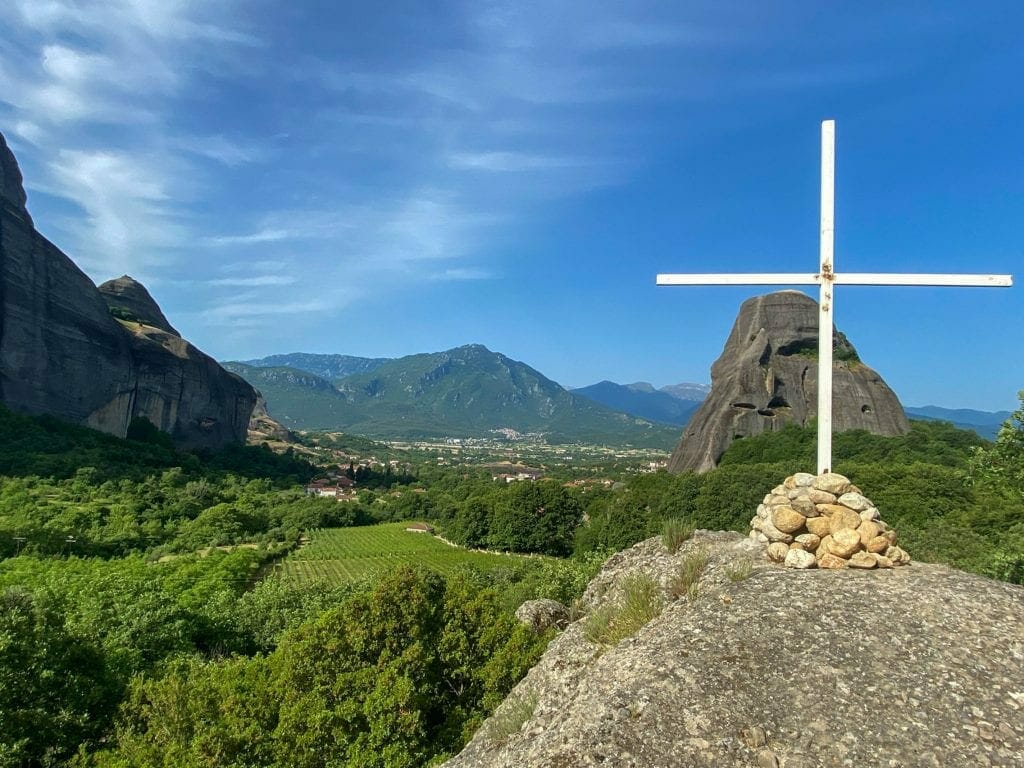
As you ascend the steep steps towards these magnificent and intricate structures and wander through the sacred grounds, you can’t help but sense a powerful energy, even if you’re not particularly religious. Gazing out at the breathtaking rock formations from hundreds of feet above, with the town sprawled below, you’re transported to a realm that defies description and can only be truly appreciated in person. It’s almost unfathomable to comprehend the depth of unwavering faith, profound commitment, and selfless sacrifice that these structures and grounds embody, especially in today’s world.
The story is compelling and serves as a powerful example of human creativity and resilience. When we unite with determination, we can accomplish extraordinary feats that defy all limitations. Simply visiting the majestic Meteora is enough to rekindle our belief in the boundless potential within each of us when we transcend our individual concerns. Join us as we embark on a journey to another era, another realm, and a lifestyle unlike any other as we explore the enchanting Meteora, the Monasteries in the Clouds.
First Look as We Approached
First impressions of this wondrous place start miles away as you get your first glimpses of that unique rocky skyline. The site continues to amaze you with every mile you get closer. The anticipation will exceed what you have prepared for, as it did for us. Excitement grows until you finally arrive in the town below these magnificent rock formations, and the true magic starts to reveal itself. The light shining on the rocky structures, with a slight haze in the air, gives them a painted-canvas backdrop.
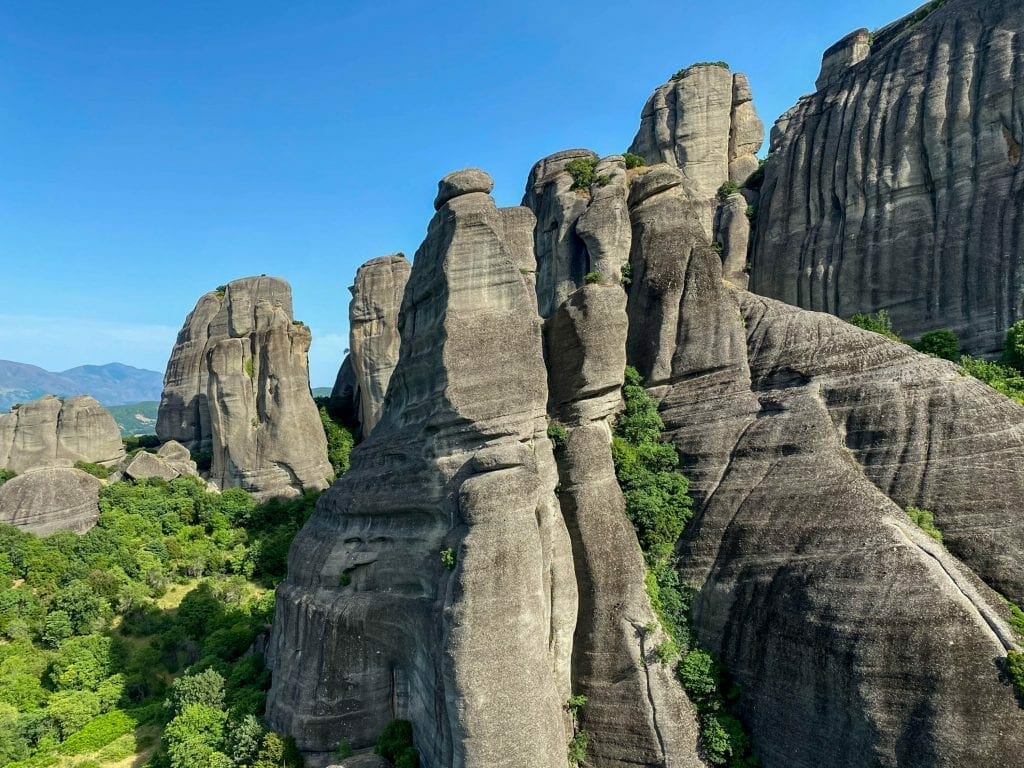
As you walk through the streets of the towns below, it never truly looks real. It feels alien and magical, with every angle more photogenic than the next. The scale and beauty are matched only by the sheer awe and wonder they create. That is when you realize that there are many steep hills to drive and trails to climb if you are up to the challenge.
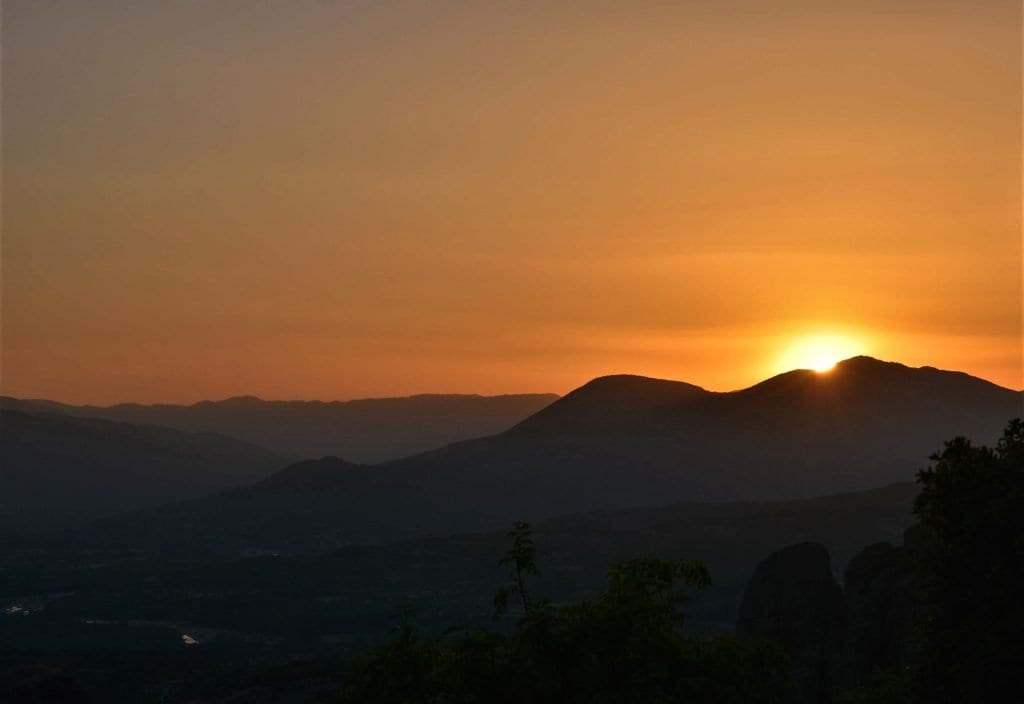
Arrive at your hotel and settle in, as you will have a long day ahead if you plan to see every monastery. Do not worry; this is a place you will want to spend at least two full days in, so don’t rush. The sunrise and sunset are more than worth it. If you arrive after they close for the day, drive up and survey the location of each monastery, or take in the sunset.
The History of the Meteora Monasteries
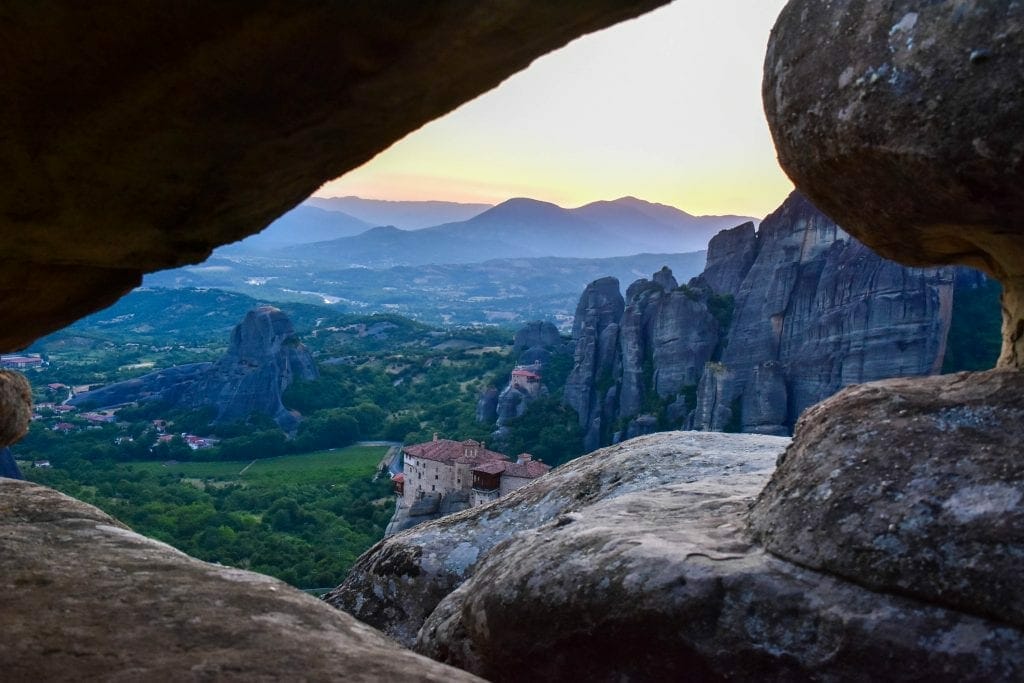
The history of Meteora goes much farther back than these man-made structures. Caves near Meteora indicate continuous habitation between 50,000 and 5,000 years ago. The first and oldest known structure is a stone wall that blocked two-thirds of the entrance to the Theopetra cave. This construction dates back 23,000 years, yet Meteora has never been mentioned in Ancient Greek myths or literature.
After the Neolithic Era, an ascetic group of hermit monks was the first documented occupants of this area. They moved up to these ancient rock peaks in the ninth century AD, living in hollows and fissures, some reaching as high as 1800 ft. above the plains below. They reached their caves with rope ladders. As a result, the hermits led solitary lives, meeting only on Sundays and special days. In those early days, they would come down and gather in a chapel built at the foot of a rock known as Dhoupiani for worship.
But Threats Require a Change
This began around the eleventh century; however, construction of the Meteora monasteries did not commence until the fourteenth century. This was due to the increasing number of Turkish attacks on Greece. As a result, the monks began to seek places to hide from the Turkish forces. At that time, access to the top of the Monasteries was only through removable ladders, ropes, and hand wenches.
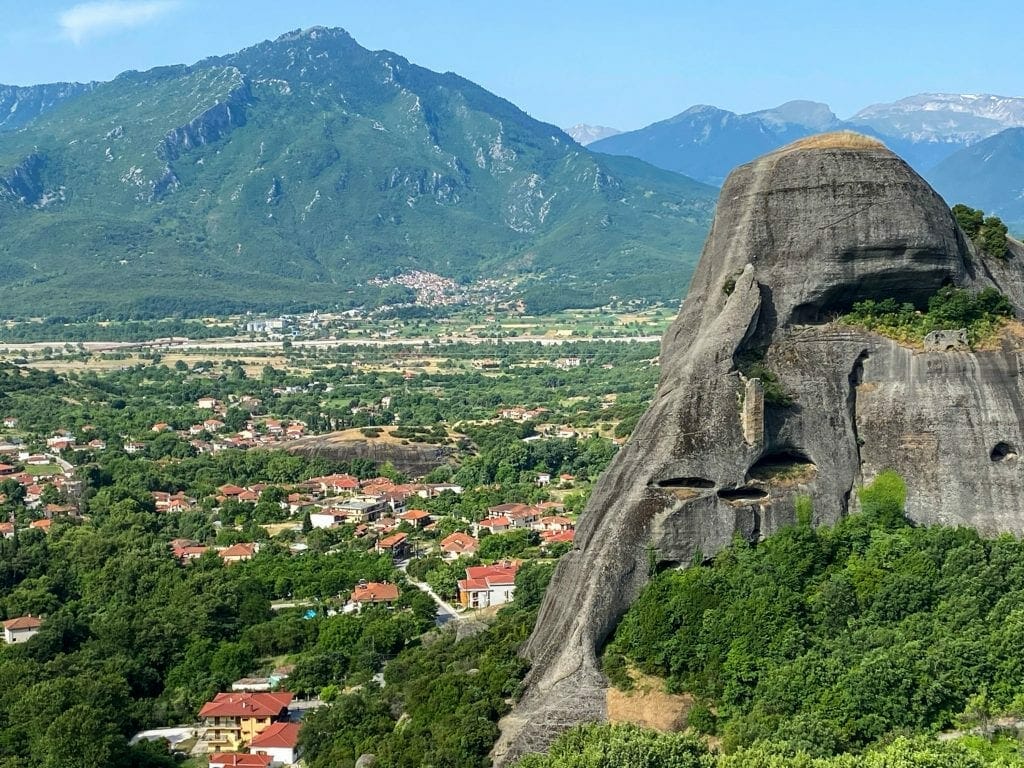
Today, climbing those rock faces is still challenging but doable, thanks to the addition of beautiful stone steps carved into the rock in the 1920s. That is what makes them even more mind-boggling. They built these magnificent architectural sites and lived in them for 600 years before the steps were built. We climbed some of those steps; it was exhausting and challenging. It makes their achievement genuinely monumental in scope.
At Meteora’s peak in the sixteenth century, there were as many as 40 monasteries. Unfortunately, only six of these grand structures remain fully functioning. Four of them are occupied by monks and two by nuns, with each housing usually no more than ten individuals. Remains of many of the other long ruined Monasteries are visible on the surrounding rock pillars if you look for them. This helps give you a small glimpse of how much more glorious the sight of this area would have been centuries ago, with all those beautiful buildings covering almost every peak.
The Building of the Monasteries
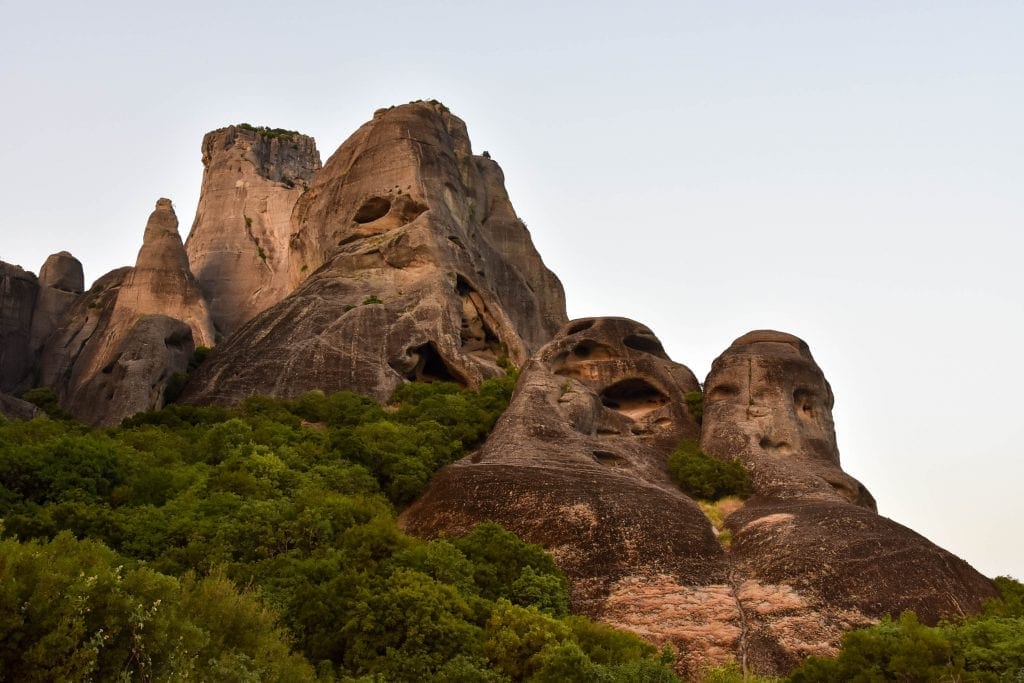
Unfortunately, no one knows the exact date of the monasteries’ establishment. Still, we know the creation of these holy structures was to serve monks and nuns following the teachings of the Eastern Orthodox Church. As a result, the rudimentary monastic state formed around the late eleventh and early twelfth centuries called the Skete of Stagoi; further, this state was centered around the church of Theotokos (Mother of God), which is still standing today. An ascetic community had started to flock to Meteora by the end of the twelfth century, and the area began to grow.
In 1344, Athanasios Koinovitis from Mount Athos visited Meteora and brought a group of followers. Between 1356 and 1372, he founded the Great Meteoron monastery on Broad Rock. The monks remained safe from political upheaval and controlled access to the monastery. But at the end of the fourteenth century, the threat from Turkish raiders to the Byzantine Empire’s rule over northern Greece grew. They wanted control over the fertile plain of Thessaly, which threatened the hermit monks seeking a retreat from the Turkish occupation. The monks found the rough, inaccessible rock pillars ideal for refuge.
Two Centuries Later
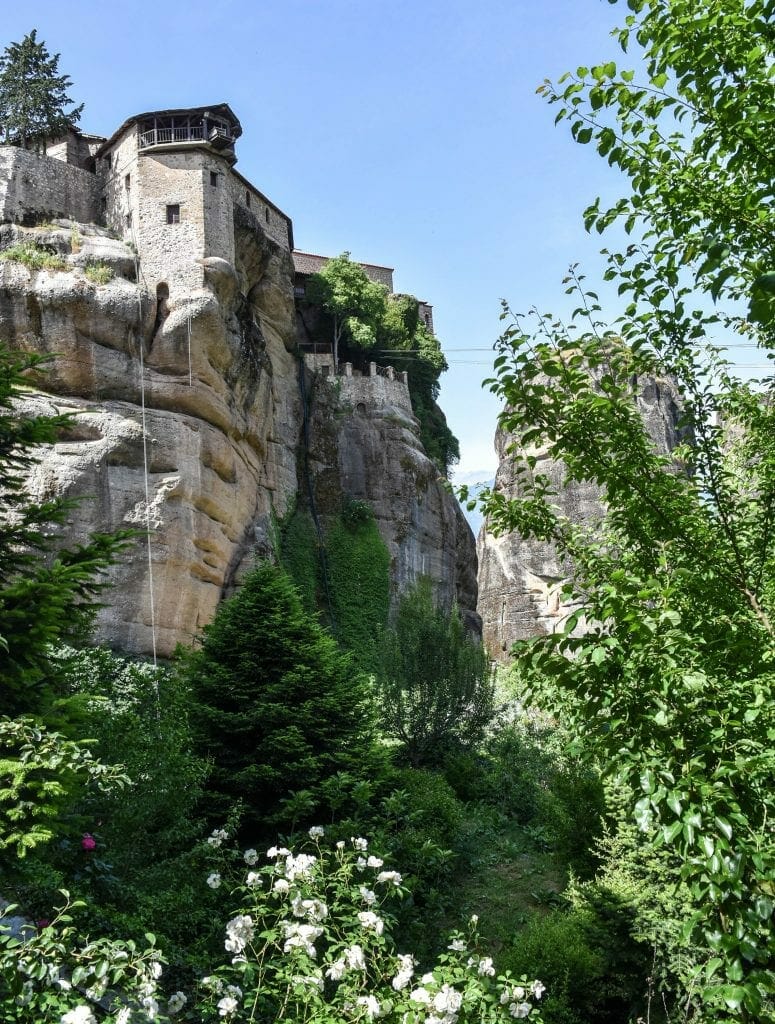
Theophanes then built the Varlaam monastery in 1517. This monastery was reputed to house the finger of St. John and the shoulder blade of St. Andrew. Access to the monasteries was deliberately complicated, requiring long ladders latched together or large nets to haul goods and people. They say the ropes were replaced only “when the Lord let them break.”
Until the seventeenth century, the primary means of transporting goods and people was by basket and rope. In the 1920s, the arrangements improved. Steps were cut into the rock, making the complex accessible via a bridge from the nearby plateau.
Tragically, Meteora and the monasteries were bombed during World War II, and many of the site’s art treasures were stolen.
Considering visiting Greece? Check out our Greece Travel Guide
The Monasteries
The Great Holy Meteoron Monastery
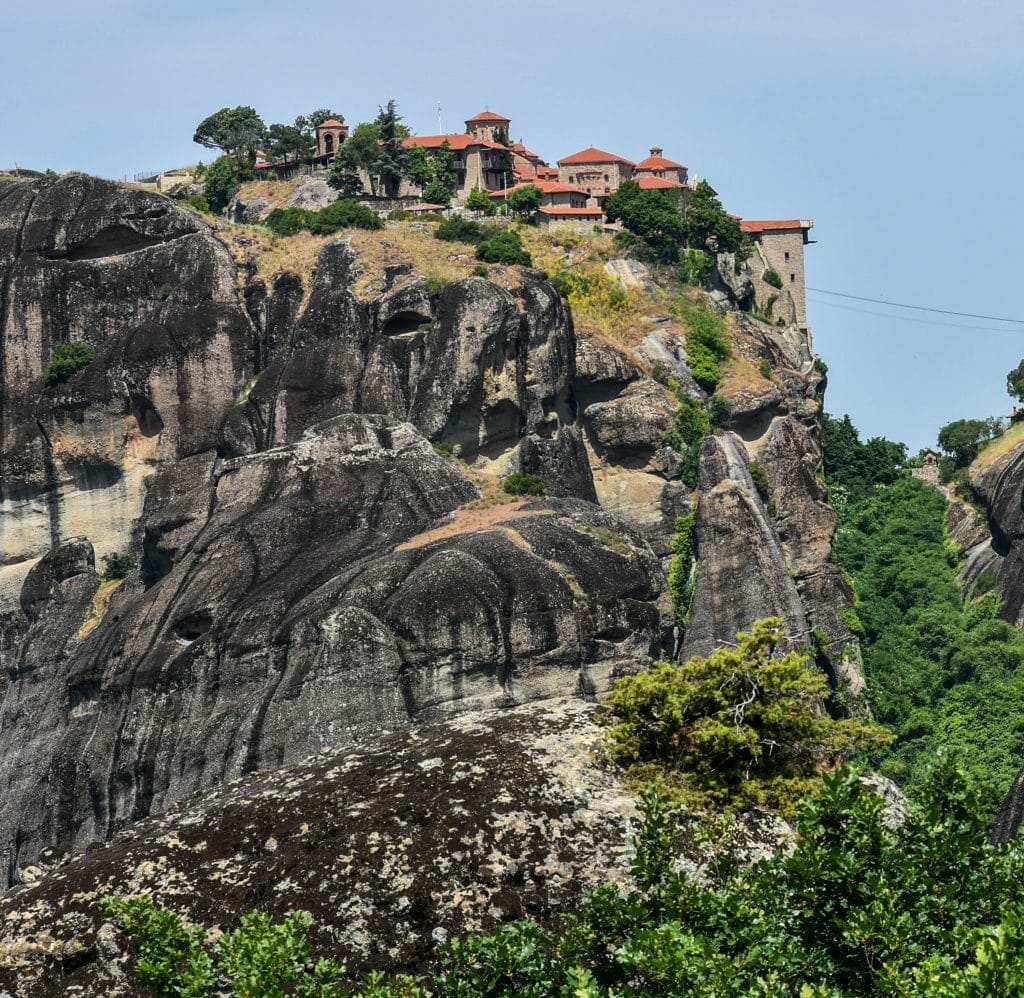
The Holy Monastery of Great Meteoron is the oldest and largest of all the monasteries. Within its name, Meteoro stands for “suspended in the air” due to the cliff formation of a massive pillar of rock on which it was built. The Great Meteoron Monastery was founded in the 14th Century by Saint Athanasios, the Meteorite. He was also credited with establishing structured monasticism across the region, making this monastery the foundation of organized monasticism in Meteora.
The monks who built this monastery did so at great sacrifice and suffering. The first monks spent 25-30 years of hard labor assembling the materials needed to build on top of the massive stone pillar. Building and completing the structure we see today took another 20-25 years. These monks were isolated throughout this period. Most who constructed this magnificent structure, especially the 14 monks who followed Athanasios, never lived to see it completed. Their faith was so strong that they persevered to complete this Herculean effort, though they could never see it themselves.
The main church of the Holy Monastery of Great Meteoron was built in the 16th century. It is decorated with spectacular frescoes from the same century. These are some of the best examples of post-Byzantine Greek art.
There is a wonderful museum to visit with highly regarded religious icons. The view alone makes this monastery a must-do.
Entry and difficulty
As in all cases, you must wear appropriate clothing because this is a holy place. See below for specifics. The entry fee is minimal.
This is the most difficult monastery to reach. There are over 300 steps to reach the entry. Pack water and some snacks, especially in the warmer months. There is most often a roadside canteen before and after your climb of the 300 steps.
Notes
Unfortunately, we could not visit this monastery because it was closed on the day we were there (a good reason to plan at least two full days in the area). However, we spent considerable time photographing it and visiting the nearby terraces. It was indeed spectacular.
The Holy Monastery of Varlaam
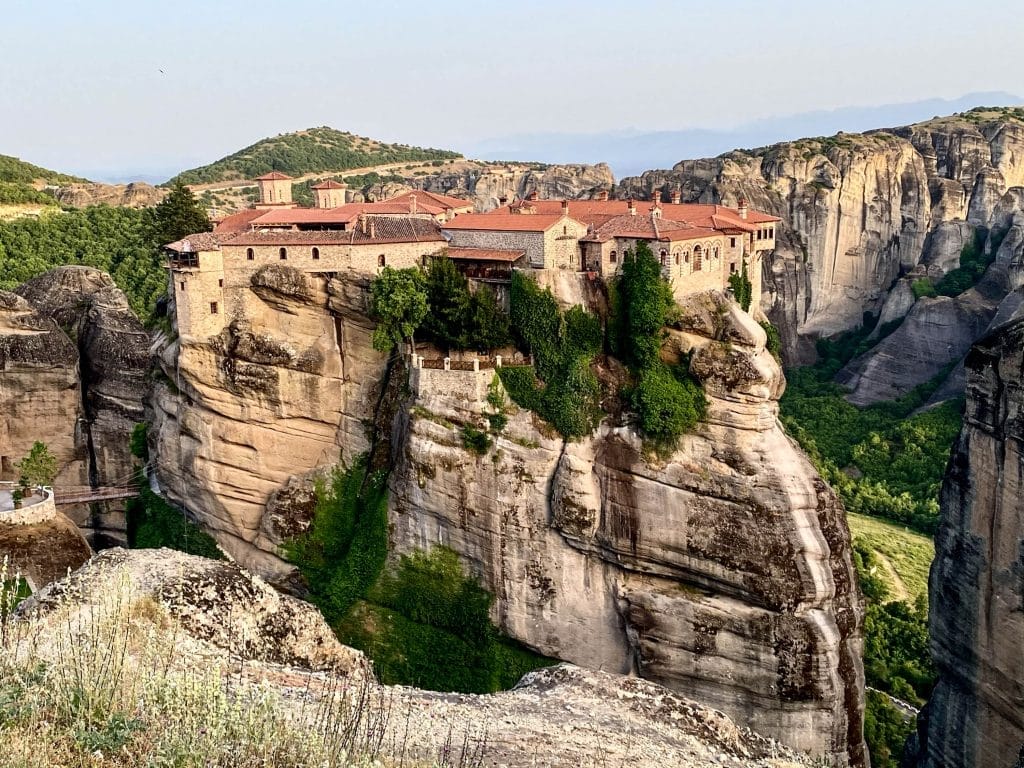
The Monastery of Varlaam is the second-biggest monastery in Meteora and is near the Great Meteoron. It was founded and built in the mid-14th century by a monk named Varlaam. When Varlaam died decades later, the remaining monks abandoned the monastery, and in subsequent years the structure nearly fell into ruins.
In the early 16th century, two brothers, both monks, restored Meteora’s abandoned monastery. They spent many years building a beautiful new chapel dedicated to “All Saints.” The beautiful frescoes in the monastery’s chapel of All Saints are by the famous 16th-century hagiographer Franco Catalano.
During your visit, you will see a sizeable 16th-century oak barrel used for water storage over the previous centuries. The monastery also preserved the tower with the old pulley system, where you can see the net that the first monks used to hoist people and provisions. On the day we were there, they were using a similar system to retrieve supplies.
There is a museum with many lovely religious icons and paintings, most from the Renaissance.
Entry and Difficulty
As in all cases, you must wear appropriate clothing because this is a holy place. See below for specifics. The cost for entry is minimal.
There are over 140 steps to reach the entry. It required work but was not as steep of a climb as some others. Pack water and some snacks, especially in the warmer months.
Notes
It was the third monastery on our schedule and by far the most beautiful. The setting and design are almost perfect. The massive outdoor patio with a tiled gazebo offered stunning views. The inside is mostly modern and elegant. The artwork throughout was amazing. The monks living here obviously have a place that must give them such peace and solace in even the darkest days.
Monastery of Roussanou or St. Barbara
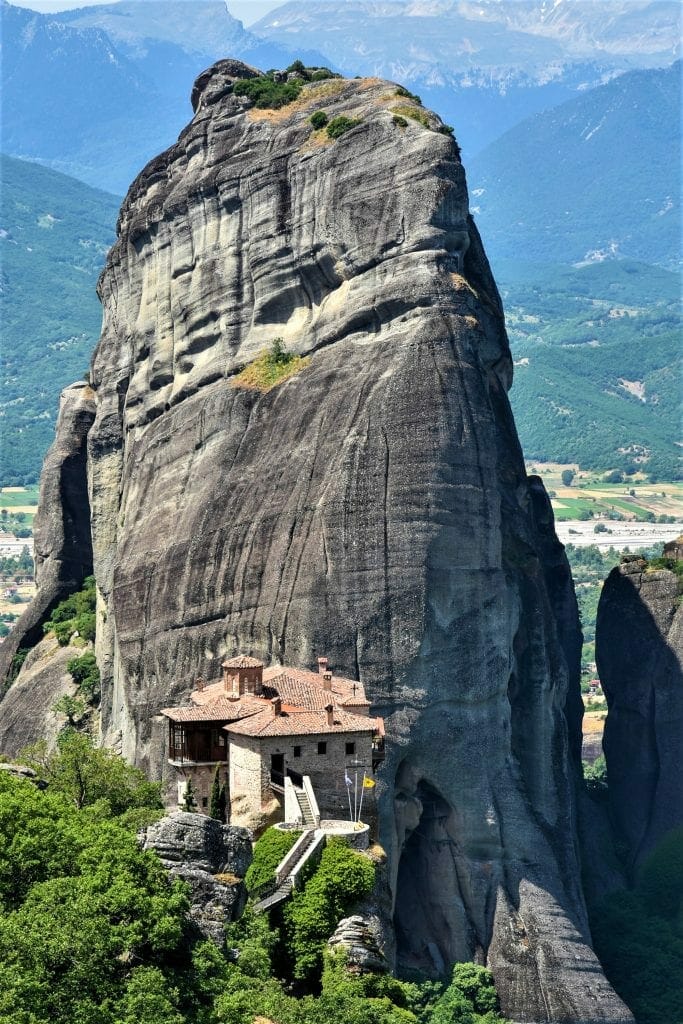
The Holy Monastery of Roussanou was first established in the 14th century and is likely named for the first hermit-monk who settled there. The main cathedral was built in the 16th century and subsequently was decorated thirty years later by a monk who lived at the monastery.
This monastery is at a lower elevation and thus smaller than most others. It suffered severe damage during World War II bombings. Although built by monks, the monastery became a convent in 1988 and now has about a dozen sister nuns living there.
The beautiful wall paintings of the Catholicon were from the 15th century, when the priest-monk Arsenios was the Abbot of the monastery. The hagiographer is unknown but was clearly a talented artist.
What makes Roussanou unique is an incredible view of the surrounding cliffs and the nearby Meteora Monasteries. There are two ways to enter; if you enter from the main road at the top, the reward is a stunning panoramic view! Therefore, this is the perfect spot for pictures and to watch the sunset.
Entry and Difficulty
As in all cases, you must wear appropriate clothing because this is a holy place. See below for specifics. The cost for entry is minimal.
The entry has over 140 steps, but it is not as difficult as some of the others. The stairs and foliage along the path are beautiful. Pack water and some snacks, especially in the warmer months.
Notes
The monastery is compact and easy to navigate. The nuns are the current keepers, and you will often find them in prayer. It is a beautiful vantage point for photographing the area.
The Monastery of Agios Stefanos
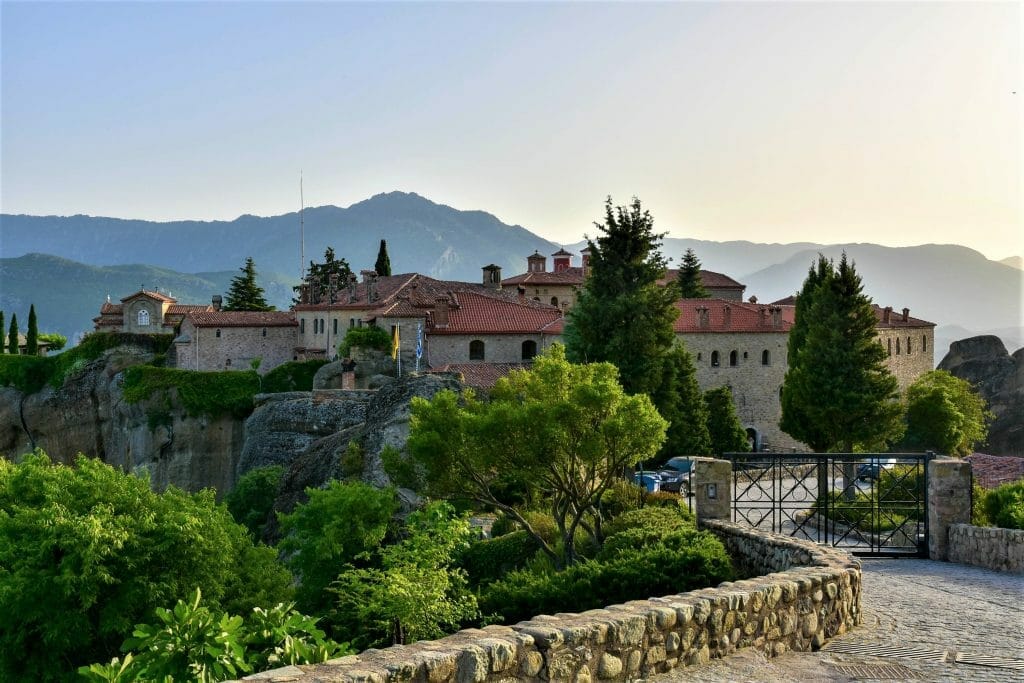
Monastic life on the rock of Agios Stephanos dates to the early 12th century. St. Stephen’s Monastery includes two cathedrals: the old 16th-century chapel, which sustained severe damage during WWII, and the 18th-century main cathedral, which contains the holy relics of Saint Charalambos.
This monastery is now a convent. It offers spectacular views of the vast Thessalian plain, the Pinios River, and the Pindos Mountains.
Entry and Difficulty
As in all cases, you must wear appropriate clothing because this is a holy place. See below for specifics. The cost for entry is minimal.
The monastery of Agios Stefanos is the most accessible, with an entrance accessible via a small bridge. Therefore, it is best for visitors with mobility issues who cannot yet use the steps but still wish to visit a Meteora monastery.
Notes
We came upon nuns praying in the chapel, but they are pretty hidden and can scare you as you study the artwork. There was a lovely gift shop with many items that the nuns produced.
The Monastery of Agios St Nikolaos Anapafsas
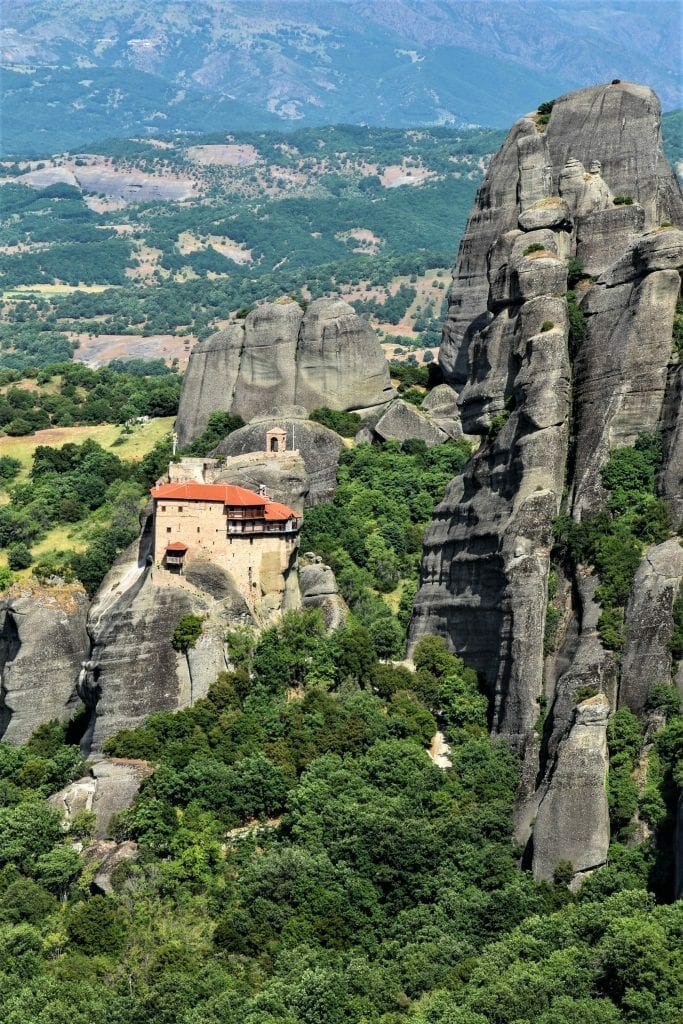
The Holy Monastery of Saint Nicholas of Anapafsas or Agios Nikolaos. Founded at the end of the 14th century. It is the closest one to town; therefore, it is the first active Monastery you will encounter on your way up to the monasteries.
Anapafsis, in Greek, means “resting.” Historians believe this name may have had to do with the monastery’s position being the first on the path and probably served the pilgrims as a resting place before traveling farther.
The surface of the rock pillar is much smaller than that of the other monasteries. This required the monastery’s builders to construct it vertically, with one level on top of another. On the walls, 14th-century paintings are visible.
The Catholicon, honoring St. Nicholas, is on the second floor. The Holy Table is located on the third floor and is decorated with murals. Space is limited, and there is no courtyard like those at other monasteries; the monks could only gather in the narthex. There is beautiful artwork throughout. You will often see the monks who reside here. In the smaller quarters here, a monk was ironing clothes in one of the rooms we visited.
Entry and difficulty
As in all cases, you must wear appropriate clothing because this is a holy place. See below for specifics. The cost for entry is 3 euros.
This route had around 140 steep steps and seemed the most fatiguing. It is absolutely worth every effort. Pack water and some snacks, especially in the warmer months.
Notes
This was a lovely, smaller monastery that was much more intimate and humble than other grander ones. With the monks very present, it truly captured their life here. There are lovely views of the valley and vineyards.
The Monastery of Holy Trinity
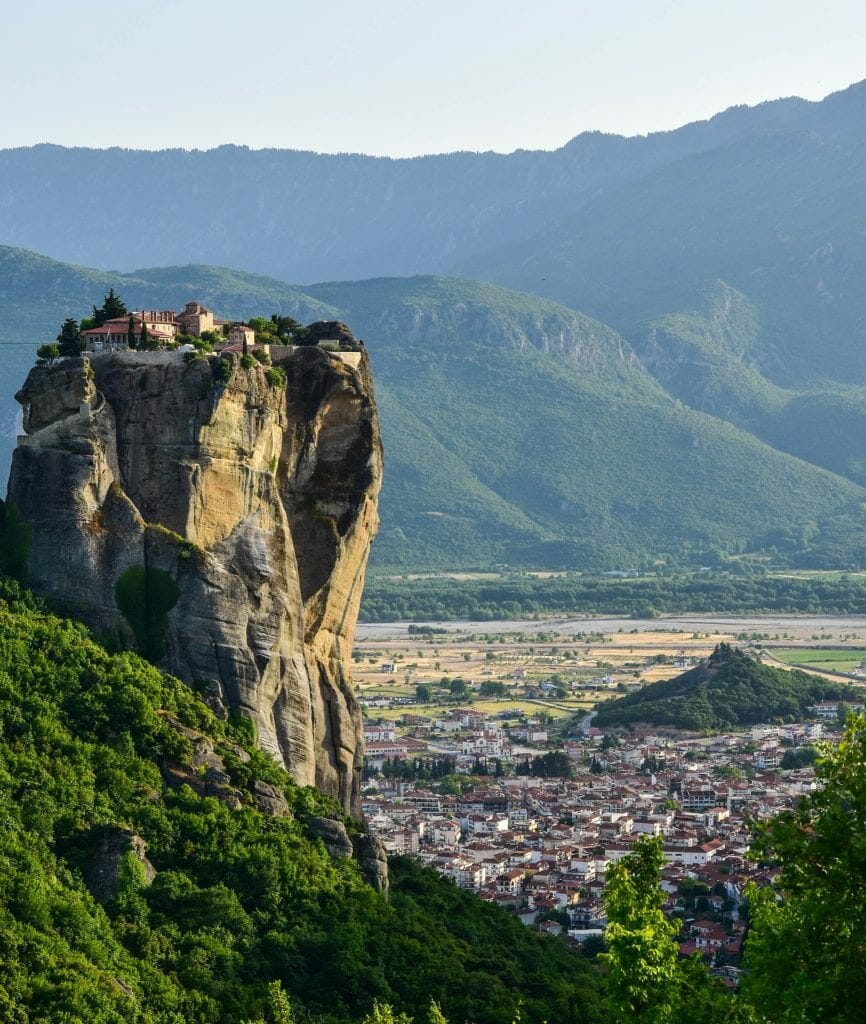
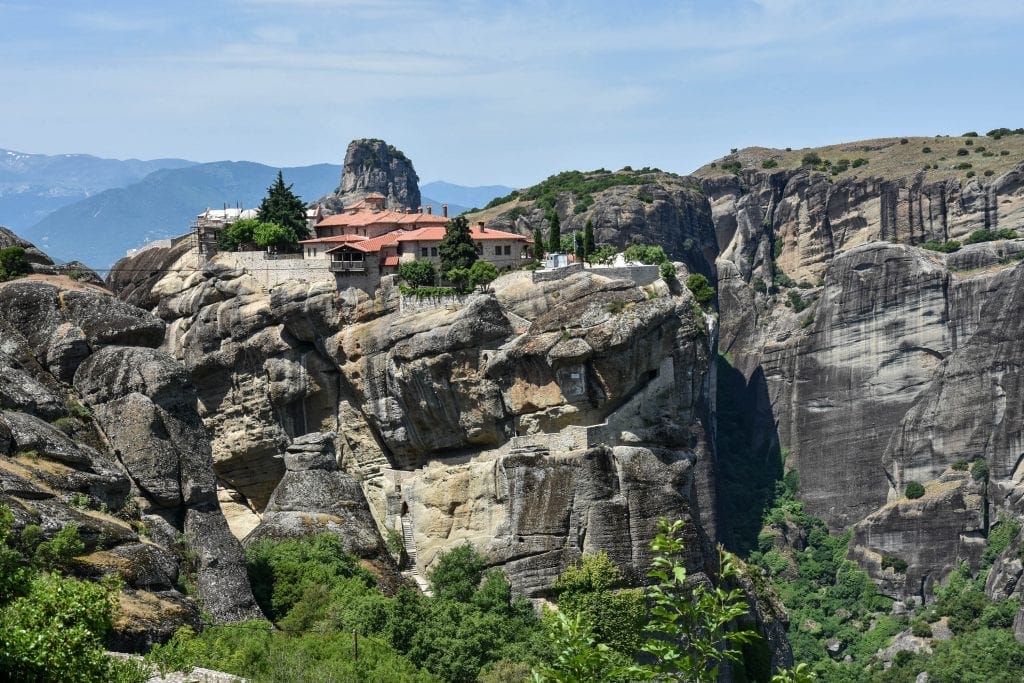
The Holy Trinity Monastery (Agia Triada) at Meteora is one of the most photographed monuments. It was founded in the 14th century and is perched on what appears to be a leaning rock pillar. It is also the most difficult to reach.
The monastery’s main cathedral was built in the 15th century, and the frescoes were painted by hagiographers Antonios, the priest, and his brother Nicolaos. The chapel of Timios Prodromos (St John the Forerunner), a small circular church with a cupola, features impressive wall paintings. The architecture appeared unique compared to other monasteries.
The Monastery was the setting for the final scenes of the James Bond film For Your Eyes Only.
Entry and Difficulty
As in all cases, you must wear appropriate clothing because this is a holy place. See below for specifics. The cost for entry is minimal.
This is the most difficult monastery to reach. There are over 140 steep steps to the entry, and the hike to the base of the rock pillar is another 1.5 miles. Pack water and some snacks, especially in the warmer months.
Notes
This monastery was under construction (May 2021); therefore, it was shut down with no reopening date noted. It was apparent that work was actively going on from our vantage point. The ascent looked quite rough and likely for the more adventurous. Those attempting to reach it will have the pleasure of the panoramic view of the surroundings, which is simply captivating!
Traveling to Meteora
Meteora is an area of few square miles and is best described as a rock forest with over 100 massive rock pillars of various sizes and shapes, some 1200 feet above the ground. The monasteries are built on top of those pillars like a natural extension. Though the area is not exceptionally large we strongly recommend giving Meteora a two-night stay at least. If we would do it again, we would give it three days. Especially since some of the monasteries are open on different days.
When we visited it was just after Greece reopened after the pandemic. We had many of these places to ourselves. We were able to get four in one day and parking was a breeze. That will not be the case in peak season. The monastaries as a whole are not that large and don’t require long visits but if you have a large group of people visiting it will be slower to get around.
Our trip there came after a few days stay in Athens. We rented a car in Athens and headed north with a stop along the way in Delphi, which was fantastic. The drive nonstop from Athens to Meteora would be about 4.5 hours. The roads were good and easy to navigate. There are some cute towns along the way and some castles to stop at. We did the drive in just over 8 hours that included four stops.
What You Must Know Before Visiting the Meteora Monasteries
These are all Holy Sites. All Monasteries have a dress code in force.
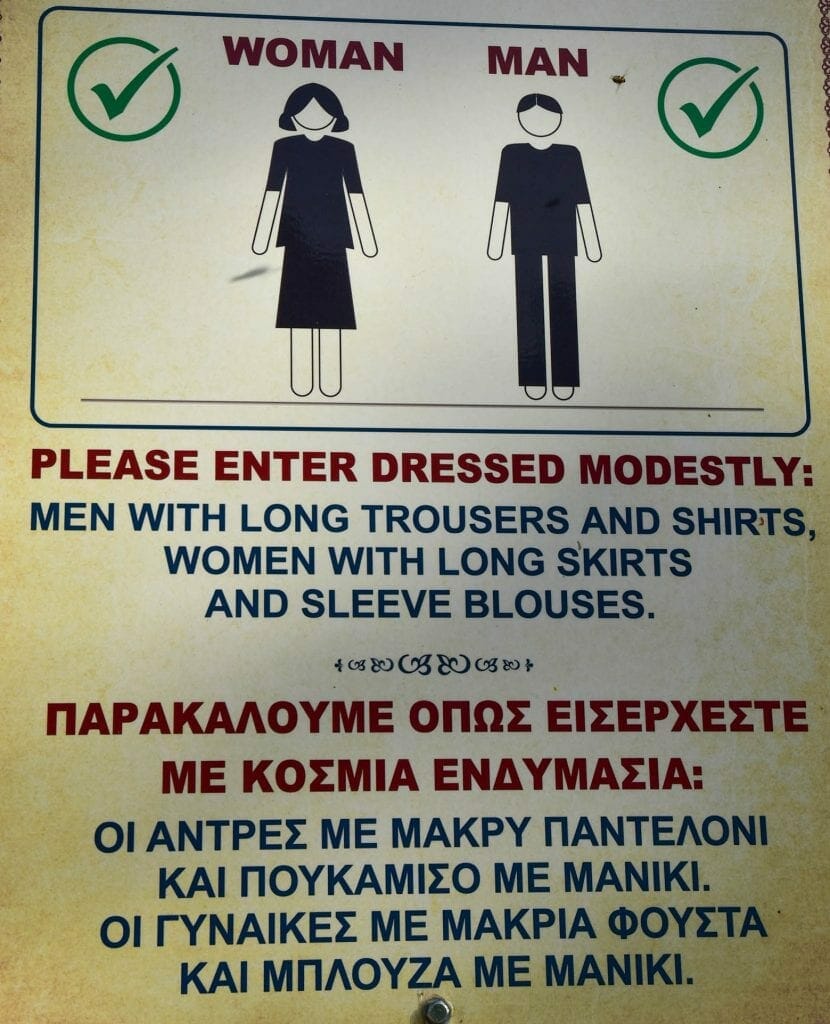
Meteora is a UNESCO World Heritage site and an archaeological site. Greece officially recognizes Meteora as a Holy Place. These monasteries are of great religious importance, so show appropriate respect during your visit.
To enter all monasteries in Meteora, men must wear long pants and a sleeved T-shirt. Sleeveless shirts are strictly forbidden. Ladies must wear long skirts; no pants, shorts, or capris. Shoulders must always be covered.
All Meteora monasteries provide skirts and scarves for women to cover their heads. They do not offer men’s clothing, and they will deny you entry. We saw one man in shorts covered by a skirt, but it was an incredibly quiet day with few visitors. It might be best to carry a pair of long pants in your pack on a hot day. Children under 12 are not required to follow the dress code.
Be Mindful
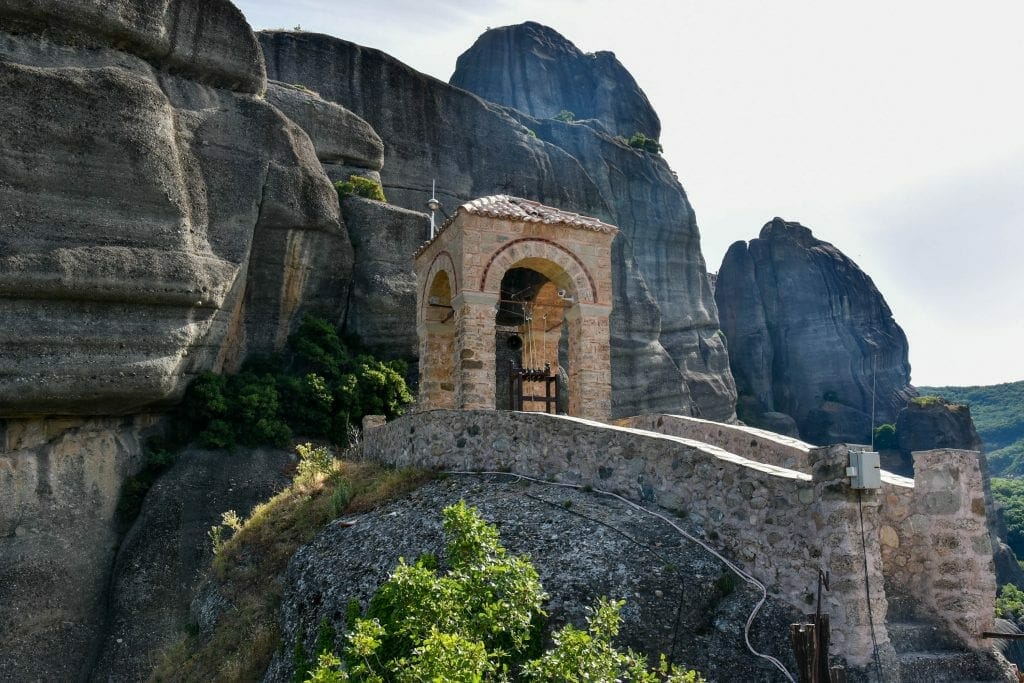
Flying drones without written permission from the authorities is strictly prohibited on the site. Subsequently, as an archaeological site, the Meteora site in Greece has a flight restriction zone of up to 4.000 ft.
Please do not take photos or videos of the monks or nuns without permission. You may offend them if you do this, as it makes them feel like a tourist attraction.
Be very respectful of their way of life, they are allowing you to to enter their home.
Map of the Monasteries
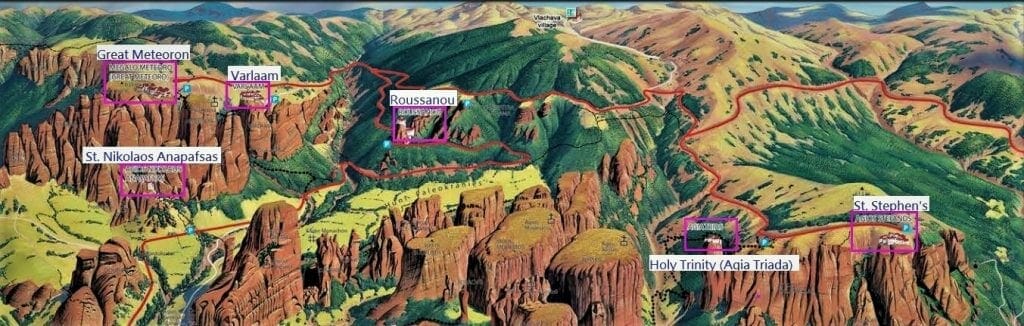
Getting Around Meteora Monasteries
This could vary based on the time of year you are there. If it is during the off-season, a car would be ideal. On that note, through peak season, parking can be horrendous. There are only a handful of parking spots at each location.
A public bus can take you several times a day to the Great Meteoron Monastery but cannot move you between the monasteries, which are a significant distance apart. Hiking or walking is an option, and we saw many people doing it.
We saw bicycles, some electric, though the road in spots lacks a good shoulder and has sharp turns. Many tours are available to take you to each monastery.
What is in the Local Area
Now, after a long day of walking up hills, steps, and maybe even a trail or two, you can wind down your day by exploring a little of the nearby towns. Kastraki Trikala is the smaller northernmost village, a perfect place to find small hotels, local places to eat, and fun tavernas. Start your drive around the monasteries.
On the other hand, Kalabaka is much larger and has a more urban feel. You will enjoy a wide array of great places to dine, stores, and souvenir shops here. There are some lovely churches to visit and an old town area. We enjoyed both.
Where to Stay
The Meteora area offers many options. We stayed at the Tsikeli Hotel Meteora in Kastraki Tirkala. It is right next to the road that takes you to the Monasteries. The village is quaint and quiet, with many restaurants and tavernas.
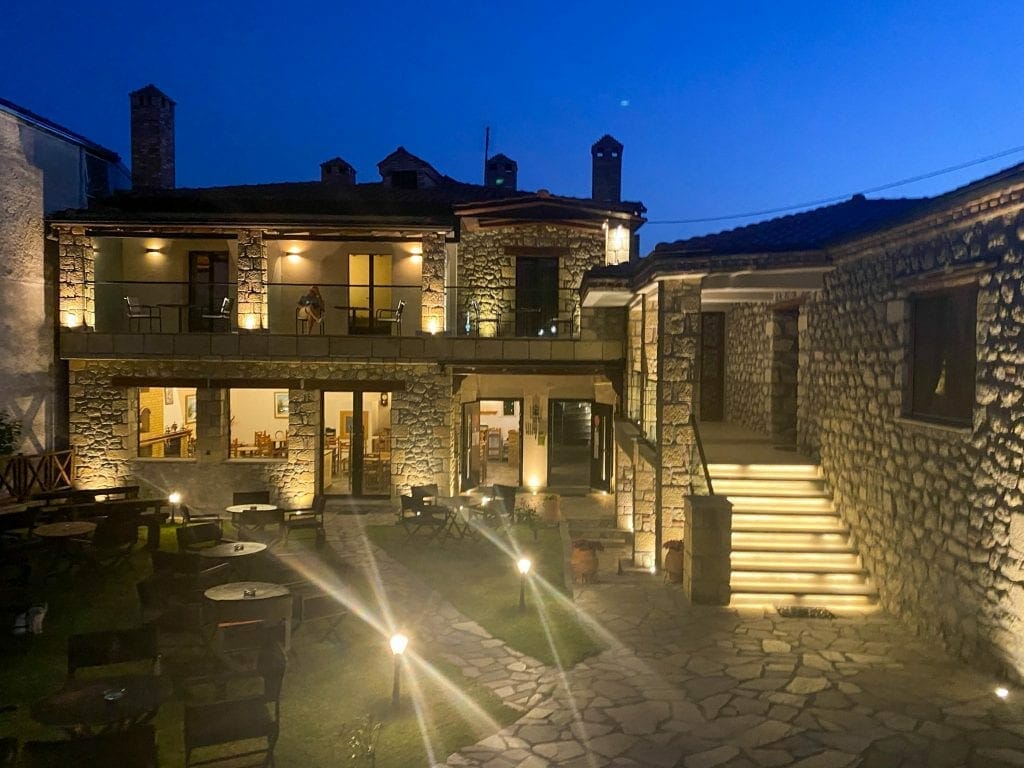
Our hotel was charming, with breakfast served in front of the hotel on the lawn, looking out toward Meteora’s rock forest.
The rooms can be simple or fancy. We reserved the two-bedroom, which was a bit basic but still clean and comfortable. The breakfast was fantastic and plentiful. They have electric bikes available for rental at the hotel. The staff was kind and engaging and lived up to the reviews.
There are many places to stay in the area of the Meteora Monasteries; look closely at the reviews and ensure they are recent.
When planning a trip, it’s always wise to compare accommodation prices across different platforms. Expedia, based in the U.S., and Booking.com, based in Europe, don’t always feature the same properties, so checking both can give you the best range of options. We prefer Booking.com for its user-friendly interface and wide selection, but we always recommend double-checking the hotel or vacation rental’s official website. Sometimes, you’ll find exclusive deals or perks when booking directly.
Click the link below to explore hotels and vacation homes in the area you are planning to visit. Who knows? It might be just the spark you need to start planning your next grand adventure.
Where to Eat
In our short time there, we only ate at one restaurant worth writing about, but what a fantastic one! The Meteoron Panorama in Kalabaka is at the base of the Meteora pillars on a hill. At night, the rock pillars are beautifully lit, which gives them a mystical feel. If that wasn’t enough, you are above the town and valley; therefore, the views are spectacular on all sides. The restaurant is lovely, with extensive patios where you can enjoy your meal.
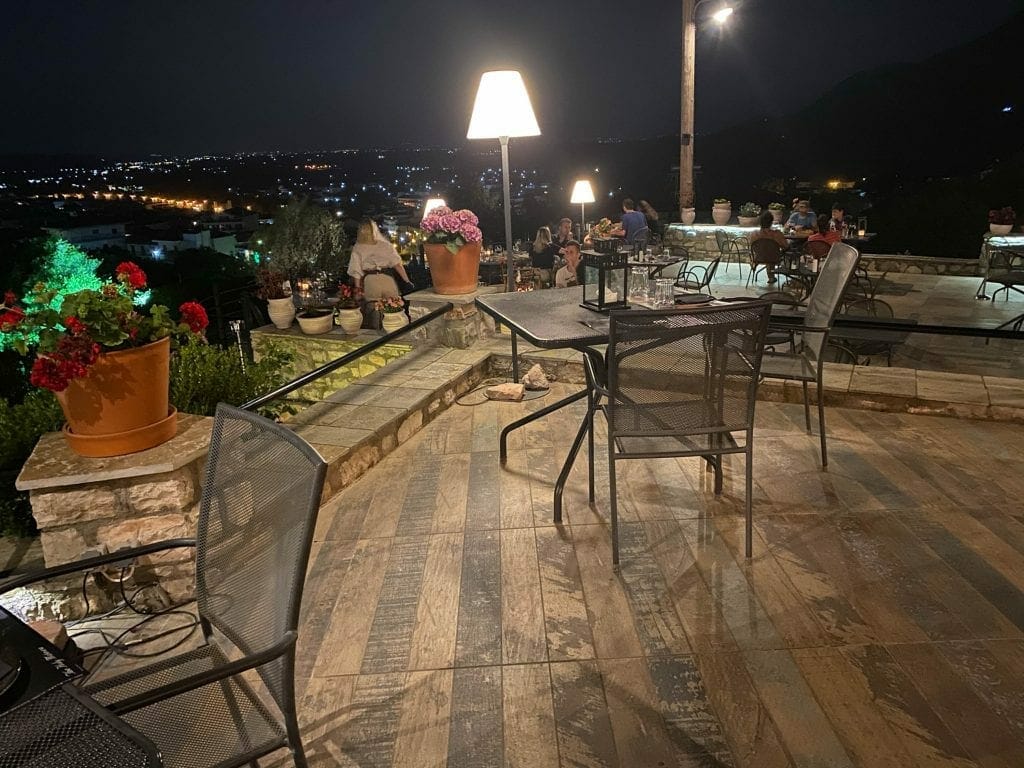
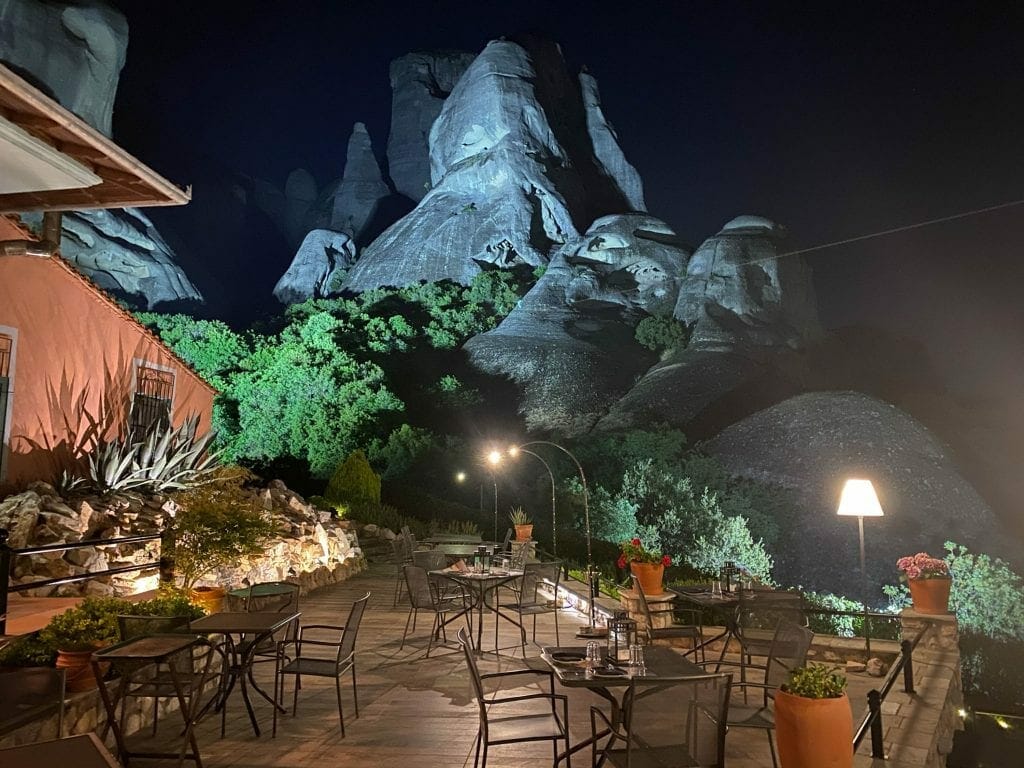
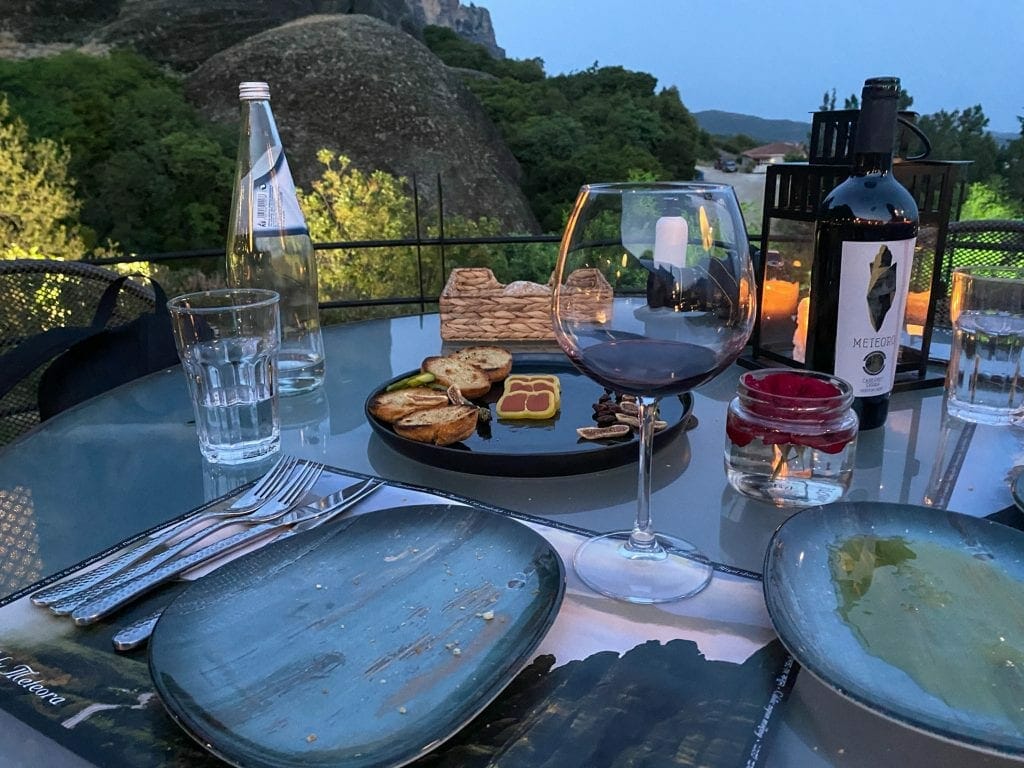
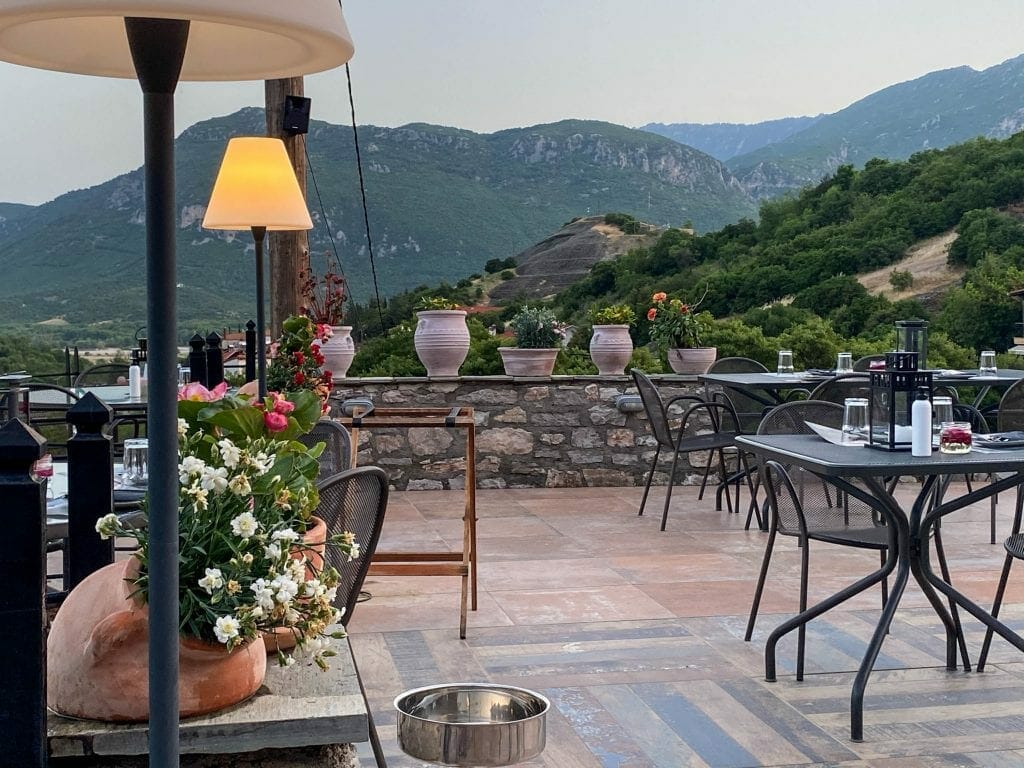
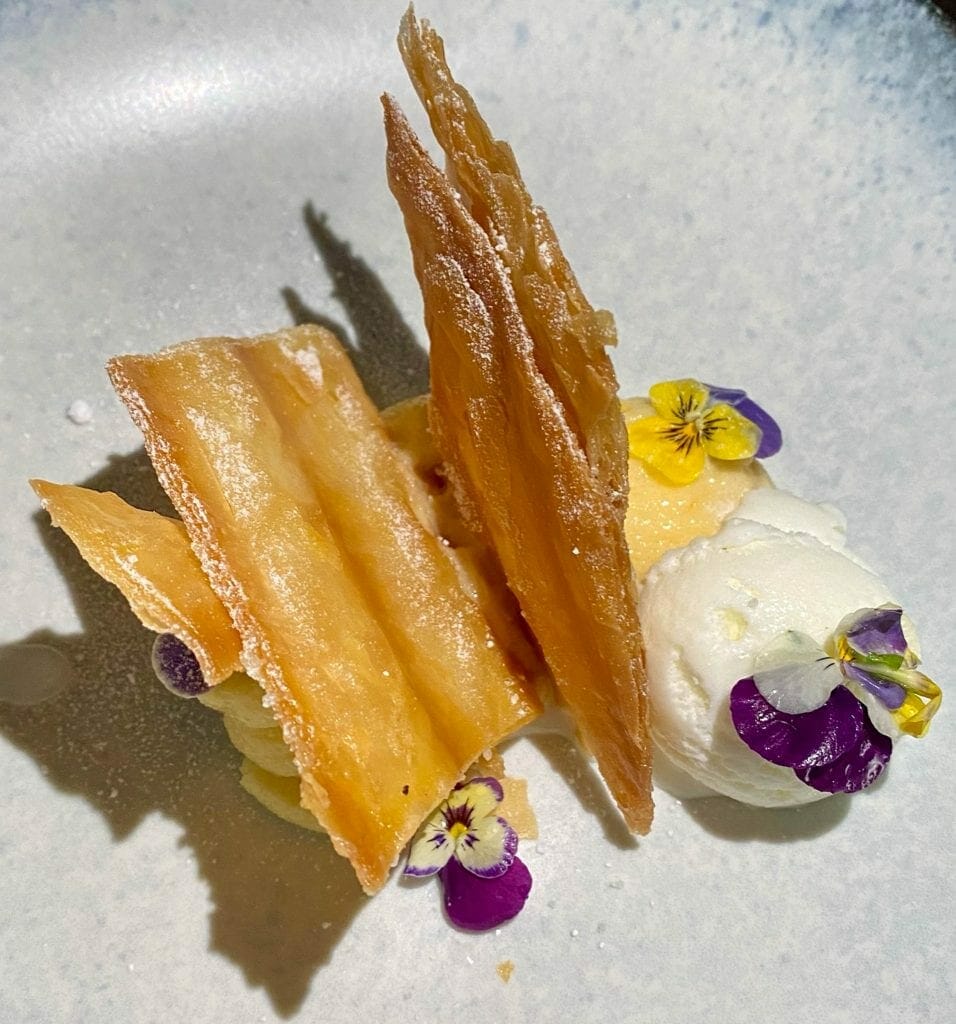
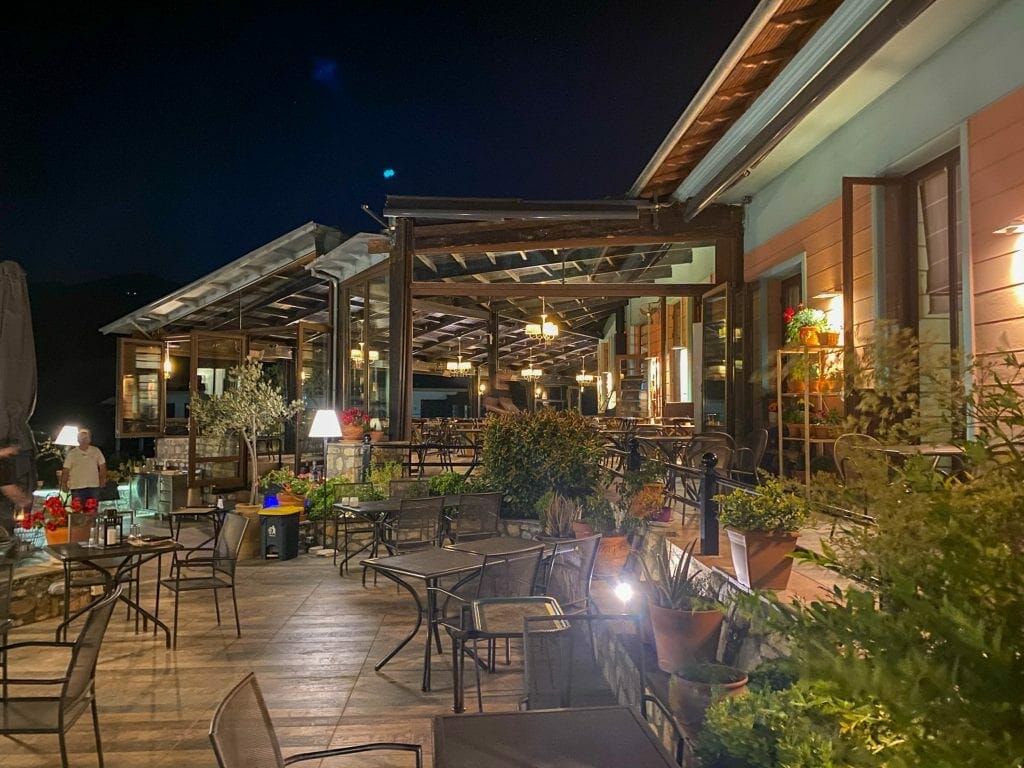
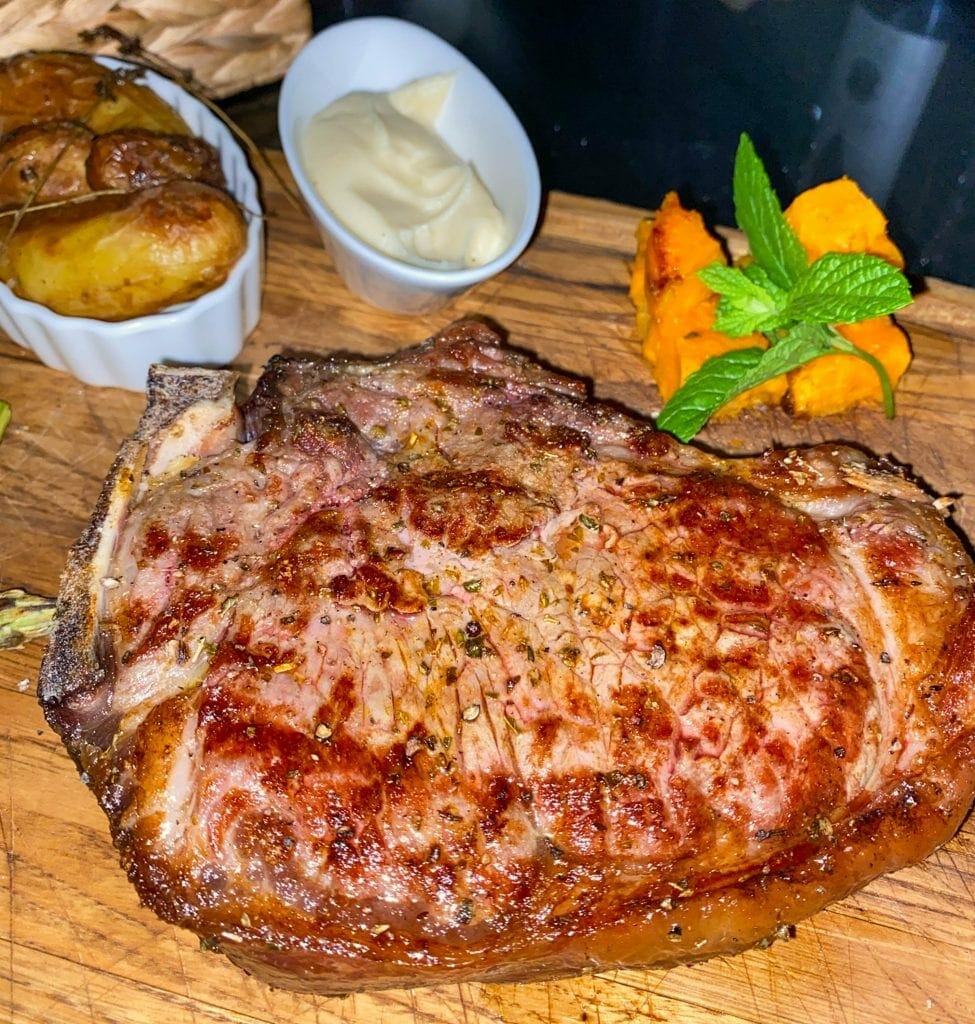
The staff was friendly, knowledgeable, and attentive. The menu features delicacies of the region. This region of Greece is known for its beef, and there are some exceptional choices on the menu. The wine list was quite extensive. It was the ideal setting for our first evening in Meteora.
Other Activities Available in Meteora
If you are lucky enough to stay a few days in the area of the Meteora Monasteries, there is much more to do than visit the Monasteries. Popular activities include:
- Scramble hiking tour of Great Saint: While tethered, hike narrow ledges of cliffs, not for the faint of heart.
- Biking: There is a lot of biking in the area. Many places rent pedal bikes and e-bikes. Guided mountain bike tours are available, and sunset bike tours are popular.
- Rock climbing: That should be no surprise for those who are so brave.
- Hiking: There are lots of open lands near the rock forest to explore. We found an abandoned Monastery built into a rock wall on our hiking trip. (see pic below)
- Hermit cave hiking: Visit the caves where the monks lived in isolation for centuries.
- River rafting: Rafting day trips are available.
- Truffle hunting: Tours have private truffle hunting with lunch included.
- Taverna hopping: There are many charming and fun Tavernas in the area where you can have some local brews and meet fellow travelers.
Check out this link for more info on local area activities: Click here
Closing Thoughts
Discover the Meteora Monasteries, a place that transcends being just a destination. It’s a mesmerizing journey filled with unique natural wonders and a humble way of life. The deep faith and awe-inspiring beauty of the landscape will leave a lasting impression, allowing you to gain a fresh perspective on nature, architecture, faith, and life itself.
As you ascend each step, you’ll be filled with increasing excitement, greeted by breathtaking vistas, and immersed in the true beauty of your surroundings. When you reach the summit and stand on a rocky ledge, you’ll be treated to some of the most mesmerizing sunsets imaginable. As the sun dips toward the horizon, casting a golden glow on the monasteries, you’ll be struck by the surrealness of the moment, wishing it could last forever. This journey is truly invaluable and will leave an indelible mark on your soul.
© 2026 Wanderers Compass All Rights Reserved
Meteora Photo Gallery




Want to learn the story behind Wanderers Compass?
Check out our most recent posts

Fear of Flying: My Journey and Tips for You
March 2, 2026
Wanderers Compass Magazine February Issue
February 15, 2026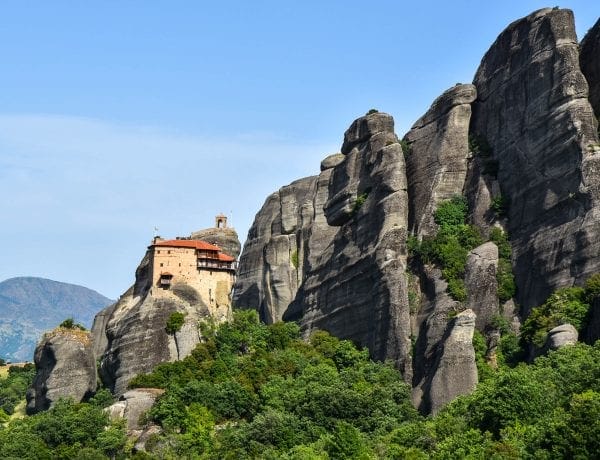
Visiting Greece’s Meteora Monasteries
February 3, 2026
Unveiling the Secrets of Malta: History, Beauty, and Resilience
February 1, 2026Our Top Recommended Travel Products
Travel Insurance
Squaremouth.com
Our Favorite Travel Insurance Site!
We strongly advocate comprehensive travel insurance, not only for minor inconveniences but also for major, unexpected events such as medical emergencies. We never leave home without it. Our go-to resource is Squaremouth.com. which offers a user-friendly platform that connects you with top-rated, reputable insurance carriers. Plus, they’ll mediate on your behalf if you run into any issues.
To empower you as a consumer, we recommend you read our blog post on why travel insurance is essential and how to secure the best coverage from leading companies at an affordable price.
MedjetAssist
Medical transport back home from anywhere in the world
Medjet is a leading provider of global air medical transport. Unlike traditional travel insurance, which typically covers medical evacuation to the nearest facility, Medjet goes further by ensuring you’re transported back to the U.S. to the hospital of your choice once you’re stable enough to fly. Medjet offers membership plans that focus on medical transport, while Medjet Horizon provides expanded coverage for broader protection. Individual trip policies start at just $99, and annual policies are available for around $300. Most policies have an age limit of 74.
To learn more about how Medical Evacuation membership with Medjet Assist works, check out our blog post for a more detailed review.
Accommodations and Airfare
Booking.com
Hotels, Home rentals, BNBs, Flights, and other Transportation & Tours
Booking.com connects millions of travelers to unforgettable experiences, a wide range of transportation options, and incredible places to stay—from homes to hotels and beyond. As one of the world’s largest travel marketplaces, it supports well-known brands and entrepreneurs of all sizes. For its convenience, variety, and reliability, it’s our preferred booking platform.
Expedia and VRBO
Hotels, home rentals, BNBs, flights, and other transportation & tours
Expedia is a U.S.-based company with a mission to make global travel accessible to everyone, everywhere. At Wanderers Compass, we embrace independent travel, and platforms like Expedia are essential to making that a reality. Expedia allows you to book every aspect of your trip—from flights and accommodations to rental cars, cruises, and activities—making it a one-stop shop for all your travel needs.
Transportation
Daytrip
Personalized city-to-city private car transfer service
Daytrip provides an affordable private car service for city-to-city transfers worldwide, and we absolutely love their service. It’s a cost-effective alternative to renting a car, offering comfortable, stress-free travel with the added benefit of scenic stops along the way. For example, we used Daytrip for travel between Budapest and Vienna, enjoying some fantastic detours to local attractions. With professional drivers and customizable routes, Daytrip ensures a smooth ride while allowing you to explore hidden gems and unique sights along your journey.
To learn more about Daytrip, check out our blog post for a more detailed review.
Travel Experiences
Viator
The leading marketplace for travel experiences
Viator believes that travel is all about creating unforgettable memories. With over 300,000 experiences to choose from—ranging from simple tours to extreme adventures, plus a wide array of unique, niche activities—it’s never been easier to make lasting memories. We frequently use Viator during our travels and especially appreciate its flexible cancellation policy, which provides peace of mind with every booking.
Communication products for seamless connectivity overseas
GigSky International eSIM Data Plans
Local Prices. No Roaming. Fastest Networks.
GigSky eSIM effortlessly connects travelers worldwide, eliminating the need to swap physical SIM cards or face unexpected roaming charges. With affordable data plans and instant activation, you can enjoy reliable internet access in over 190 countries, making your travel experience more convenient than ever. Plus, they offer a fantastic deal: a free 100 MB data plan with no credit card required. They are so confident that you will love their service!
Enjoy 10% off all GigSky Plans (except cruise and inflight) with our discount code WCOMPASS10.
To learn more about how GigSky works, check out our blog post for a more detailed review.
Shopping
Wanderers Compass Amazon Storefront
An excellent source for all travel essentials and guides that we have vetted ourselves
Amazon is one of the world’s most comprehensive online shopping platforms, offering lower prices, a wide selection, and fast delivery through its global fulfillment network.
This page contains affiliate links. When you purchase through these links, we may earn a small commission at no extra cost to you. Thank you for your ongoing support!


1 Comment
zidane
February 8, 2026 atMeteora Monastery Complex is awe-inspiring, perched atop towering rock pillars with breathtaking views