

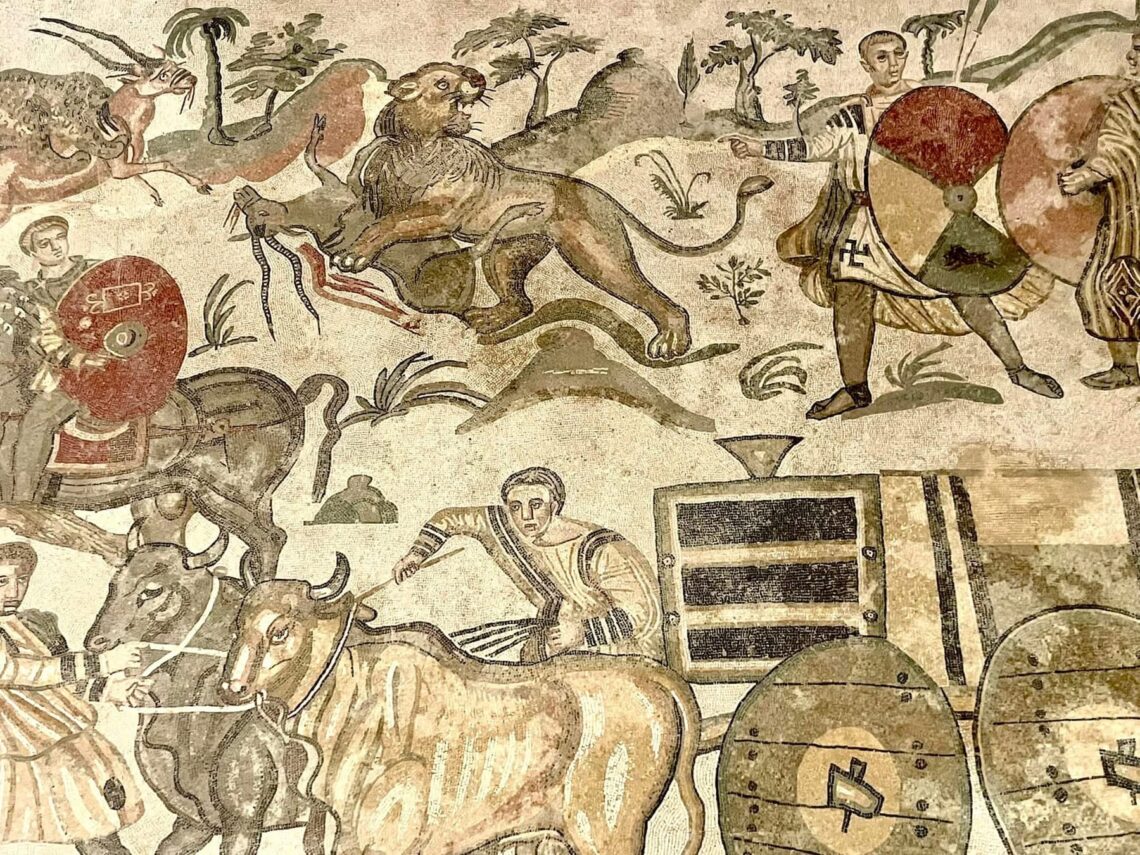
The villa is one of the most luxurious of its kind. It is especially noteworthy for the richness and quality of the mosaics which decorate almost every room; they are the finest mosaics in situ anywhere in the Roman world.
UNESCO
Villa Romana del Casale isn’t just a historical site; it’s one of the most awe-inspiring archaeological destinations we’ve visited in Europe. Tucked in the countryside near Piazza Armerina in central Sicily, this extraordinary Roman villa feels like stepping into another world, one where time has frozen and the stories of elite Roman life are told through intricate, astonishingly preserved mosaics.
We’ve been fortunate to explore ruins across the Mediterranean, but Villa Romana del Casale has a magic all its own. You don’t just look at history here, you walk across it. Every mosaic tile seems to whisper something from the past, from gods and gladiators to bikini-clad athletes and galloping hunters. The surrounding Sicilian hills only add to the dreamlike feeling, making it one of those places we still talk about long after the visit.
This guide is here to help you discover what makes Villa Romana del Casale so unique and why it’s worth visiting when you’re exploring Sicily. We’ll cover the villa’s remarkable history, its legendary mosaics, what’s nearby, and tips for making the most of your visit.
Where Is Villa Romana del Casale?
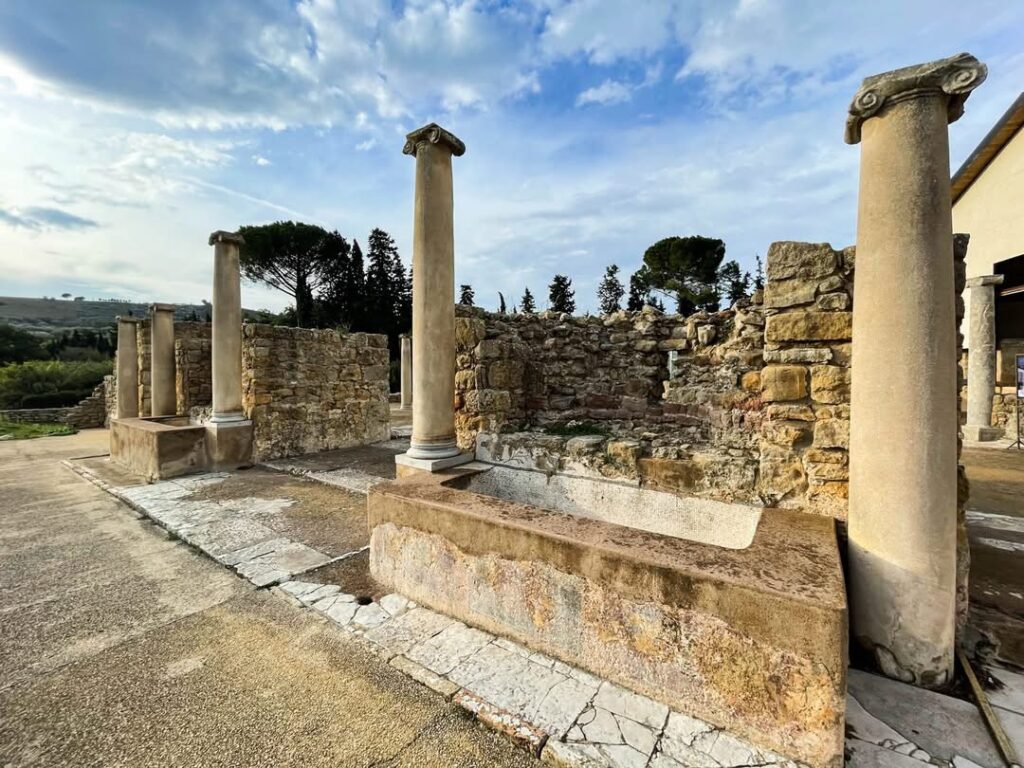
Villa Romana del Casale is located in the heart of Sicily, just a few kilometers southwest of the town of Piazza Armerina. It’s about an hour’s drive from Enna, and roughly two hours from the coastal cities of Catania and Palermo. The villa lies nestled among rolling hills and farmland, giving it a serene countryside backdrop.
To help plan your trip, here’s the approximate location on the map:
Because public transport is limited, driving is the best way to reach the site. Roads are well-marked, and signage from Piazza Armerina makes it easy to find. There is parking a short distance from the entry.
A Journey Through History


Villa Romana del Casale was built in the early 4th century AD, likely as the countryside retreat of a wealthy Roman aristocrat, possibly a high-ranking imperial official. At this time, the Roman Empire was evolving, and Sicily remained a critical province. The scale and detail of the villa suggest not only wealth but status, comfort, and a deep appreciation for the art and culture of the era.
For centuries, the villa lay buried under mud and debris, hidden from the world until local farmers rediscovered it in the 1950s. What they uncovered was breathtaking: room after room of colorful, detailed mosaics in excellent condition. The site quickly became a sensation, eventually earning UNESCO World Heritage status. Today, it’s considered one of the most important collections of Roman mosaics anywhere in the world.
Walking through the villa gives you a powerful sense of what daily life might have looked like for the Roman elite. You’ll pass through grand reception halls, elaborate bathing complexes, private bedrooms, and even servant quarters, all adorned with artwork underfoot.
What Makes Villa Romana del Casale So Memorable
What makes this villa stand out isn’t just its beauty; it’s how deeply it immerses you in the world of ancient Rome. It’s rare to find an archaeological site where the artwork feels alive, where the stories are not just about emperors and battles but about everyday life, celebrations, myth, and movement. The villa invites you to slow down and really see the past, not just imagine it.
Every corner of the villa offers something remarkable. The transition between rooms is fluid, and each space seems to reveal another layer of Roman culture, from the grand political symbolism of the hunting scenes to the unexpectedly modern flair of the Bikini Girls mosaic. You’re not just looking at fragments of a forgotten civilization; you’re looking at a world that feels incredibly relatable. These mosaics burst with personality, humor, pride, and even tenderness.
Some highlights that stuck with us: the vibrant expression on a musician’s face in a mythological panel, the geometric precision of corridor floors that seem designed to hypnotize, and the haunting stillness of the servant quarters, still beautifully tiled but simpler and more restrained. Even the less famous mosaics show off the artists’ confidence and care: each animal, object, or figure seems meticulously crafted to tell a precise story.
Remarkable Restoration


This panel is probably the most iconic mosaic in the villa and one of the most famous in the world. It shows young women participating in athletic events, such as discus throwing, running, and weightlifting. Their outfits (Roman-era bikinis) make this both a cultural curiosity and a celebration of women’s roles in ancient society.
The villa’s preservation is exceptional, and the thoughtful design of the modern walkways and protective coverings helps you appreciate every room in its full context. It feels personal, like the villa wasn’t just built for the elite, but meant to endure so that others could experience its magic centuries later. That lasting connection is what makes Villa Romana del Casale so memorable.
What truly sets this villa apart are its mosaics. Covering more than 3,500 square meters of floor space, they are vibrant, varied, and surprisingly modern in tone. Here are a few highlights you won’t want to miss:
1. The “Bikini Girls” Mosaic


One of the most surprising and widely discussed mosaics inside Villa Romana del Casale is commonly referred to as the “Bikini Girls.” At first glance, the nickname feels obvious. The women depicted appear to be wearing two-piece garments that resemble modern bikinis, and the image feels almost startlingly contemporary.
But the longer you stand in front of it, the more layered the scene becomes.
These women are not reclining or posed decoratively. They are engaged in athletic competition. The mosaic, dating to the 4th century AD, shows women running, throwing a discus, lifting handheld weights, and participating in ball games. Their garments, a strophium (a breast band) and fitted briefs, were practical athletic attire rather than leisurewear.
One figure appears to receive a palm branch and crown, traditional Roman symbols of victory. This suggests organized sport, not casual recreation.
What makes the mosaic so compelling is not simply the clothing, but the confidence. The women are depicted as strong, active, and focused. Their bodies are rendered with realism. Their posture conveys discipline.
The scene challenges simplified assumptions about ancient gender roles. While Roman society was undeniably patriarchal, elite women in certain contexts clearly participated in physical training and competitive display. Strength was not hidden; it was acknowledged.
More than sixteen centuries later, the mosaic still feels strikingly modern not because it mirrors our fashion, but because it reflects ambition, movement, and pride in physical achievement.
It is playful at first glance.
It is powerful upon reflection.
2. The Great Hunt


Stretching nearly 200 feet along a long corridor, it is one of the largest and most elaborate Roman mosaics in existence. Walking beside it feels almost like moving through a visual narrative, each panel advancing a story of coordination and control.
The scene does not depict hunting for sport. Instead, it illustrates the organized capture and transport of exotic animals from across the Roman Empire. Elephants, lions, leopards, antelopes, and even a rhinoceros are shown being restrained and prepared for shipment. Teams of handlers use ropes and nets with careful precision. Ships wait offshore to transport the animals across the Mediterranean.
This was imperial infrastructure in action.
The animals were destined not for private estates, but for public spectacle, arena games, and staged hunts that reinforced Rome’s dominance. By displaying these scenes in his villa, the owner was making a statement. He was signaling access to vast trade routes, political networks, and the machinery of empire.
The craftsmanship is remarkable. Musculature, tension in ropes, facial expressions, and subtle gestures between figures give the mosaic a sense of movement. It feels organized and deliberate, much like the empire it represents.
Where the Bikini Girls mosaic reflects personal discipline and athletic achievement, the Great Hunt reflects imperial ambition and logistical mastery.
One centers the individual.
The other centers the empire.
Together, they create a portrait of Roman society that is both human and expansive grounded in competition, spectacle, and structured power.
3. Mythological Themes


Beyond athletic scenes and imperial logistics, the villa’s floors are layered with mythological imagery that reveals how the Roman elite understood power, virtue, and identity.
Myth was not decorative filler.
It was messaging.
Many of the rooms contain mosaics depicting scenes from Greco-Roman mythology stories that every educated Roman would have known. These visual narratives were cultural shorthand, signaling refinement, education, and moral alignment.
One striking example is the mosaic of Orpheus, the legendary musician whose music could charm animals and even influence the underworld. In the villa’s depiction, Orpheus stands at the center surrounded by attentive creatures, reinforcing themes of harmony and civilized control over nature. It is an image of cultivated power, influence achieved through intellect and artistry rather than force.
Elsewhere, scenes associated with Hercules appear, emphasizing endurance, strength, and triumph over chaos. Hercules was a popular symbolic figure in Roman art because he represented disciplined strength and the ability to overcome impossible tasks. Displaying such imagery inside a private residence aligned the homeowner with those same virtues.
These mythological mosaics served multiple purposes. They entertained guests. The mosaics affirmed a shared intellectual and cultural framework. They subtly communicated status and philosophical values.
For a Roman villa owner in the 4th century, myth was not fantasy.
It was identity.
Walking through these rooms today, you realize the floors were part of a larger conversation between host and guest, between personal virtue and public image, between humanity and the divine.
Just like the Bikini Girls mosaic speaks to physical discipline and the Great Hunt speaks to imperial reach, the mythological scenes speak to intellectual and moral aspiration.
They complete the picture.
Villa Romana del Casale is not simply a display of wealth.
It is a statement about how that wealth was understood framed through sport, empire, and mythology alike.
4. Domestic and Everyday Life


While the grand mosaics of empire and mythology capture attention, some of the most revealing scenes at Villa Romana del Casale are the quieter ones.
Scattered throughout the villa are mosaics depicting daily life, servants carrying trays, hunters preparing dogs, children playing, and workers tending to animals. These scenes feel less symbolic and more observational. They grounded the villa in lived reality.
The presence of servants in many mosaics is particularly telling. Figures are shown preparing food, assisting in baths, managing domestic animals, and supporting elite activities. The villa was not simply a private retreat. It was a functioning estate supported by an organized household staff. Wealth here was sustained through structure and hierarchy.
In dining areas, banquet imagery reinforces the social importance of hospitality. Reclining figures suggest formal meals where guests gathered not only to eat but to exchange ideas, demonstrate refinement, and reinforce status. The floors beneath those gatherings told stories of culture and power, subtly framing the conversation above.
Other rooms include pastoral scenes of shepherds with flocks, rural landscapes, and agricultural moments that hint at the estate’s connection to the surrounding Sicilian countryside. These mosaics remind visitors that elite Roman life was tied to land ownership and agricultural productivity. The villa was both a symbol of wealth and a center of economic activity.
What makes these domestic scenes compelling is their normalcy. They humanize the space. They remind us that beneath the grandeur were routines: meals prepared, rooms cleaned, animals tended, children raised.
Architecture and Roman Engineering


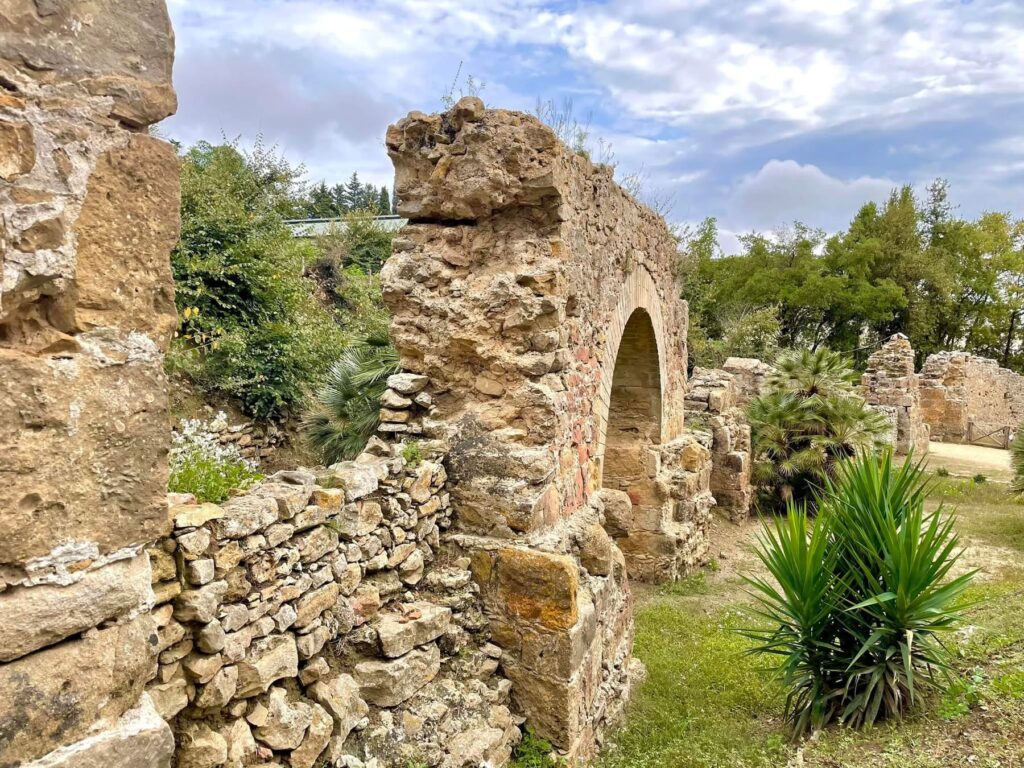
While the mosaics often steal the show, the villa’s architecture is equally impressive. The layout is based on a Roman peristyle house, with rooms organized around courtyards. It includes:
- Thermal baths with an advanced hypocaust (underfloor heating) system.
- Reception halls with apses and grand entrances.
- Private apartments for the owner and family, separated from servant quarters.
- Guest areas and public spaces are designed for entertaining and business.
Roman builders combined elegance with practicality, and it shows. Even today, the villa’s flow makes sense, and the engineering behind the plumbing, heating, and water systems is nothing short of genius.
When to Visit Villa Romana del Casale


Spring (April to June) is an ideal time to visit. The weather is mild, wildflowers are in bloom, and the Sicilian hills are lush and green. This is also a quieter time before the peak tourist season.
Summer (July to August) can be hot, especially midday, but it’s also when you’ll find extended hours and vibrant cultural events in nearby towns. Just be sure to arrive early or later in the day to beat the heat.
Autumn (September to October) brings cooler temperatures and fewer crowds. The golden tones of harvest season make the countryside even more beautiful.
Winter (November to March) is off-season. Some services may be limited, but the villa remains open, and you’ll often have it almost to yourself.
Opening Hours:
- General Hours: The villa is open daily from 9:00 AM to 6:00 PM, with the last admission at 5:00 PM.
- Seasonal Variations: During peak tourist seasons, such as summer months, the villa may offer extended hours. It’s advisable to check the official website or contact the site directly before your visit to confirm current operating hours.
Admission Fees:
- Adults: €14 per person.
- Young Adults (ages 18-24): €7 per person.
- Free Admission: Children under 18, teachers, students, and individuals with disabilities are eligible for free entry.
Additional Information:
- Ticket Purchase: Tickets can be purchased at the entrance. During peak seasons, to avoid potential queues, consider arriving early or booking a guided tour that includes skip-the-line access.
- Facilities: The site offers amenities such as restrooms, a snack bar, a gift shop, and parking facilities.
- Accessibility: The villa has made efforts to accommodate visitors with mobility challenges, but due to the site’s historic nature, some areas may be less accessible. It’s recommended that you inquire in advance if you have specific needs.
- Guided Tours: Engaging a knowledgeable guide can enrich your experience, providing deeper insights into the villa’s history and mosaics.
By keeping these details in mind, you can ensure a well-prepared and enjoyable visit to Villa Romana del Casale.
What Else to Do Nearby


Piazza Armerina: A Town That Holds Time
Just a short drive from Villa Romana del Casale, Piazza Armerina feels like stepping into a living fresco. We wandered its narrow, medieval streets, where weathered stone facades and hidden courtyards offered glimpses into daily Sicilian life. The 18th-century Cathedral of Piazza Armerina, with its majestic blue dome and sweeping hilltop views, made for a peaceful pause in our day. A slow lunch at a family-run trattoria, complete with handmade pasta, local wine, and warm conversations, grounded us after the grandeur of the Roman mosaics. The town has a local, everyday rhythm that beautifully offsets the villa’s ancient opulence.
Morgantina: Walking Through Ancient Echoes
About 30 minutes from the villa, Morgantina is a place where history breathes. Once a thriving Greek and Roman city, this sprawling archaeological site lets you roam freely through the remains of an agora, theater, public baths, and residential quarters. With few tourists in sight, we felt like we had the ruins to ourselves the silence only broken by the crunch of gravel underfoot and the breeze threading through broken columns. The site gave us a deeper sense of Sicily’s layered past, acting as a powerful complement to the Roman world showcased at the villa.
Enna: Sicily from Above
Perched high in the island’s center, Enna gave us a bird’s-eye view of Sicily and a different kind of serenity. We marveled at the dramatic drop-offs and wide-open landscapes stretching in every direction. The Castello di Lombardia, one of the largest medieval castles in Italy, made for a fascinating visit and an unbeatable photo backdrop. We wandered along its fortified walls, imagining the centuries of history they’ve witnessed. Enna offered us a quieter, more contemplative break from our archaeological deep dives a blend of medieval strength and natural beauty that was both grounding and inspiring.
Caltagirone: Sicily’s Ceramic Soul
Just under an hour away, Caltagirone dazzled us with color and craftsmanship. Famous for its centuries-old ceramic tradition, the town is a creative feast. We climbed the Scalinata di Santa Maria del Monte, its 142 hand-painted steps each telling a different story through intricate patterns and glazes. At one point, Ryan couldn’t resist the rhythm of the moment and broke into a spontaneous dance down the staircase, a joyful video we captured that quickly became a favorite among our followers. The view from the top was the cherry on top: tiled rooftops, rolling hills, and the feeling of standing on a masterpiece. With its bold ceramics and lively spirit, Caltagirone is where art, tradition, and fun collide.
Where to Stay Near Villa Romana del Casale
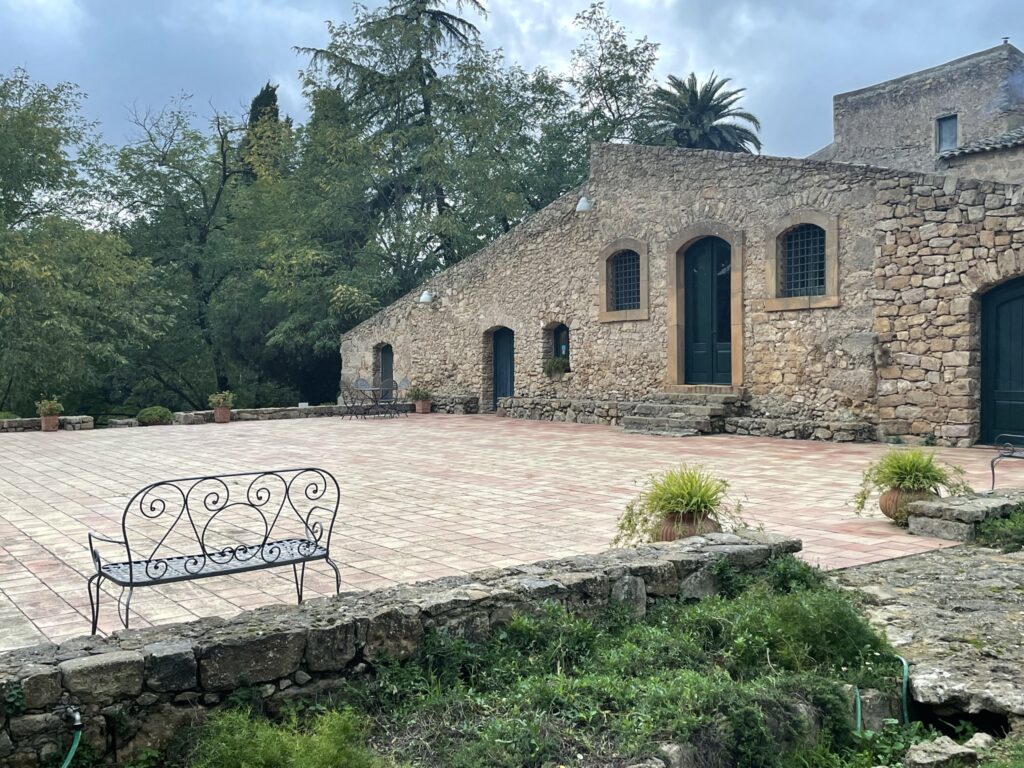
While there aren’t major hotel chains here, the area around Piazza Armerina offers charming accommodations that enhance the experience.
When planning a trip, it’s always wise to compare accommodation prices across different platforms. Expedia, based in the U.S., and Booking.com, based in Europe, don’t always feature the same properties, so checking both can give you the best range of options. We prefer Booking.com for its user-friendly interface and wide selection, but we always recommend double-checking the hotel or vacation rental’s official website. Sometimes, you’ll find exclusive deals or perks when booking directly.
Click the link below to explore hotels and vacation homes in the area you are planning to visit. Who knows? It might be just the spark you need to start planning your next grand adventure.
Final Thoughts
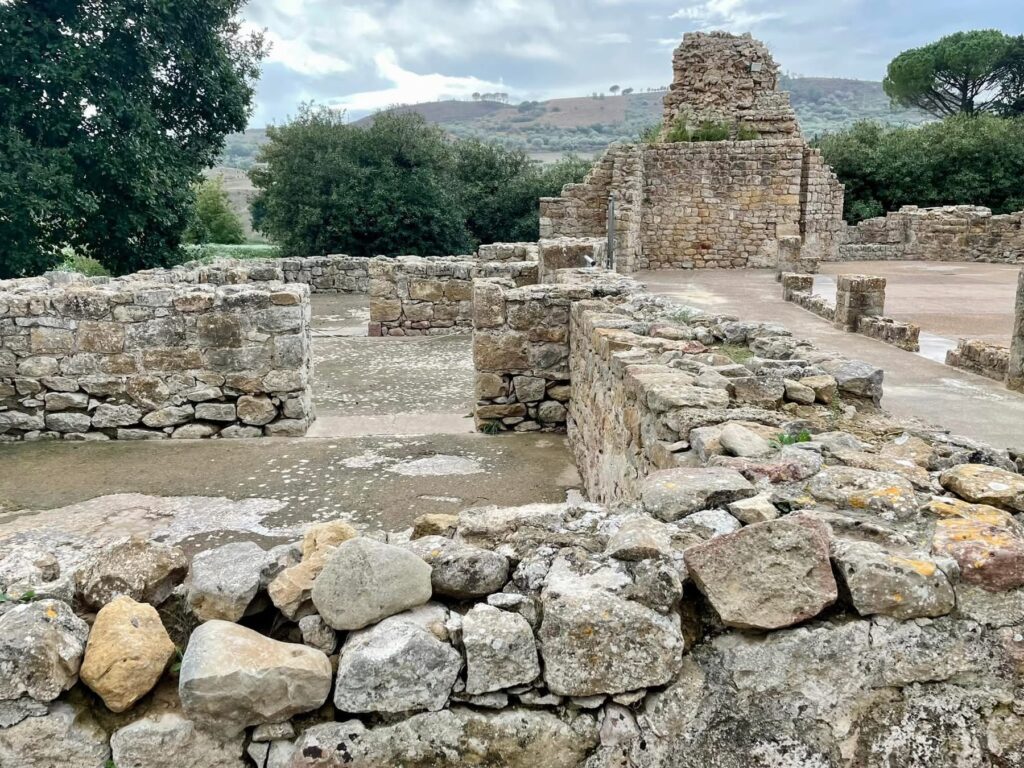
Villa Romana del Casale isn’t just one of the best archaeological sites in Sicily; it’s one of the most emotionally resonant places we’ve visited in Italy. The sheer scale and artistry of the mosaics, the immersive layout, and the connection to daily life in ancient times make it unforgettable.
You’ll come for the art, but stay for the wonder. Standing in a Roman hallway surrounded by stories told in stone, with the Sicilian countryside just beyond the walls, is the kind of experience that stays with you.
This is a place that doesn’t just tell history, it lets you walk through it.
© 2026 Wanderers Compass All Rights Reserved
For the most current information, times, and tickets, go to the official website for Villa Romana del Casale
Want to learn the story behind Wanderers Compass?
Check out most recent posts

Fear of Flying: My Journey and Tips for You
March 2, 2026
Wanderers Compass Magazine February Issue
February 15, 2026
Visiting Greece’s Meteora Monasteries
February 3, 2026
Unveiling the Secrets of Malta: History, Beauty, and Resilience
February 1, 2026
Best Travel Credit Cards in 2026
February 1, 2026
Rothenburg ob der Tauber: A Detour Worth Taking
January 31, 2026
Introducing the January Issue of Wanderers Compass Magazine
January 15, 2026Our Top Recommended Travel Products
Travel Insurance
Squaremouth.com
Our Favorite Travel Insurance Site!
We strongly advocate comprehensive travel insurance, not only for minor inconveniences but also for major, unexpected events such as medical emergencies. We never leave home without it. Our go-to resource is Squaremouth.com. which offers a user-friendly platform that connects you with top-rated, reputable insurance carriers. Plus, they’ll mediate on your behalf if you run into any issues.
To empower you as a consumer, we recommend you read our blog post on why travel insurance is essential and how to secure the best coverage from leading companies at an affordable price.
MedjetAssist
Medical transport back home from anywhere in the world
Medjet is a leading provider of global air medical transport. Unlike traditional travel insurance, which typically covers medical evacuation to the nearest facility, Medjet goes further by ensuring you’re transported back to the U.S. to the hospital of your choice once you’re stable enough to fly. Medjet offers membership plans that focus on medical transport, while Medjet Horizon provides expanded coverage for broader protection. Individual trip policies start at just $99, and annual policies are available for around $300. Most policies have an age limit of 74.
To learn more about how Medical Evacuation membership with Medjet Assist works, check out our blog post for a more detailed review.
Accommodations and Airfare
Booking.com
Hotels, Home rentals, BNBs, Flights, and other Transportation & Tours
Booking.com connects millions of travelers to unforgettable experiences, a wide range of transportation options, and incredible places to stay—from homes to hotels and beyond. As one of the world’s largest travel marketplaces, it supports well-known brands and entrepreneurs of all sizes. For its convenience, variety, and reliability, it’s our preferred booking platform.
Expedia and VRBO
Hotels, home rentals, BNBs, flights, and other transportation & tours
Expedia is a U.S.-based company with a mission to make global travel accessible to everyone, everywhere. At Wanderers Compass, we embrace independent travel, and platforms like Expedia are essential to making that a reality. Expedia allows you to book every aspect of your trip—from flights and accommodations to rental cars, cruises, and activities—making it a one-stop shop for all your travel needs.
Transportation
Daytrip
Personalized city-to-city private car transfer service
Daytrip provides an affordable private car service for city-to-city transfers worldwide, and we absolutely love their service. It’s a cost-effective alternative to renting a car, offering comfortable, stress-free travel with the added benefit of scenic stops along the way. For example, we used Daytrip for travel between Budapest and Vienna, enjoying some fantastic detours to local attractions. With professional drivers and customizable routes, Daytrip ensures a smooth ride while allowing you to explore hidden gems and unique sights along your journey.
To learn more about Daytrip, check out our blog post for a more detailed review.
Travel Experiences
Viator
The leading marketplace for travel experiences
Viator believes that travel is all about creating unforgettable memories. With over 300,000 experiences to choose from—ranging from simple tours to extreme adventures, plus a wide array of unique, niche activities—it’s never been easier to make lasting memories. We frequently use Viator during our travels and especially appreciate its flexible cancellation policy, which provides peace of mind with every booking.
Communication products for seamless connectivity overseas
GigSky International eSIM Data Plans
Local Prices. No Roaming. Fastest Networks.
GigSky eSIM effortlessly connects travelers worldwide, eliminating the need to swap physical SIM cards or face unexpected roaming charges. With affordable data plans and instant activation, you can enjoy reliable internet access in over 190 countries, making your travel experience more convenient than ever. Plus, they offer a fantastic deal: a free 100 MB data plan with no credit card required. They are so confident that you will love their service!
Enjoy 10% off all GigSky Plans (except cruise and inflight) with our discount code WCOMPASS10.
To learn more about how GigSky works, check out our blog post for a more detailed review.
Shopping
Wanderers Compass Amazon Storefront
An excellent source for all travel essentials and guides that we have vetted ourselves
Amazon is one of the world’s most comprehensive online shopping platforms, offering lower prices, a wide selection, and fast delivery through its global fulfillment network.
This page contains affiliate links. When you purchase through these links, we may earn a small commission at no extra cost to you. Thank you for your ongoing support!


