


“Don’t prolong jet lag by reminding yourself what time it is back home. Be in Europe”
Jet lag and I have a history.
Not the casual, “I felt a little off after vacation” kind of history. The kind that comes from crossing oceans over and over again, arriving in new countries after sleepless nights in the air, and realizing very quickly that if I didn’t figure this out, I was going to waste precious days of travel feeling like a zombie.
As a registered nurse and frequent long-haul traveler with well over 1.5 million miles in the air, I’ve not only read the research but also, over the years, tried the supplements, downloaded the apps, adjusted my sleep schedule in advance, and experimented with nearly every “expert” tip out there.
And after decades of trial, error, and real-world testing, I’ve come to one conclusion:
Jet lag isn’t defeated in your bedroom weeks before you travel.
It’s defeated the moment you land.
Click here to jump ahead to our Jet Lag Survival Checklist
What Jet Lag Actually Is (and Why It’s Worse Going East)

Jet lag is not just “feeling tired.” It’s a disruption of your circadian rhythm, your internal biological clock that regulates sleep, hormone release, digestion, and even body temperature over a 24-hour cycle.
This clock is highly sensitive to light. Sunlight tells your brain when it’s daytime. Darkness tells it to produce melatonin and prepare for sleep. When you cross multiple time zones quickly, your internal clock stays set to the time zone of your departure city. At the same time, the external world has moved on without you.
The result?
You’re wide awake at 3 a.m.
Starving at midnight.
Exhausted at noon.
In general, traveling east tends to be more difficult than traveling west because you are effectively shortening your day. Simply put, your body finds it much easier to stay up later than to fall asleep earlier. For example, flying from New York to Paris forces your body to try to sleep when it still feels like early evening back home, a far tougher adjustment than pushing bedtime a little later when heading west.
As a result, many travelers find eastbound trips to Europe or Asia especially draining. However, this isn’t a matter of willpower or travel experience. Rather, it comes down to basic human biology and how our internal clocks are wired to respond to light and time.
The Many “Cures” for Jet Lag (and Why They Often Don’t Work)

Because jet lag is so common, there’s no shortage of solutions. I’ve tried most of them.
Sleep-adjustment schedules tell you to start shifting your bedtime days or weeks before departure. In theory, this helps pre-align your circadian rhythm. In reality? Most of us have jobs, families, and responsibilities that make that nearly impossible.
Apps promise personalized light and sleep timing. They’re based on solid science, but again, real life often interferes. Meetings, flights, delays, and life logistics rarely align perfectly with an app’s ideal schedule.
Melatonin and sleep aids can help some people fall asleep, but they don’t reset your circadian rhythm on their own. As a nurse who has worked on placebo-controlled trials, I can say confidently: belief can be powerful. If you think something will work, sometimes it does, but that doesn’t make it a universal solution.
Special diets, fasting, or timing meals are sometimes suggested to “reset” your body clock. There’s emerging science here, but for most travelers, it’s difficult to put into practice while juggling airport food and unpredictable travel days.
Are these methods useless? Not necessarily. Some people swear by them. But after years of trying to make them work in the real world, I found they didn’t deliver consistent results, especially when every travel day brings its own chaos.
The Pre-Trip Foundation: Set Your Body Up for Success
Before I get to the method that truly works for me, let’s talk about what happens before you leave.
After all, jet lag recovery is much easier when your body isn’t already running on fumes.
In the days leading up to a trip, I focus on:
- Hydration — Because long flights can dehydrate you quickly, I make a point to start increasing my water intake in the days leading up to travel. Staying hydrated helps your body handle the journey more smoothly.
- Nutrient-dense foods — In addition, I focus on eating plenty of fruits, vegetables, and lean proteins before a trip. A balanced, healthy diet not only reduces physical stress but also helps our bodies stay strong and resilient during travel.
- Minimizing stress — Just as important, I begin packing weeks in advance, so I’m not scrambling at the last minute. Of course, you can adjust along the way, but rushing the night before because of a forgotten item only adds unnecessary stress.
- Sleep where possible — Finally, I prioritize rest ahead of travel. Even if sleep isn’t perfect, starting a long journey already exhausted makes everything feel harder, so any extra rest helps.
This isn’t glamorous advice. It’s basic physiology. A well-hydrated, well-nourished body adapts better to change.
The Method That Has Worked for Decades
After 1.5 million miles and countless time zones, here is the single most effective rule I follow, the same one travel expert Rick Steves has long recommended:
Do not nap when you arrive. Not even for a minute!
This sounds brutal. It sometimes feels brutal. But it works.
Most long-haul flights land in the morning or midday. Your instinct is to collapse. But that is the exact opposite of what your circadian rhythm needs.
Light is the strongest cue your brain has to reset its clock.
So what do we do?
We drop our bags at the hotel, even if we can’t check in yet, and we go straight back out. We walk. We sightsee. We drink coffee if needed. We eat meals on the local schedule. We stay in daylight. We move, move, move.
No spa treatments in dark rooms. No, “just resting our eyes.” No curling up “for 20 minutes.”
Staying awake through that first day floods your brain with the environmental signals it needs to shift time zones.
Why This Works (The Science Part)

At the center of this process is your brain’s master clock, located in the suprachiasmatic nucleus. This tiny but powerful system resets itself primarily based on light exposure. Therefore, when you keep yourself active and outside during daylight hours, you’re sending your body a strong, unmistakable signal that it’s time to shift.
In essence, you’re telling your brain:
“This is daytime now. Adjust accordingly.”
Then comes the second crucial step:
Go to bed early, but at a normal nighttime hour in your new destination.
By the end of that first full day of forced wakefulness and steady sunlight exposure, your body is finally ready. At that point, sleep tends to come deeply and naturally. We often get a solid eight to nine hours and wake up feeling aligned with the new time zone.
That means no 3 a.m. insomnia. No dragging through days in a mental fog.
Instead, it’s one tough day upfront, followed by a confident, energized start to the trip. You are adjusted to your time zone, and your trip is set for success.
The Mistakes We See Over and Over
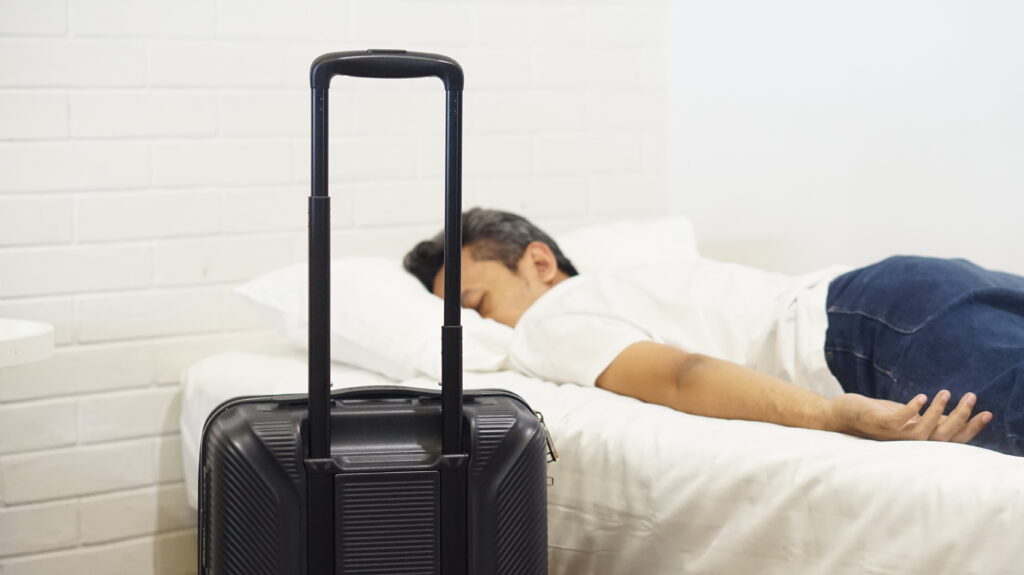
One of the biggest jet lag traps is the “arrival day spa plan.” At first glance, it sounds relaxing, especially after a long flight, but in reality, it often backfires. Spas keep you indoors under dim lighting, wrapped in warmth and stillness, exactly the conditions your body associates with sleep. As a result, you may accidentally doze off, confuse your internal clock, and wake up feeling even more disoriented than before. Instead of helping you adjust, it quietly reinforces the time zone you just left.
Similarly, daytime alcohol use during that first arrival window can create its own problems. Flying already dehydrates you, and alcohol only compounds the effect, increasing fatigue and mental fog. On top of that, it disrupts your sleep quality later that night, making it harder to get the deep, restorative rest your body needs to reset.
Finally, there’s perhaps the most tempting mistake of all: giving in to that first nap. After hours in transit, your body begs for it. However, even a short sleep can trick your brain into thinking nighttime has arrived. What starts as a quick rest can easily turn into a two-hour crash, pushing your real bedtime later and stretching jet lag out for days. In the moment, it feels like relief, but in the long run, it’s often the very thing that prolongs the struggle.
What Happens on the Way Home?
Ironically, many travelers, including us, don’t follow these same rules as strictly when returning home. As a result, that’s often when jet lag lingers the longest.
Over time, we’ve learned to apply the very same strategy on the return, too: instead of giving in to exhaustion, we stay active during daylight hours, resist the urge to nap, and go to bed at a reasonable local time. Just as they do upon arrival abroad, light and movement once again help reset the clock.
The good news? It works in reverse just as effectively.
Final Thoughts: You Don’t Have Time for Jet Lag

When we travel, every moment counts. We don’t want to lose days to exhaustion or mental fog. We want to hit the ground running, museums, markets, neighborhoods, food, and experiences.
After decades of experimenting, we’ve learned that jet lag doesn’t need a complicated pre-trip protocol.
It needs sunlight, movement, and one stubborn day of staying awake.
It’s not easy. But it’s worth it.
And the reward?
You wake up on day two ready to explore, not to recover.
© 2026 Wanderers Compass All Rights Reserved
Are You Impacted by Seasickness? Check out our article, Seasickness Remedies that Actually Work
Jet Lag Survival Checklist
The no-nonsense routine we swear by after 2 million miles
✈️ BEFORE YOU LEAVE
✔ Start hydrating a few days before departure
✔ Eat balanced meals with plenty of fruits and vegetables
✔ Minimize last-minute stress, pack early
✔ Try to get decent sleep (even if it’s not perfect)
✔ Avoid starting your trip already exhausted if you can help it
🛬 THE MOMENT YOU LAND
✔ Drop bags at the hotel — do not lie down
✔ Get outside in daylight as soon as possible
✔ Walk, explore, stay physically and mentally engaged
✔ Eat meals on the local schedule, even if you’re not very hungry
✔ Use coffee strategically if needed, but don’t overdo it
🚫 WHAT NOT TO DO ON ARRIVAL DAY
✘ No naps — not even “just 20 minutes.”
✘ No dark spa days or long indoor lounging
✘ Avoid daytime alcohol (it worsens dehydration and fatigue)
✘ Don’t hide in your hotel room scrolling through your phone.
🌙 THAT FIRST NIGHT
✔ Eat dinner at a normal local time
✔ A glass of wine is fine if that’s your thing, just keep it light
✔ Go to bed on the early side, but at a realistic bedtime
✔ Let exhaustion work in your favor
🌅 DAY TWO AND BEYOND
✔ Wake up and get into daylight again
✔ Stay active and keep meals on local time
✔ Avoid drifting back to your home time zone habits
🧠 THE MINDSET SHIFT
Jet lag recovery isn’t about perfection; it’s about commitment on day one. One tough day resets your body far faster than days of half-sleep and mistimed naps.
Move. Get light. Stay awake.
Your future, well-rested self will thank you.
Find Great Accommodations for Your Next Trip Booking.com – Expedia
Food Tours & Experiences Get Your Guide – Viator
Travel Insurance Squaremouth.com
Reviews Google Maps

Check out our most recent post



Want to learn the story behind Wanderers Compass?
Our Top Recommended Travel Products
Travel Insurance
Squaremouth.com
Our Favorite Travel Insurance Site!
We strongly advocate comprehensive travel insurance, not only for minor inconveniences but also for major, unexpected events such as medical emergencies. We never leave home without it. Our go-to resource is Squaremouth.com. which offers a user-friendly platform that connects you with top-rated, reputable insurance carriers. Plus, they’ll mediate on your behalf if you run into any issues.
To empower you as a consumer, we recommend you read our blog post on why travel insurance is essential and how to secure the best coverage from leading companies at an affordable price.
MedjetAssist
Medical transport back home from anywhere in the world
Medjet is a leading provider of global air medical transport. Unlike traditional travel insurance, which typically covers medical evacuation to the nearest facility, Medjet goes further by ensuring you’re transported back to the U.S. to the hospital of your choice once you’re stable enough to fly. Medjet offers membership plans that focus on medical transport, while Medjet Horizon provides expanded coverage for broader protection. Individual trip policies start at just $99, and annual policies are available for around $300. Most policies have an age limit of 74.
To learn more about how Medical Evacuation membership with Medjet Assist works, check out our blog post for a more detailed review.
Accommodations and Airfare
Booking.com
Hotels, Home rentals, BNBs, Flights, and other Transportation & Tours
Booking.com connects millions of travelers to unforgettable experiences, a wide range of transportation options, and incredible places to stay—from homes to hotels and beyond. As one of the world’s largest travel marketplaces, it supports well-known brands and entrepreneurs of all sizes. For its convenience, variety, and reliability, it’s our preferred booking platform.
Expedia and VRBO
Hotels, home rentals, BNBs, flights, and other transportation & tours
Expedia is a U.S.-based company with a mission to make global travel accessible to everyone, everywhere. At Wanderers Compass, we embrace independent travel, and platforms like Expedia are essential to making that a reality. Expedia allows you to book every aspect of your trip—from flights and accommodations to rental cars, cruises, and activities—making it a one-stop shop for all your travel needs.
Transportation
Daytrip
Personalized city-to-city private car transfer service
Daytrip provides an affordable private car service for city-to-city transfers worldwide, and we absolutely love their service. It’s a cost-effective alternative to renting a car, offering comfortable, stress-free travel with the added benefit of scenic stops along the way. For example, we used Daytrip for travel between Budapest and Vienna, enjoying some fantastic detours to local attractions. With professional drivers and customizable routes, Daytrip ensures a smooth ride while allowing you to explore hidden gems and unique sights along your journey.
To learn more about Daytrip, check out our blog post for a more detailed review.
Travel Experiences
Viator
The leading marketplace for travel experiences
Viator believes that travel is all about creating unforgettable memories. With over 300,000 experiences to choose from—ranging from simple tours to extreme adventures, plus a wide array of unique, niche activities—it’s never been easier to make lasting memories. We frequently use Viator during our travels and especially appreciate its flexible cancellation policy, which provides peace of mind with every booking.
Communication products for seamless connectivity overseas
GigSky International eSIM Data Plans
Local Prices. No Roaming. Fastest Networks.
GigSky eSIM effortlessly connects travelers worldwide, eliminating the need to swap physical SIM cards or face unexpected roaming charges. With affordable data plans and instant activation, you can enjoy reliable internet access in over 190 countries, making your travel experience more convenient than ever. Plus, they offer a fantastic deal: a free 100 MB data plan with no credit card required. They are so confident that you will love their service!
Enjoy 10% off all GigSky Plans (except cruise and inflight) with our discount code WCOMPASS10.
To learn more about how GigSky works, check out our blog post for a more detailed review.
Shopping
Wanderers Compass Amazon Storefront
An excellent source for all travel essentials and guides that we have vetted ourselves
Amazon is one of the world’s most comprehensive online shopping platforms, offering lower prices, a wide selection, and fast delivery through its global fulfillment network.
This page contains affiliate links. When you purchase through these links, we may earn a small commission at no extra cost to you. Thank you for your ongoing support!


2 Comments
Bleu
March 14, 2026 atInsightful article but alas also shortsighted. Travelling to a destination Eastward with a 10 hour time difference and arriving at midnight is nowhere even a possibility in this article. I’m hoping to be able to get to the hotel and sleep ASAP but would have loved some alternative tips.
Joelle Machia
March 15, 2026 atWith that arrival time you can apply the same rule we discuss in the article. You want to establish yourself in the new time zone. You can sleep once you are in your room but make sure to wake up at an early hour. Then power through the day and go to bed at a normal hour that evening, no naps at all. We have done this and it worked just as well. The key, as the article states, is to get daylight and then sleep that reflects the time zone you are in. We can address that in the article to make suggestions for various situations. Thanks for the input.